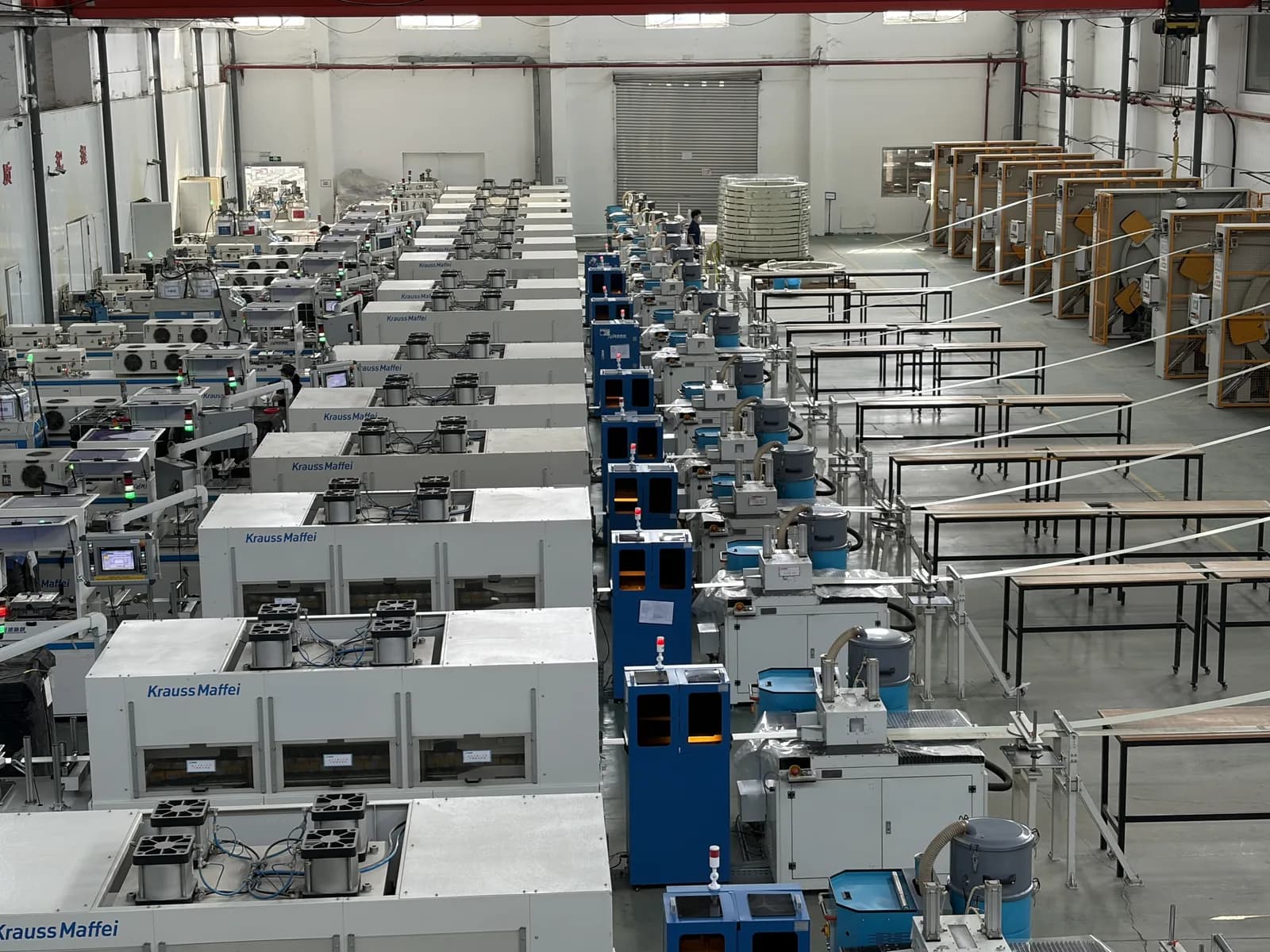
Pultrusion is a continuous, automated manufacturing process used to produce fiber reinforced polymer (FRP) composite profiles with a constant cross-section. The term "pultrusion" combines "pull" and "extrusion". Unlike metal extrusion where material is pushed through a die, in pultrusion reinforcing fibers are pulled through a resin bath and then through a heated die that shapes and cures the composite.
How the Pultrusion Process Works
The pultrusion process consists of several sequential stages, each critical to the final product quality.
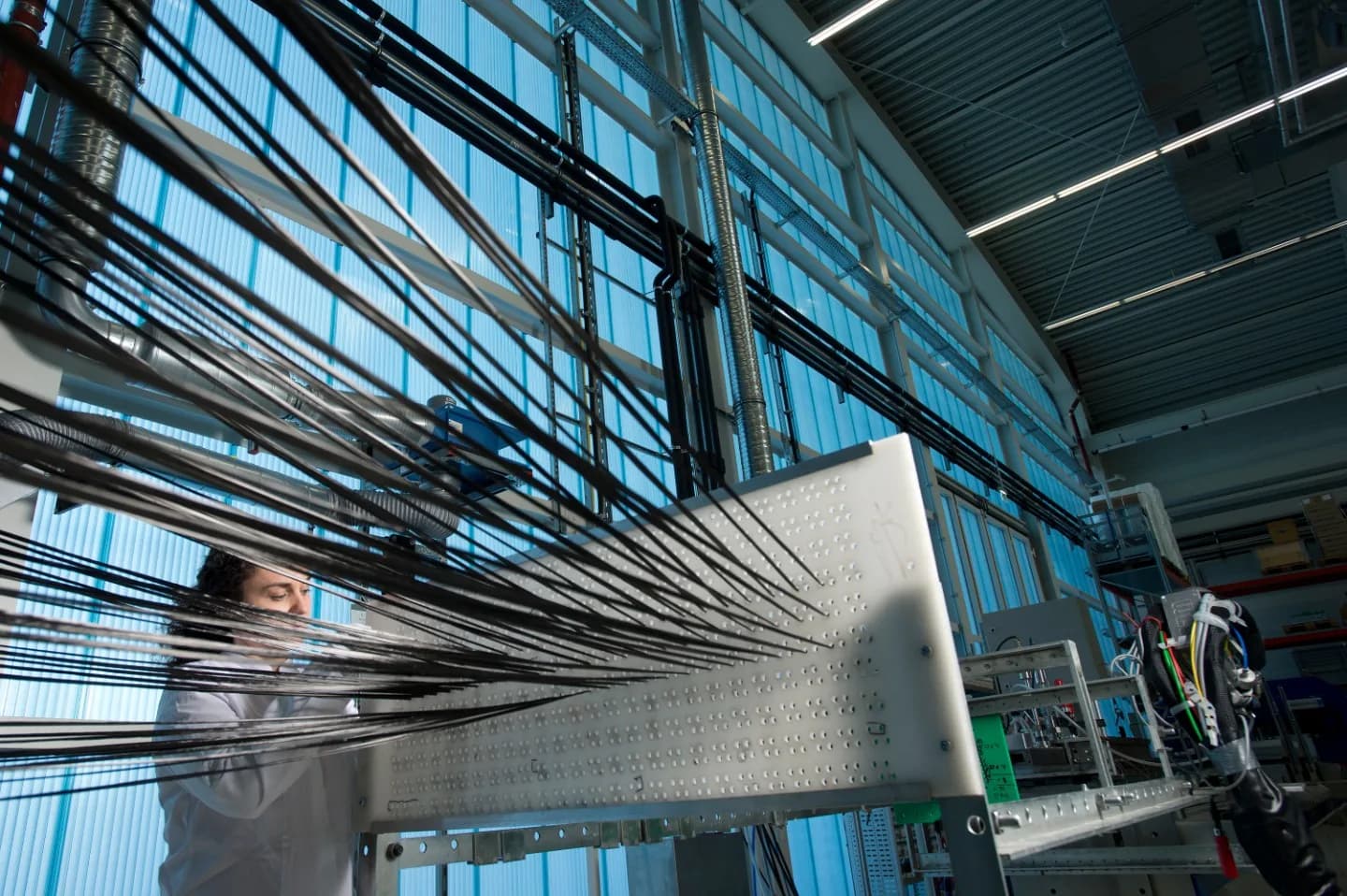
1. Fiber creel and guide system Continuous reinforcing fibers, typically E-glass roving but also carbon fiber, aramid, or basalt, are arranged on a creel rack. The fibers are guided through a series of cards and combs that organize them into the precise architecture required by the profile design. This fiber architecture determines the mechanical properties of the finished profile.
2. Resin impregnation The organized fibers pass through a resin impregnation system. In traditional open-bath pultrusion, the fibers are drawn through an open trough of liquid resin. In injection pultrusion, the more advanced method, resin is injected directly into the entry of the heated die under controlled pressure. Injection pultrusion offers better fiber wet-out consistency, reduced VOC emissions, and lower resin waste.
3. Heated die The resin-saturated fiber bundle enters a precision-machined steel die that has been heated to a carefully controlled temperature profile, typically between 120 degrees C and 180 degrees C depending on the resin system. As the material passes through the die, the heat initiates and completes the thermosetting cure reaction. The die imparts the final cross-sectional shape to the profile.
4. Pull mechanism A reciprocating clamp or caterpillar-track puller draws the cured profile continuously from the die at a controlled speed, typically 0.3 to 1.5 meters per minute for structural profiles. The pull speed is balanced against the die length and cure temperature to ensure complete cure.
5. Cut-off A flying saw cuts the continuously produced profile to the required lengths without stopping the line.
Why Pultrusion Matters
Pultrusion produces FRP profiles with one of the highest fiber volume fractions available in composite manufacturing, typically 60 to 70 percent glass content by weight. This translates directly to strong longitudinal tensile and flexural performance, high stiffness-to-weight ratio, and consistent quality batch after batch.
The continuous nature of pultrusion makes it the most cost-effective process for producing FRP profiles at volume. Tooling costs are lower than for RTM or autoclave processes, and production rates of several hundred meters per shift are routine once the process window is validated.
Applications of Pultruded Profiles
Pultruded FRP profiles serve structural and semi-structural applications across construction, infrastructure, energy, marine, and industrial sectors. Common applications include structural beams and columns, window and door frames, cable trays and ladder systems, walkway gratings, bridge deck panels, and cooling tower structural members.
At F1 Composite, we operate multiple pultrusion lines equipped for both open-bath and injection pultrusion processes, capable of producing profiles up to 600 millimeters by 300 millimeters in cross-section. Our engineering team works with clients from initial profile design through tooling, validation, and volume production.