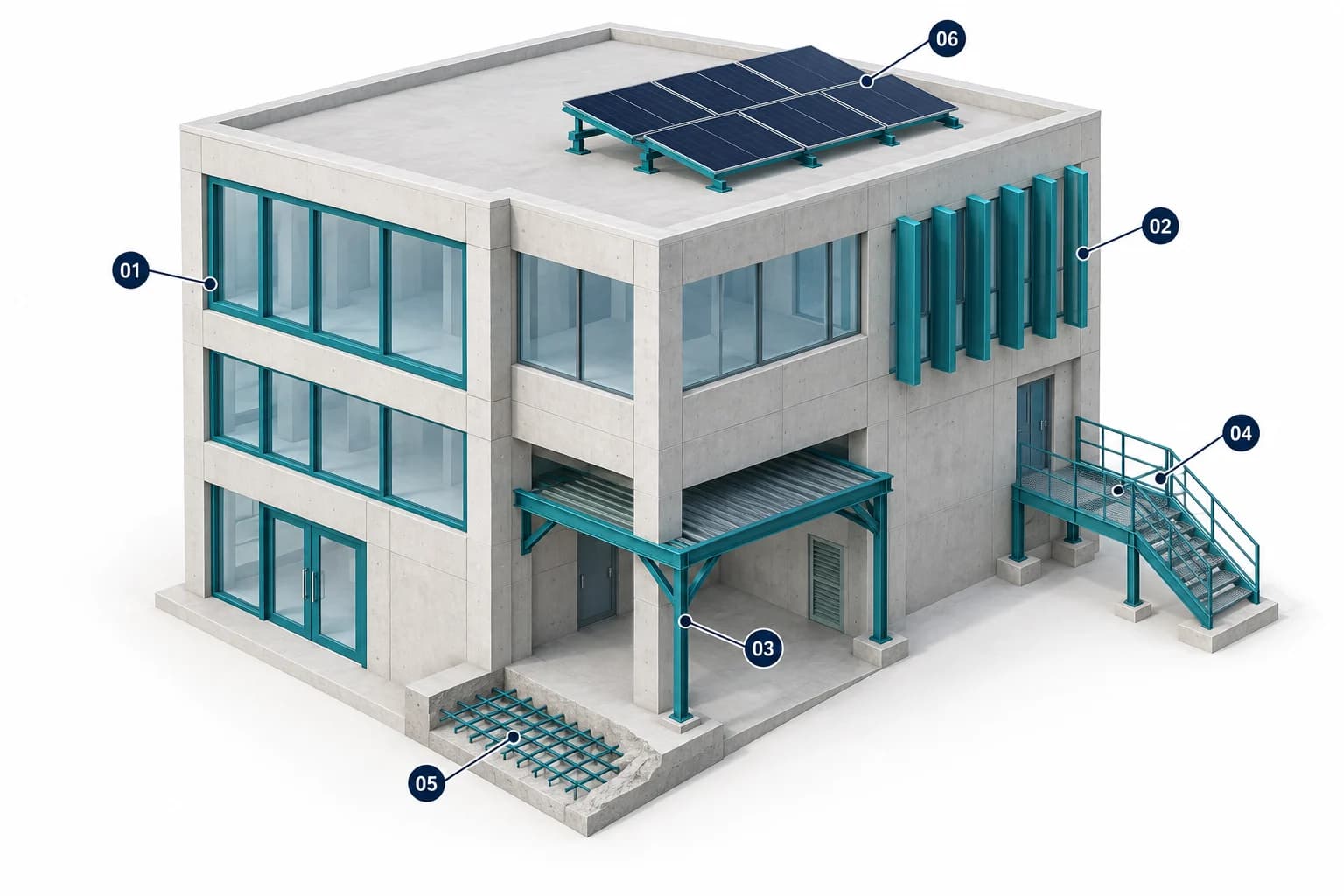
 Buildings & ConstructionLightweight, corrosion-resistant structural profiles for modern building envelopes and facades.Explore the sector
 Industries
FRP industrial applications by sector
Fiber-reinforced polymer profiles deliver measurable advantages across industries where corrosion resistance, lightweight strength, and design longevity matter most.
FRP industrial applications across seven sectors
F1 Composite supplies pultruded fiberglass profiles to seven industries where corrosion, weight, electrical neutrality, or radio transparency drive the material decision. Each industry has its own qualification standards, procurement language, and typical failure modes; we publish the engineering and specification context for each so that procurement teams and engineers can move from concept to qualified supplier.
- Buildings & ConstructionLightweight, corrosion-resistant structural profiles for modern building envelopes and facades.Explore the sector
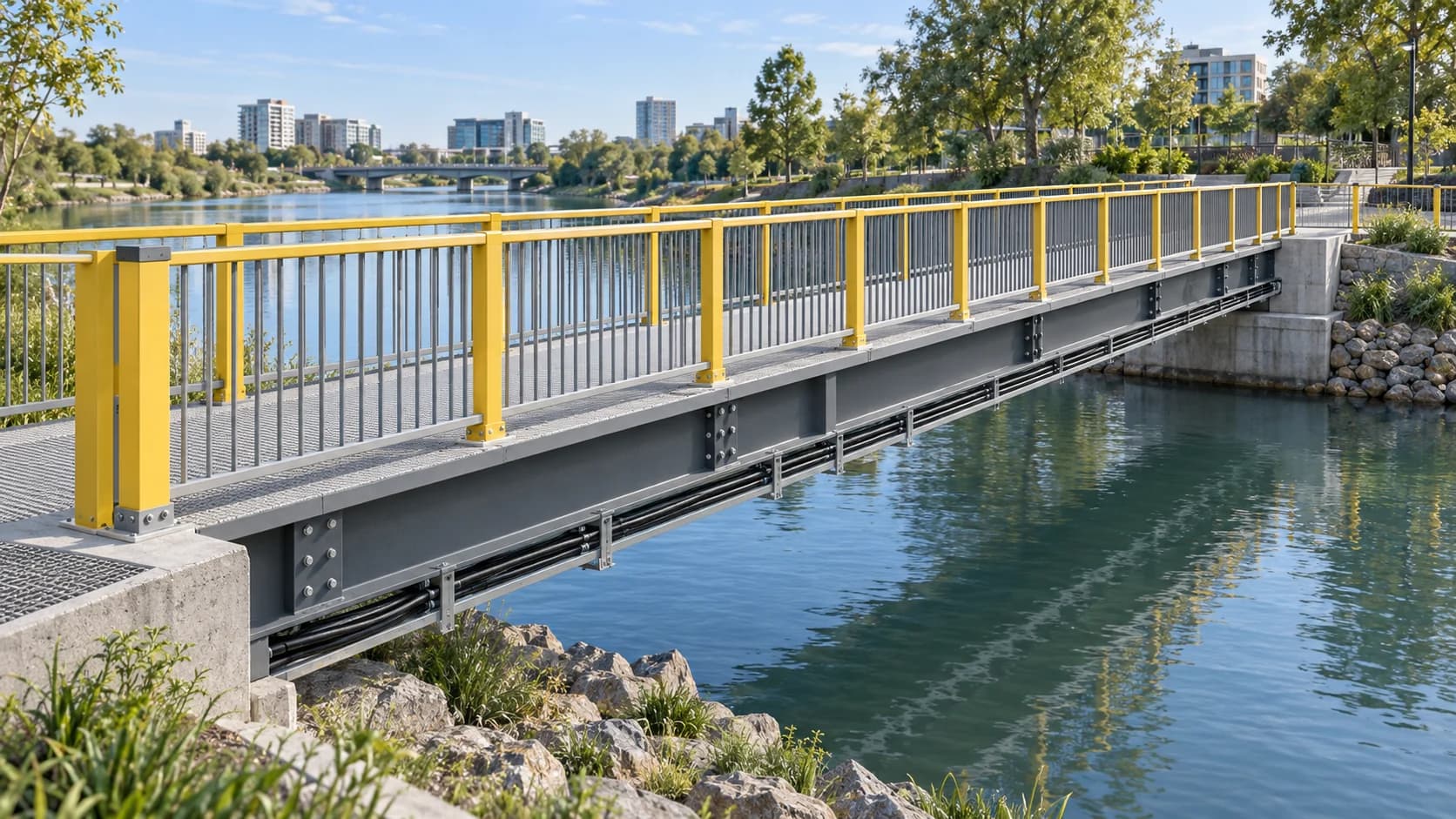 InfrastructureDurable FRP solutions for bridges, walkways, and civil engineering structures.Explore the sector
 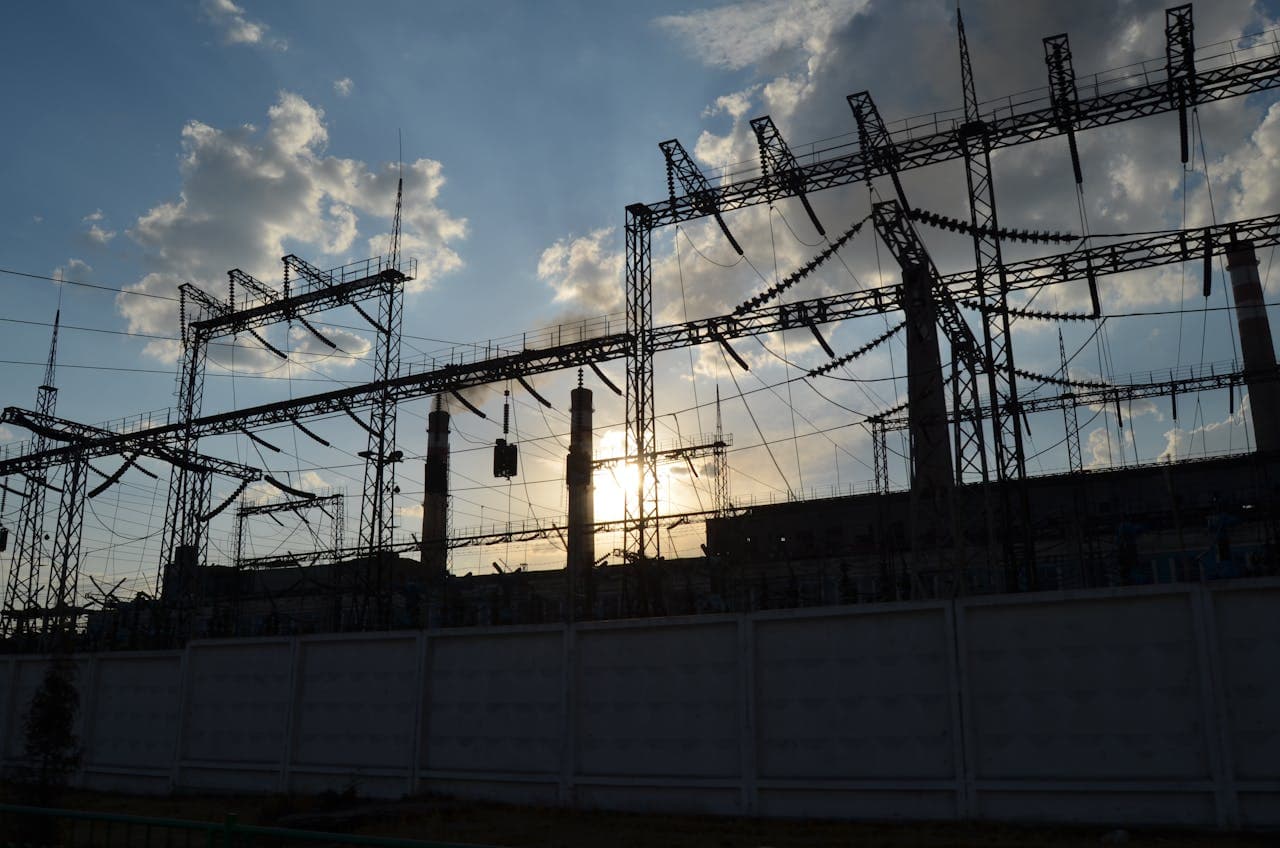 Illustrative photoEnergy & PowerDielectric, UV-resistant FRP profiles for substations, transmission, renewables, and power infrastructure.Explore the sector
 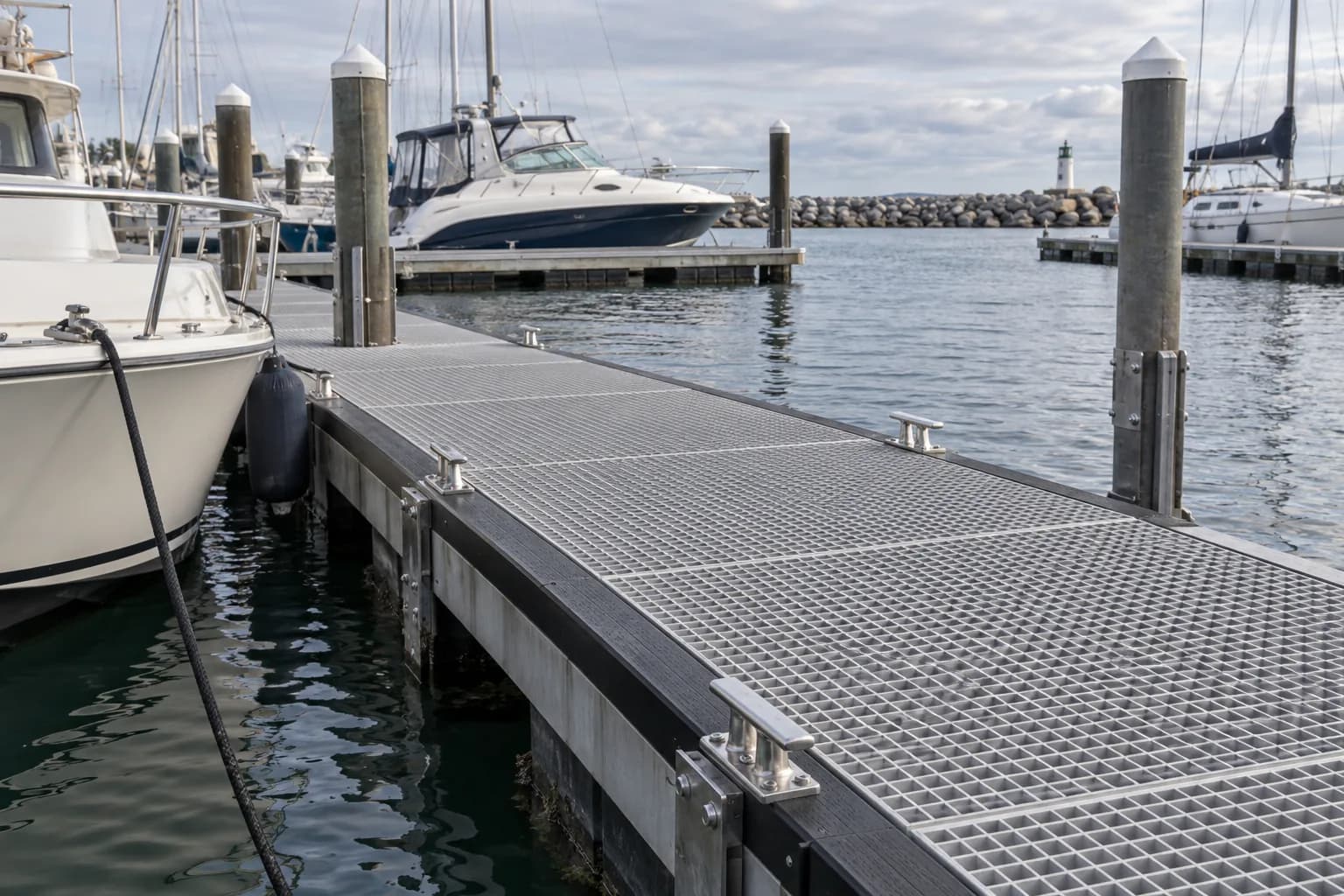 Marine & OffshoreSaltwater-resistant grating, decking and profiles for docks, marinas, boardwalks and offshore access.Explore the sector
 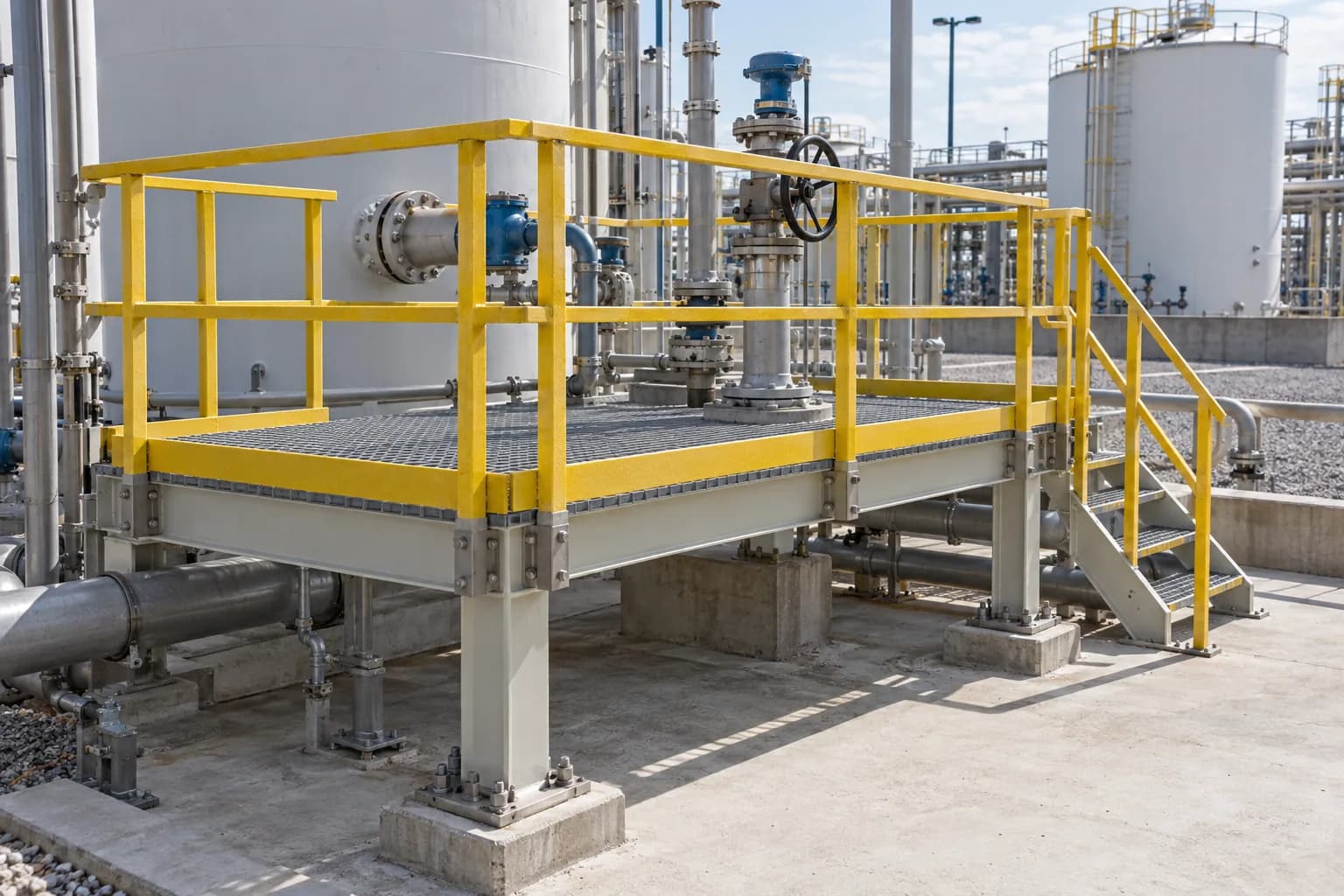 Industrial & ChemicalPultruded structural profiles for processing plants and manufacturing facilities.Explore the sector
 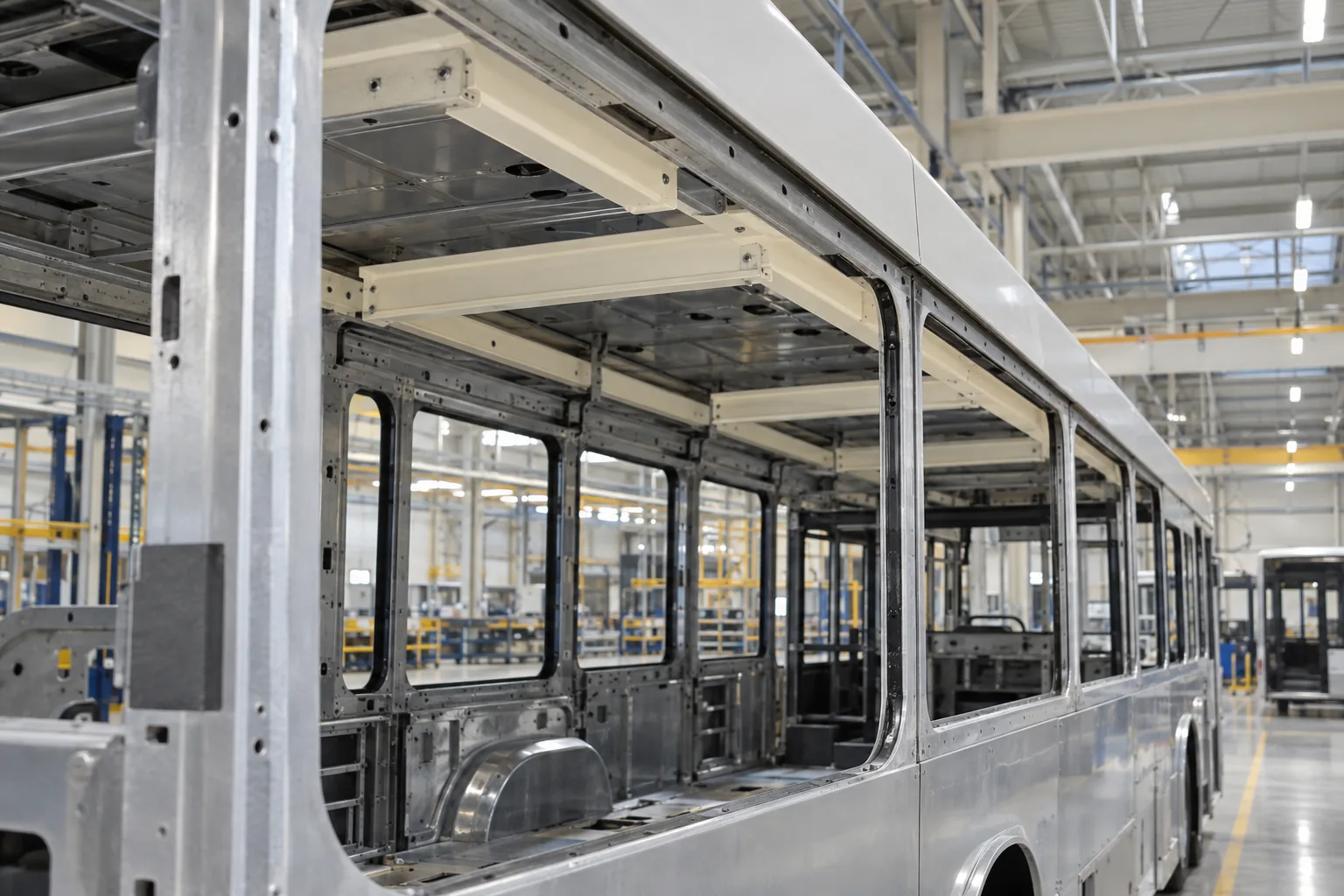 Automotive & RailPultruded profiles to evaluate for passenger cars, buses, EV battery enclosures, commercial bodies and selected rail components.Explore the sector
 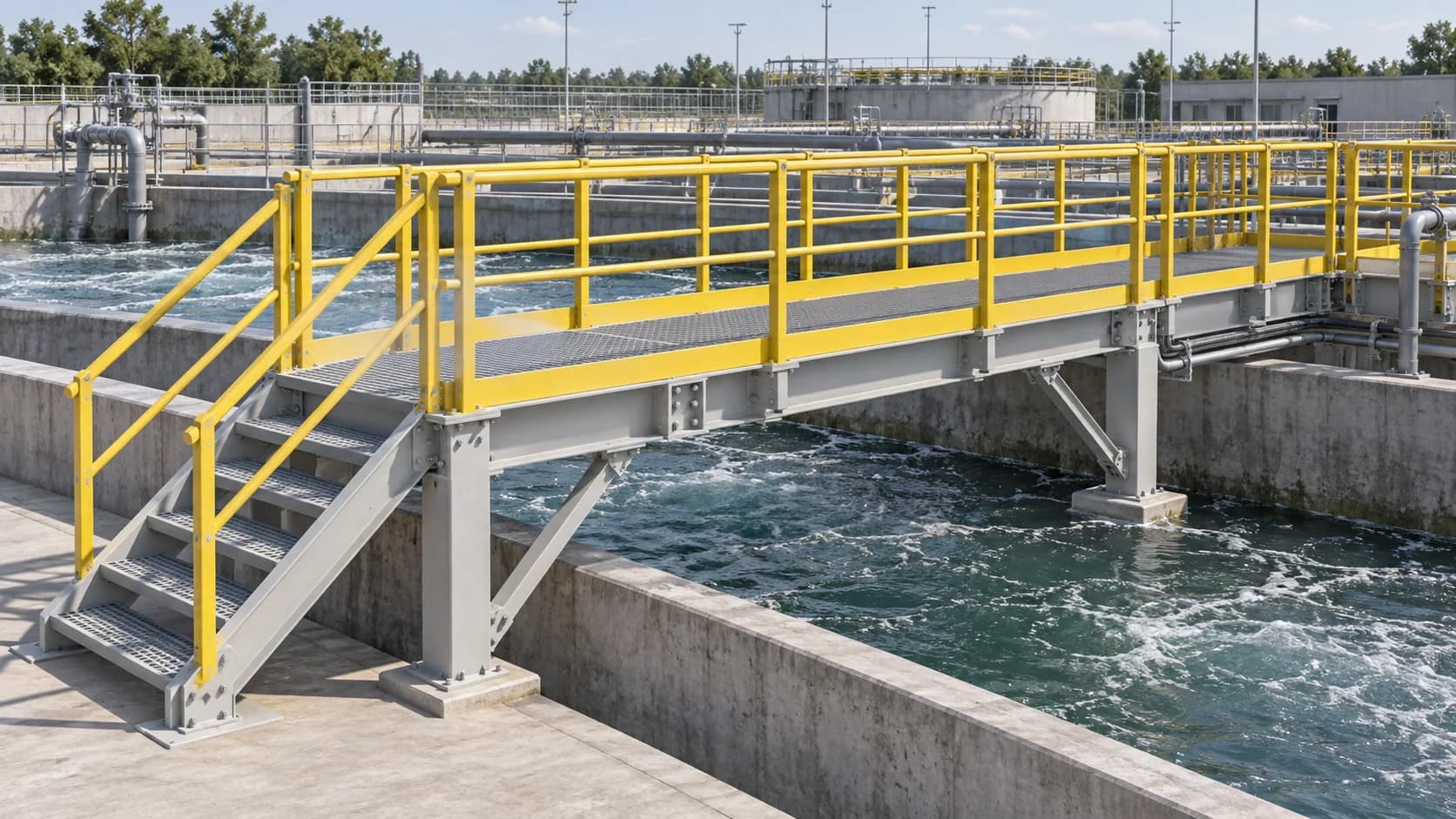 Water & WastewaterProfiles and grating for cable supports, access frames and walking surfaces around treatment equipment.Explore the sector
 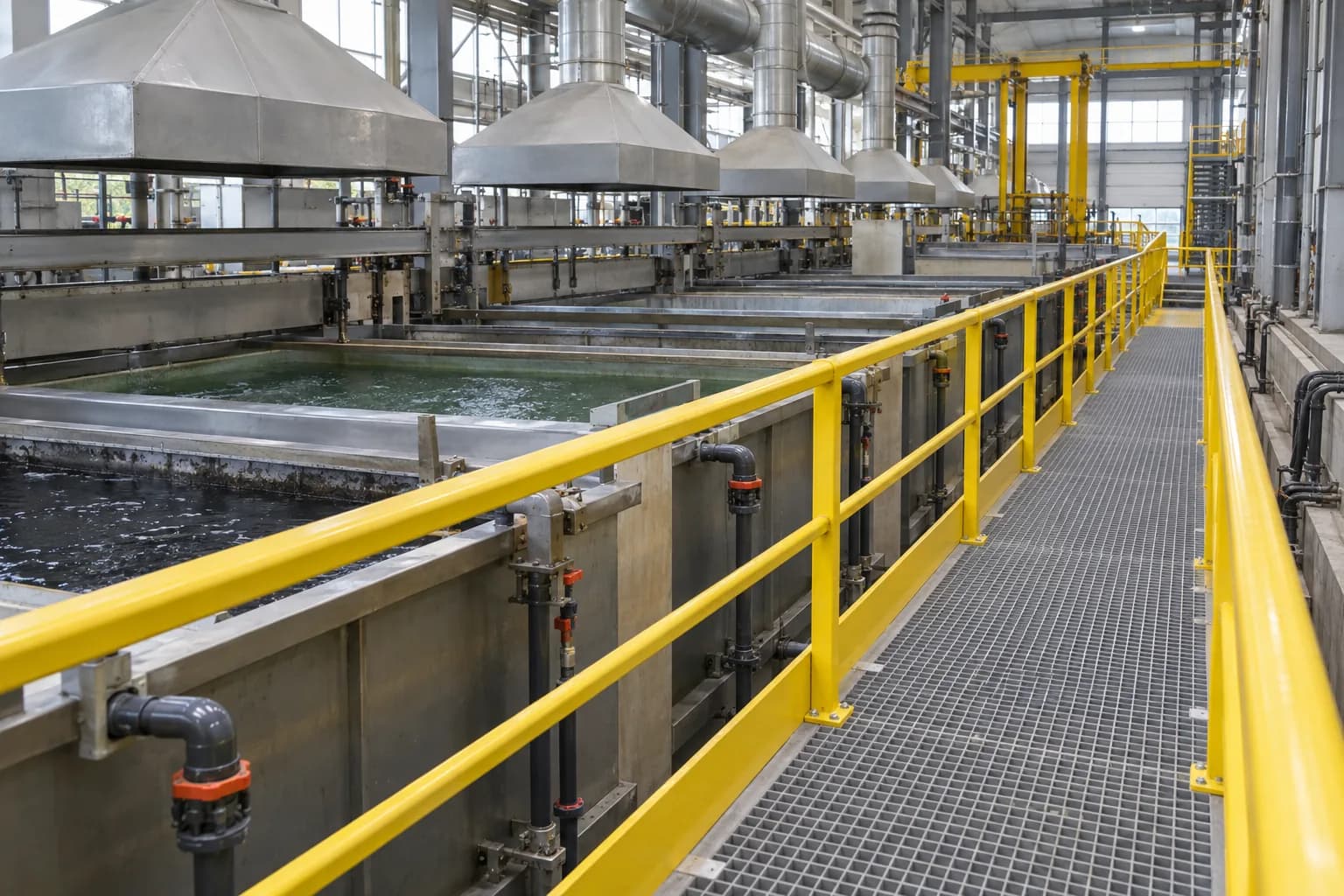 Browse by applicationPlatforms, cooling towers, solar mounting, cable trays, bridges and agricultural stakes: start from the component's use.All applications
Why FRP, sector by sector
The case for FRP is rarely "lighter than steel" alone. Every industry has a specific reason.
- Buildings & Construction
- Thermal performance: glass FRP conducts about 0.3 W/m·K against about 160 for aluminum, so window and facade frames need no separate thermal break.
- Infrastructure
- Corrosion: FRP decks, handrails and cable supports do not rust, so they avoid steel's recoating cycle; the inspection plan is still set for each project.
- Energy & Power
- Electrical insulation with corrosion resistance, for cable supports, substations and solar structures on coastal or humid sites.
- Marine & Offshore
- Seawater: glass FRP does not rust, and a vinyl ester laminate with sealed cut edges suits splash and immersion.
- Industrial & Chemical
- Chemicals: with the resin chosen for the chemicals on site, platforms, grating and supports avoid the corrosion and recoating of steel.
- Automotive & Rail
- Candidate parts in buses, EV enclosures and rail can use FRP's low density and electrical insulation; geometry, connections and approval stay specific to each part.
- Water & Wastewater
- Wet, chemically dosed service around treatment equipment, where cable supports, access frames and walkways would otherwise need repeated coating.
Regional supplier pages
For procurement teams in regions with local supplier compliance requirements.
Frequently asked questions
How do industries differ from applications?
Industries describe the project sector, such as water treatment or energy. Applications describe the component's use, such as cable supports or walkways. One profile may serve several sectors with different material and connection requirements.
Does an industry page describe a complete system supply?
No. Start with the profiles, grating or window products required. Confirm engineering, cutting, drilling, fittings and any assembly scope on the quotation; complete equipment, civil works and site installation are separate scopes.
How should I specify a product for my sector?
Provide the component drawing, service environment, loads and connections, quantity, required documents and destination. Use data for the offered section and material rather than assuming that every FRP product meets the same requirements.
Not sure which FRP solution fits your project?
Send the dimensions, quantity, service conditions and destination. We reply within one business day.