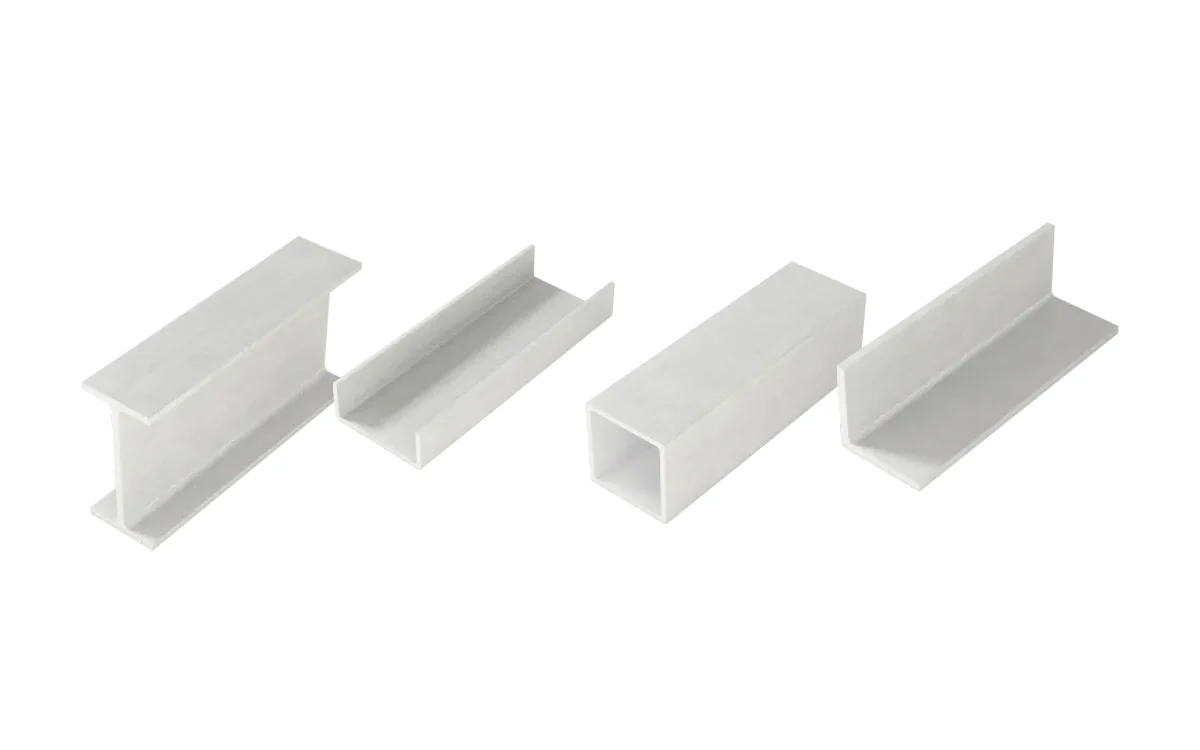
 Standard structural profilesFrames, equipment stands and supports from 114 catalog sizes.
Industry· Energy & power
FRP Composite Profiles for Energy & Electric Power
Pultruded FRP profiles for substations, cable routes, solar mounting and wind energy. Glass FRP is non-conductive and does not rust, so it suits equipment areas where steel needs grounding, bonding or recoating; the laminate and the assembly are confirmed for each project.
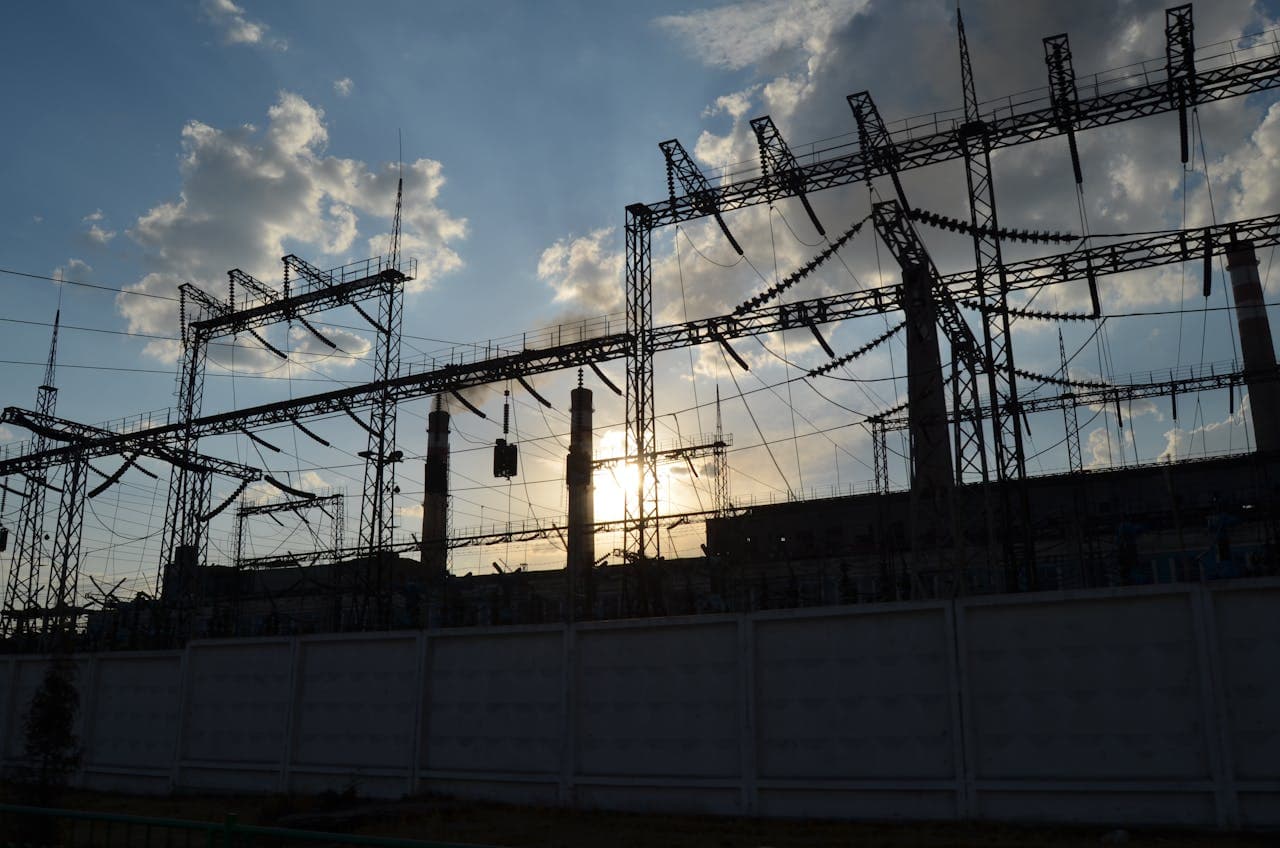
FIG. 1 Energy & powerIllustrative photo
Where FRP is used, area by area
The parts change from one kind of energy site to the next, and so do the checks. Electrical and fire requirements belong to the specified laminate and assembly, not to fiberglass as a category.
| Area | Conditions | Typical FRP parts | What to check |
|---|---|---|---|
| Overhead distribution lines | Timber crossarms can decay and steel hardware can corrode in wet or coastal service | Pultruded fiberglass crossarm members with agreed drilling and assembly scope | Conductor load cases, pole mount and brace capacity, clearances, tracking, UV and water ingress |
| Substations and switchyards | Steel frames need grounding and bonding, and corrode in coastal or industrial air | Equipment stands, frames and trench covers from standard profiles | Clearances, dielectric data for the specified laminate, UV exposure and any fire classification |
| Cable routes in plants | Steel trays and supports rust in damp, chemical or coastal areas | Channels, angles and brackets for cable supports; custom tray sections | Cable weight, support spacing, fire-retardant resin where required, the electrical design basis |
| Solar mounting | Zinc coatings wear on coastal, agricultural and floating sites; many roofs have little spare capacity | Rails, posts, clamps and PV module frame profiles | Wind and snow loads, UV-stabilised resin and surface veil, connections and roof capacity |
| Wind energy | Blade reinforcement needs light laminates with documented fatigue behavior | Pultruded spar-cap panels in glass, carbon or hybrid laminates | The laminate data sheet and the blade designer's qualification route |
| Transformers and switchgear | Metal parts near high-current conductors can heat by induction | Custom insulating spacers, standoffs and supports | Temperature class of the resin, and dielectric and thermal test data for the specific part |
Products 6 product families
- Standard structural profilesFrames, equipment stands and supports from 114 catalog sizes.
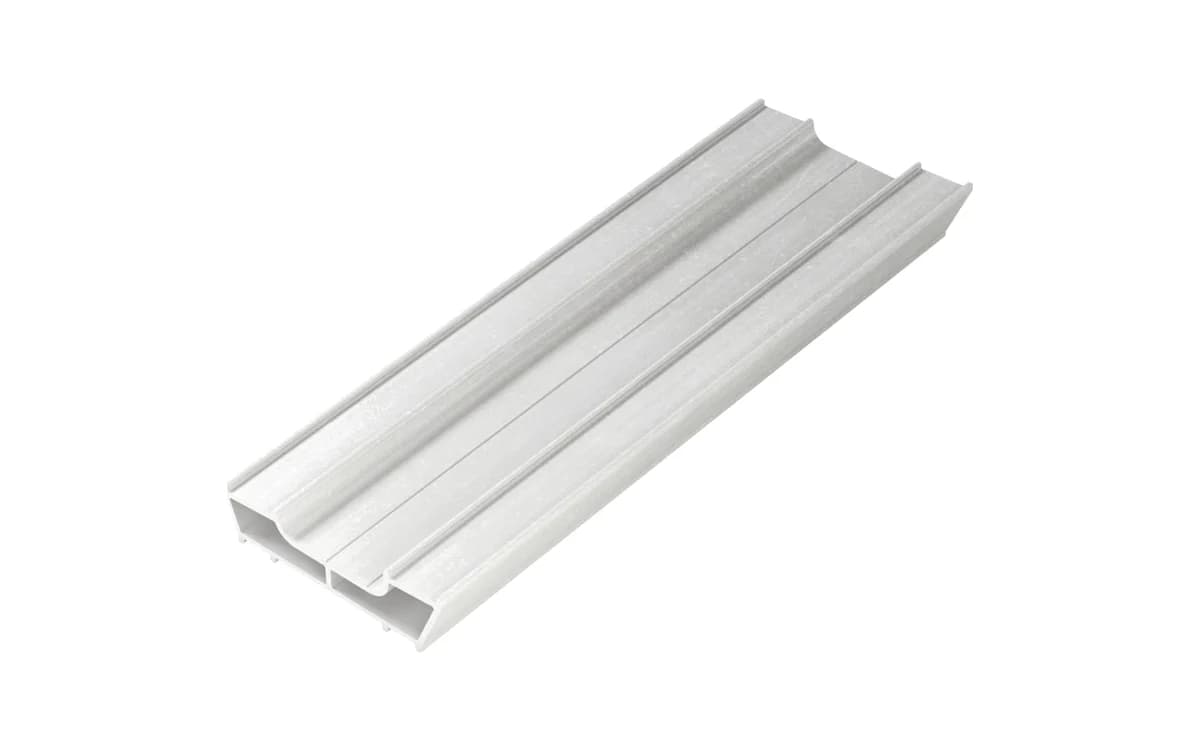 Custom profilesInsulating spacers, tray sections and special shapes on new tooling.
 Project photoSolar mounting systemsPV module frames, rails and supports for rooftops, farms and coastal sites.
 Supplier photoWind turbine blade panelsPultruded spar-cap panels in glass, carbon and hybrid laminates.
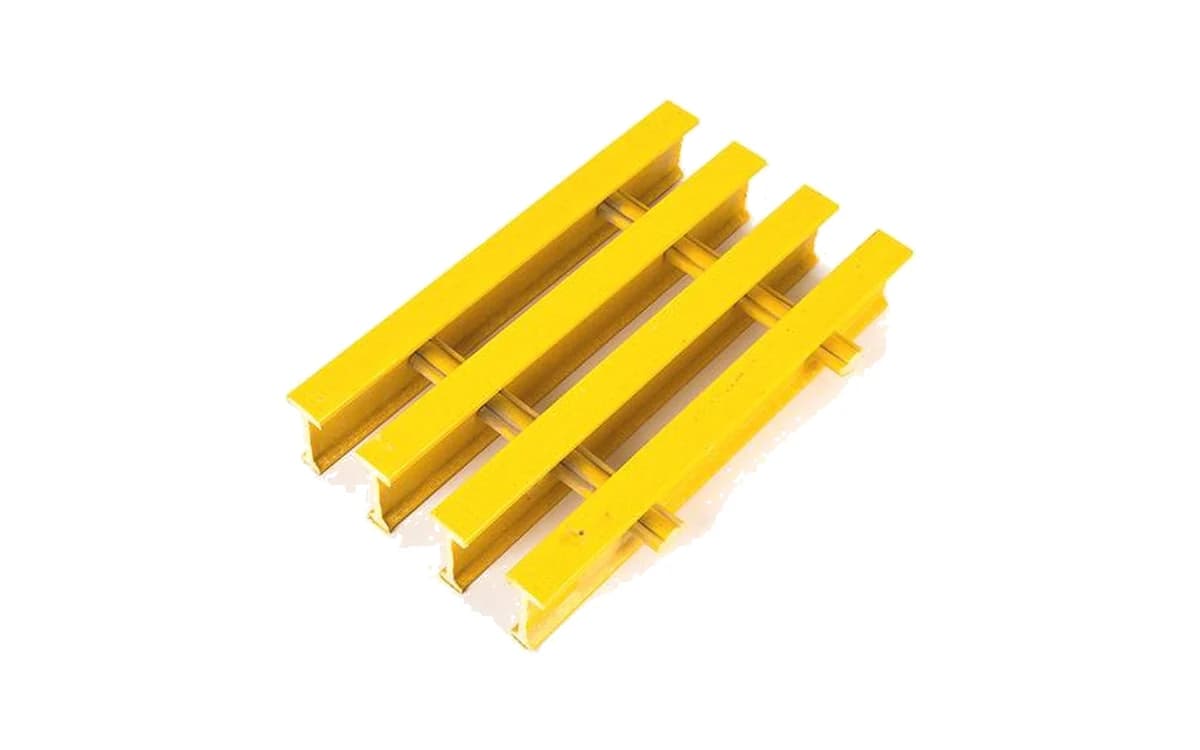 Pultruded gratingWalkways and platforms around equipment.
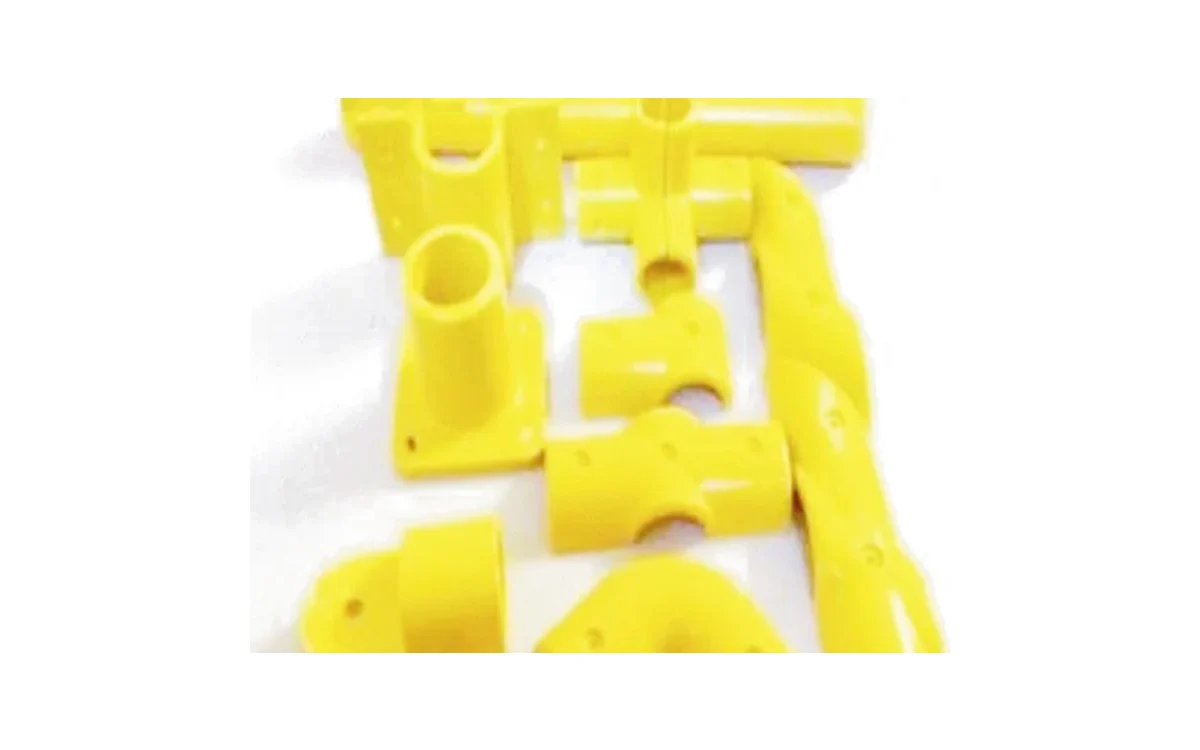 Fasteners and fittingsFiberglass threaded rods, nuts and fittings for non-metallic joints.
Projects and applications
- Case study · Project photoChongqing rooftop PV retrofitPultruded GFRP H-rail on color steel-tile factory roofs, with about 75% less rail dead load than galvanized steel.
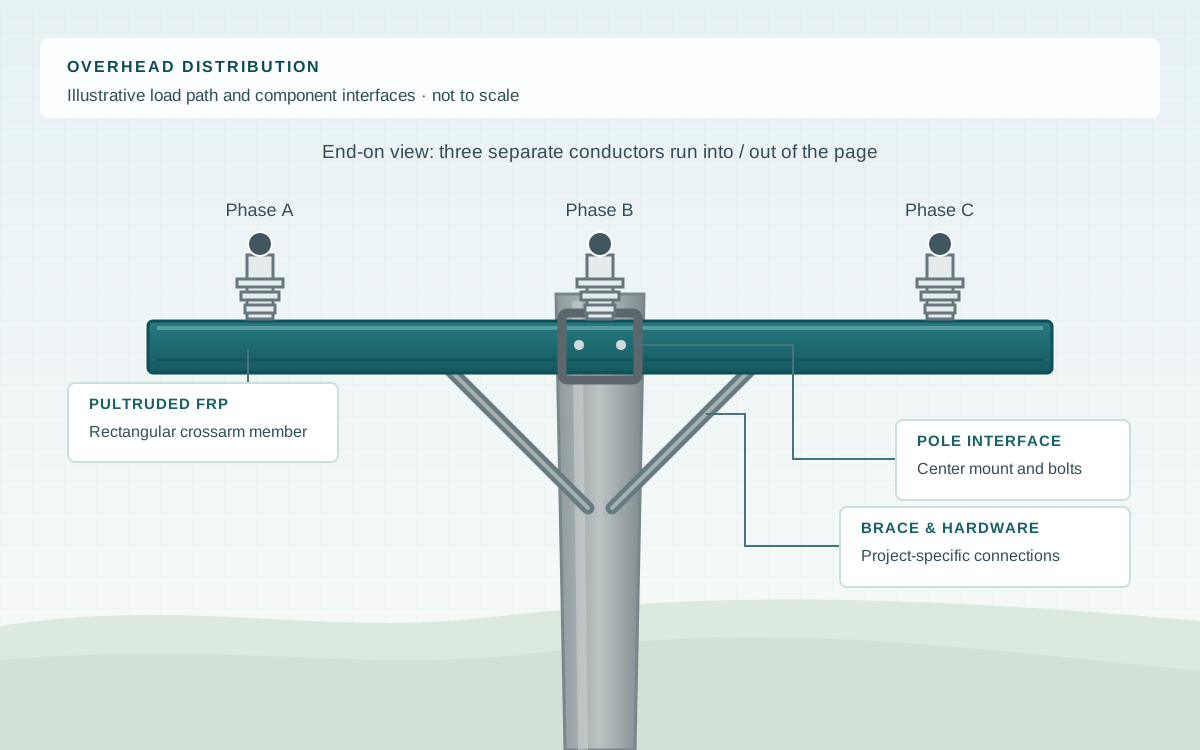 Application · End-on distribution schematicFRP utility crossarmsSpecify pultruded fiberglass crossarms for overhead distribution: pole geometry, conductor loads, fittings, electrical performance and qualification evidence.
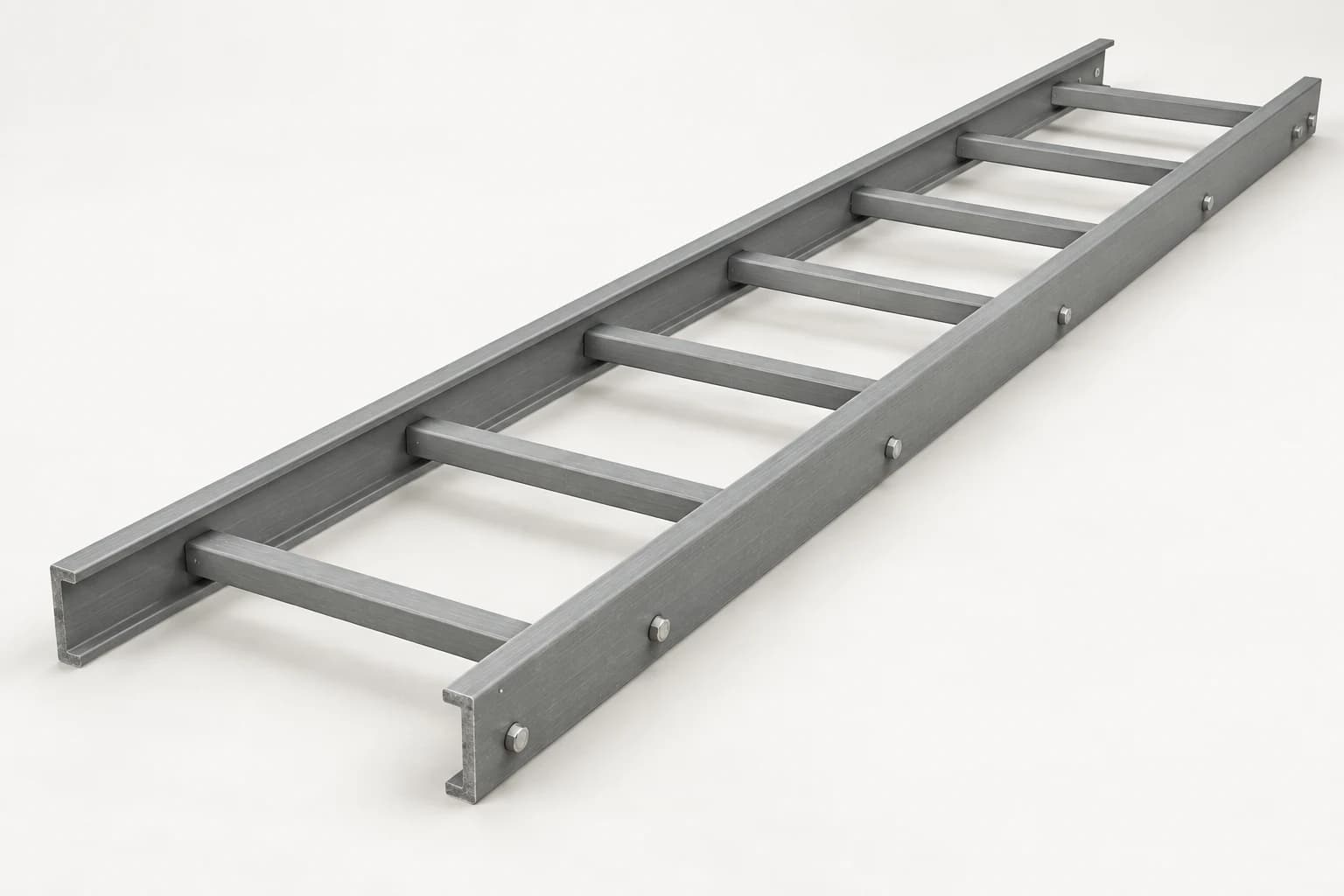 ApplicationFRP cable trays & laddersCompare FRP cable trays and cable ladders for corrosive environments. Define tray bases, ladder rungs, resins, supports, fittings and project requirements.
Documents
- Data sheetPDF · 3 MB
FRP Profile Design Manual — DOC-PF-2026-EN Rev. B
- Issued by
- F1 Composite
- For
- Structural shapes
Revision B (October 2026), generated from the website's catalog, laminate and design-basis data: EN 13706 E23 laminate values beside the grade minimums, section properties of all 114 catalog sizes, allowable uniform loads to the published LRFD screening basis, application guides, durability stated by resin formulation, fabrication and inspection. A preliminary-sizing reference, not a project approval or batch certificate; it supersedes the withdrawn Rev. A.
- Data sheetPDF · 13 KB
Wind Energy Pultruded Laminate — Mechanical Data Sheet
- Issued by
- F1 Composite
- For
- Wind turbine blade panels
The tested laminate and reinforcement described in the document. Fatigue and fiber-content results apply to the stated specimens, not all blade or spar-cap designs.
- CertificatePDF · 142 KB
EPD & Carbon Footprint — Pultruded GFRP Composite Profiles
- Issued by
- CABR
- For
- Standard profiles
Environmental Product Declaration and product carbon footprint analysis for F1 Composite pultruded GFRP composite profile products, with 1 m² functional unit. Calculation reference CABR-CFC-01(02)-2025(20030)1, cradle-to-gate 33,934.34 g CO₂e/m², distribution 254.59 g, cradle-to-grave 36,099.32 g. Standards: GB/T 24025-2009 (ISO 14025-aligned Type III EPD), GB/T 32161-2015, ISO 14067, PAS 2050. Issued by China Academy of Building Research Co., Ltd. (CABR) Certification Center on April 30, 2025.
- CADOn request
Standard Profiles — CAD Library
- Issued by
- F1 Composite
- For
- Standard profiles
2D and 3D CAD models for all standard I-beam, channel, angle, and tube profiles.
- CatalogOn request
Product Catalog 2024
- Issued by
- F1 Composite
- For
- All products
Complete catalog of standard pultruded FRP profiles with dimensions, properties, and ordering information.
- CertificateOn request
ISO 9001:2015 Certificate
- For
- All products
Request the current quality-management certificate holder, validity and scope for your proposed supply.
- CertificateOn request
CE Declaration of Performance
- For
- All products
Request product-specific performance and applicable conformity documentation; confirm the intended use and assessment route.
Questions buyers ask
Is FRP non-conductive enough for electrical applications?
Glass-fiber FRP is an electrical insulator, which is why it is used for supports near energized equipment. Its dielectric performance depends on the resin, glass content, surface condition, moisture and contamination. Request the dielectric test data for the specified laminate, and design the assembly, including any metal hardware, to your electrical standard.
Can FRP be used outdoors on solar and substation sites?
Yes, with a UV-stabilised resin and surface veil and, where specified, a compatible coating. Appearance and property retention depend on the resin, pigment, climate and exposure time, so state the location and design life and ask for the applicable weathering evidence.
Are FRP profiles fire-retardant?
Fire-retardant polyester, vinyl ester and phenolic laminates are available; the standard polyester laminate is not fire-retardant. Fire test reports are issued for a specified formulation and profile, so list the classification your project requires in the RFQ.
What operating temperature can FRP profiles take?
Standard laminates are used well below the resin's glass transition; the structural pages treat continuous service above about 60 °C as a reason to review the resin. Parts near transformers or other hot equipment need a resin selected and tested for the operating and peak temperatures you send.
Quote FRP for energy & power
Send what the parts do, the loads and exposure, the requirements that apply and the destination. We reply within one business day; a formal quotation follows once the specification and delivery are reviewed.
- Application and site
- What the parts do, where they are installed, and the indoor or outdoor exposure.
- Loads and layout
- Spans, support spacing, equipment or cable weights and any drawings.
- Electrical and fire
- Dielectric, grounding and fire requirements, and the standards your project cites.
- Quantities and delivery
- Lengths or part counts, destination and target date.