Skip to content
Industry· Marine & offshore

FRP for Marine Docks, Walkways & Access Platforms

Pultruded FRP profiles and grating for docks, marinas, offshore platforms and coastal walkways. Glass FRP does not rust in seawater, so it avoids the recoating cycle of steel; vinyl ester is the usual resin for splash and immersion.

FIG. 1 Marine & offshore
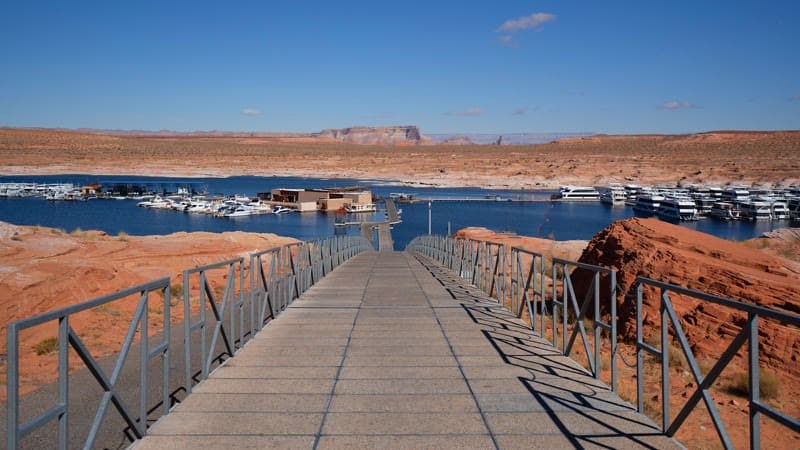
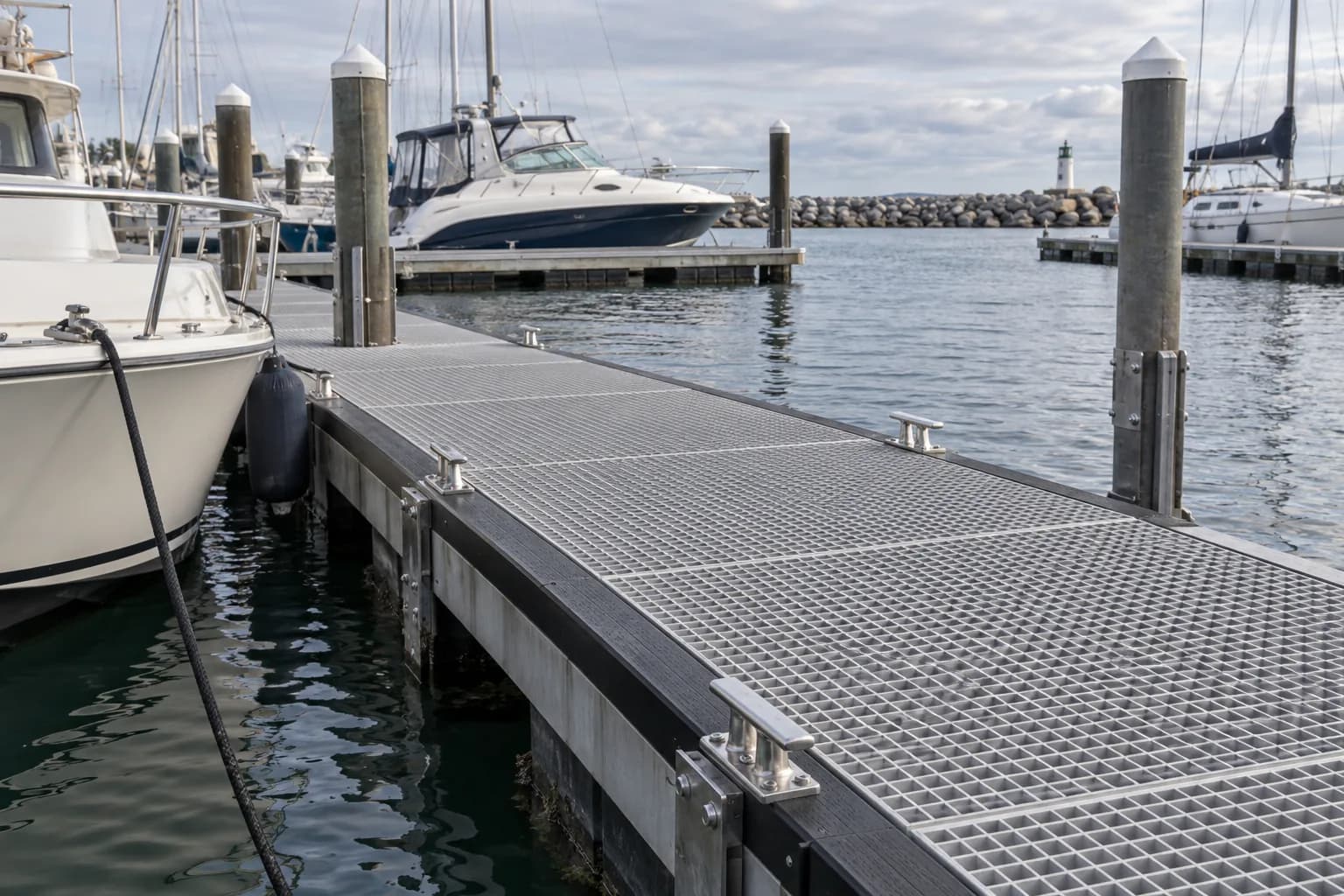
Marina dock with fiberglass grating, mooring cleats and boats
Fiberglass grating on a marina access route. Deck support and fixings require project design.

Where FRP is used, area by area

Salt, splash and UV act on every marine structure; the loads and approval routes differ. These are the usual areas and what to confirm for each.
AreaConditionsTypical FRP partsWhat to check
Docks and marinasSteel corrodes in the splash zone and timber decaysGrating, deck panels, frames and handrailsBerthing, crowd and point loads, fixings and UV exposure
Offshore platformsCorrosion maintenance is costly offshore, and weight mattersGrating, handrails, ladders and cable supportsThe operator's fire and approval requirements, and the loads
Coastal walkways and piersSalt spray on wet walking surfacesGritted grating, stair treads and handrailsSlip resistance, drainage, anchors and fixings
Aquaculture and fishery PVImmersion or splash with strong UVFrames, mounts and structural profilesImmersion behavior of the resin and sealed cut edges
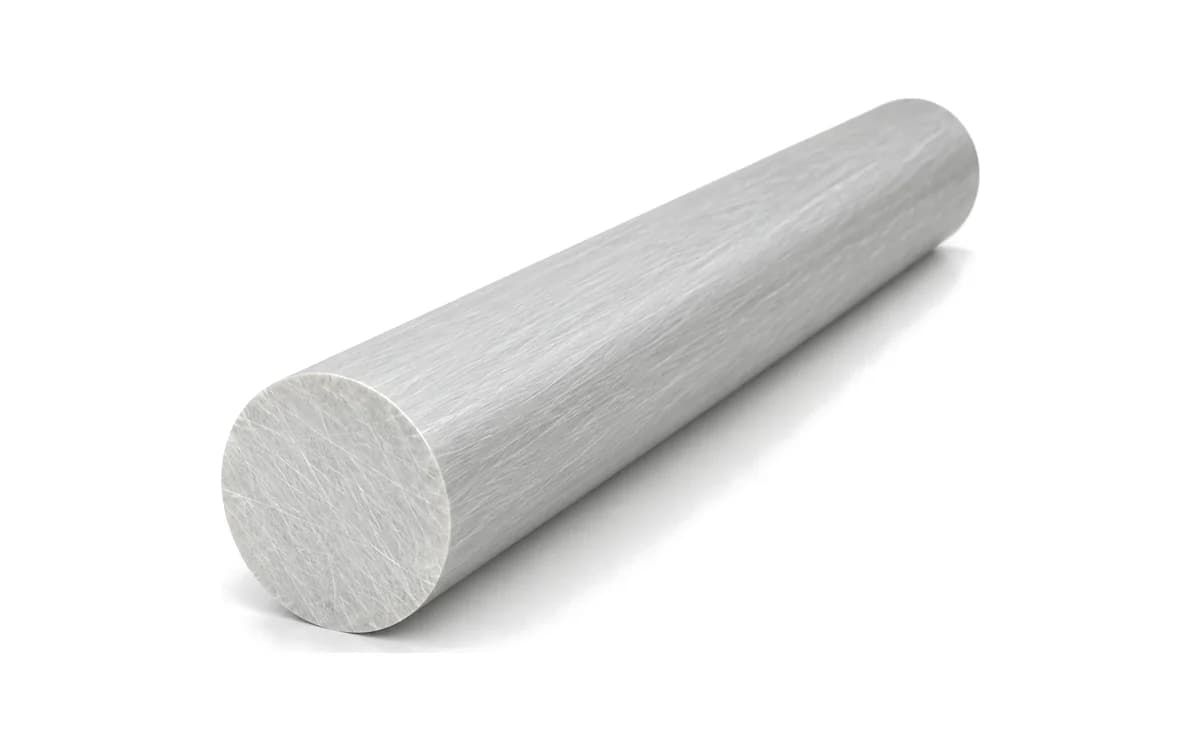
Tie-rods and anchorsSteel rods corrode in seawaterSolid FRP rodsDesign tensile values for the diameter and resin, and the anchorage

Four places to put the specification to work 4 applications

Salt air, splash and washdown make marine access a system decision. Each setting has its own load path and maintenance routine; use these notes to prepare an engineering discussion, then confirm the final assembly against project drawings and test evidence.

01 · Marinas & finger piers

Plan the route from shore ramp to berth

A marina route changes from a moving gangway to the main dock and then to narrow finger piers. Each part needs its own walking surface, support and edge detail.

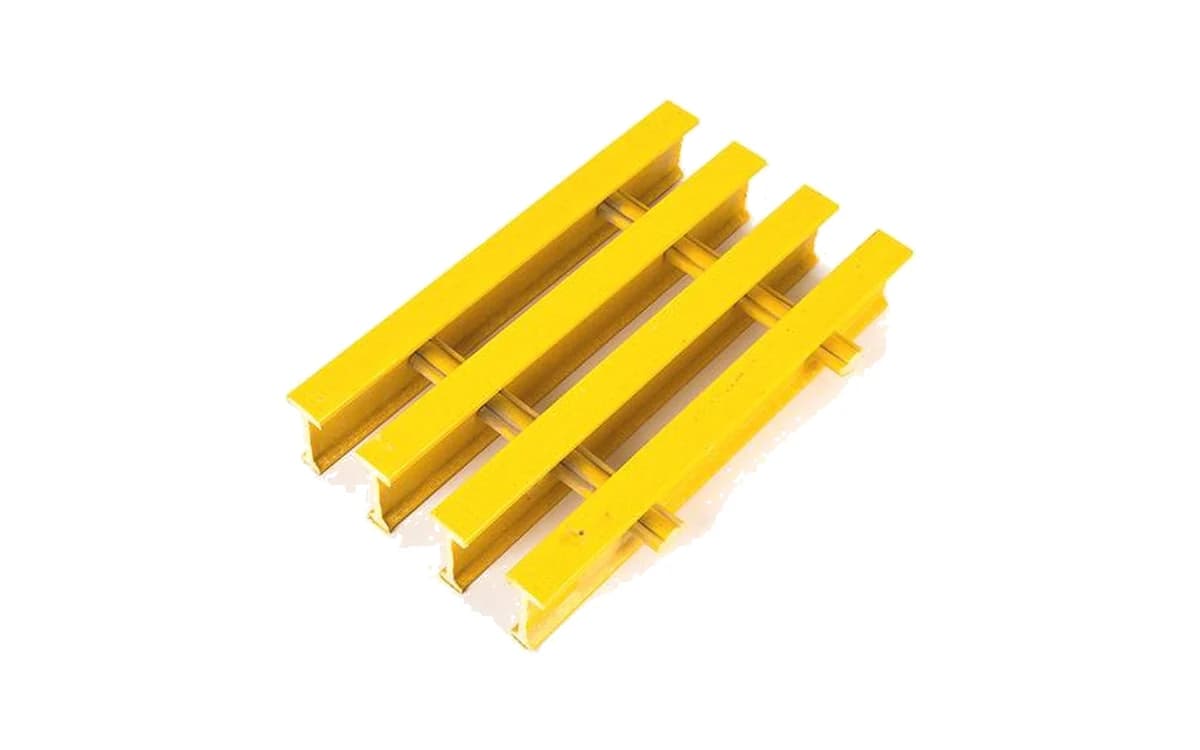
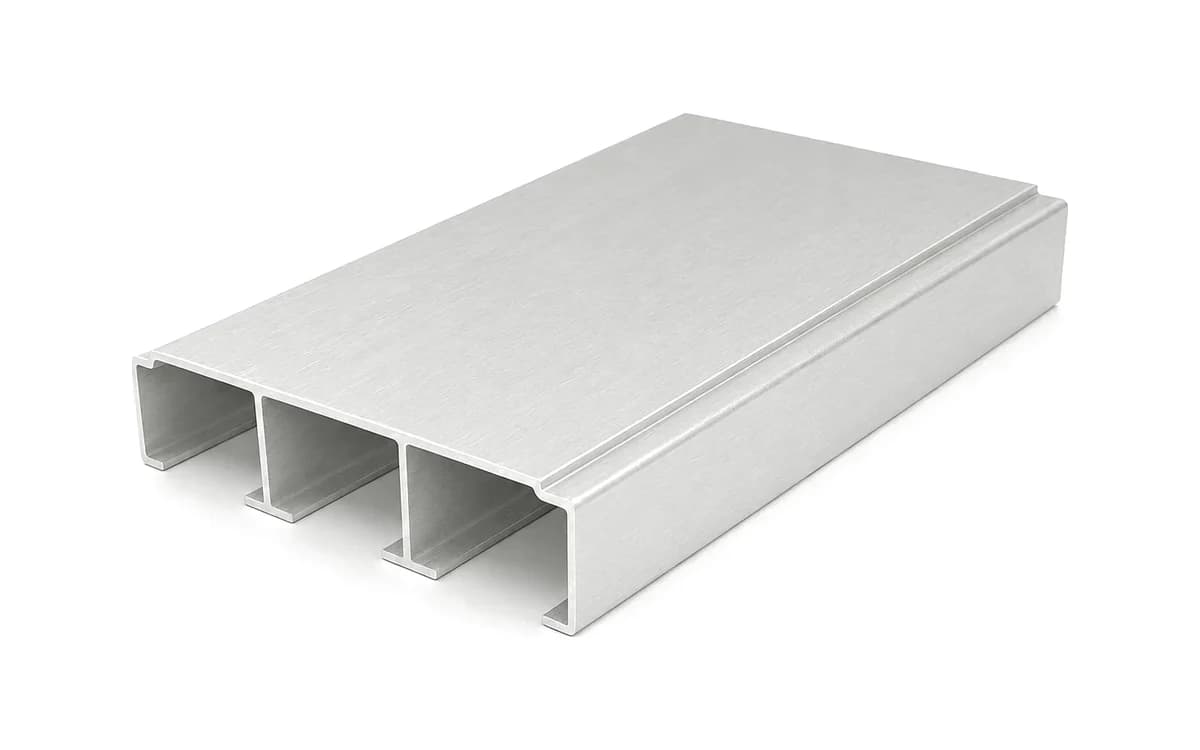
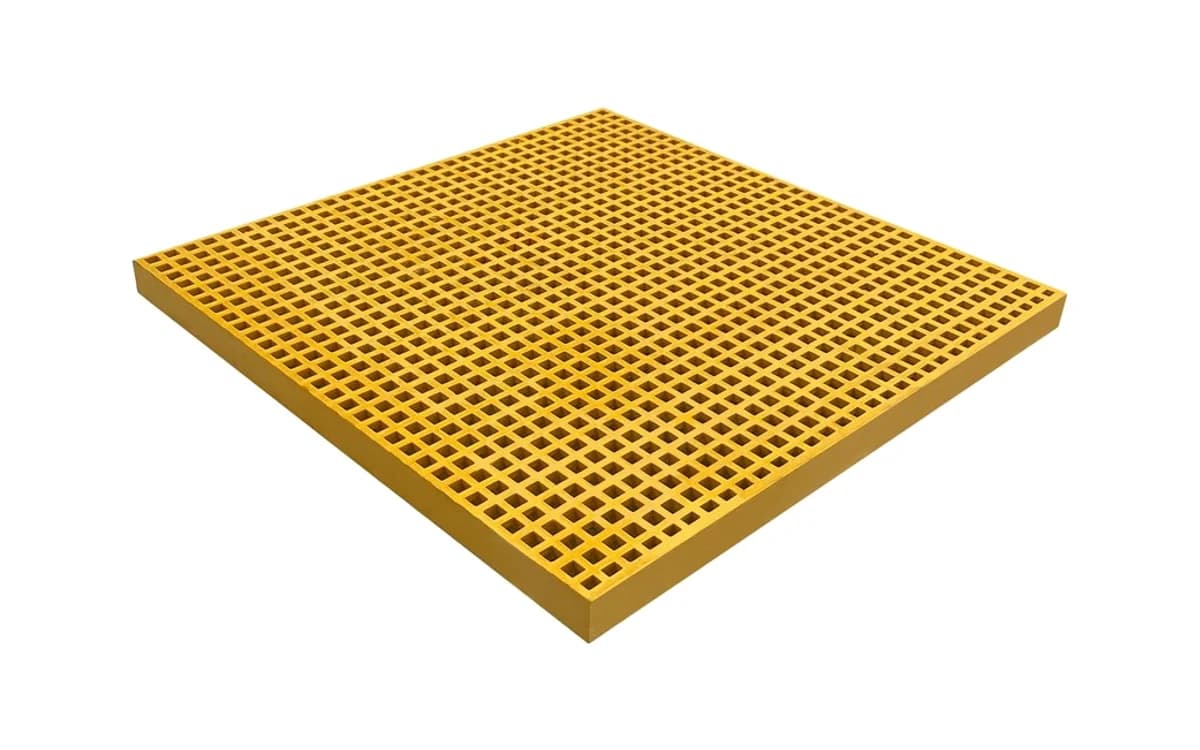
Open FRP grating gives rain and spray a path through the deck. Molded square or mini mesh can suit short panels with frequent utility cutouts; pultruded bearing-bar grating is a candidate when a defined one-way span governs. A closed FRP deck panel may suit a continuous walking surface, but its joints, slope and drainage need separate design.

For a floating dock, show how panels bear on the frame, how hold-downs fit the supports, and how the deck meets hinged gangways, cleats, service pedestals and removable access covers. Gangway slope, heel and wheel openings, wet slip resistance, edge protection and maintenance access all affect the finished route.

Where habitat rules apply, ask the permitting authority for the required light-transmitting deck area. Panel open area is only one input: joists, floats and service equipment also shade the water below. The open mesh still needs a load and accessibility check for the actual pier layout.

Bring to the specification

  • Gangway movement, transitions and berth-side clear width
  • Pedestrian, trolley and concentrated service loads
  • Mesh opening, wet slip surface and accessibility rules
  • Panel bearing, hold-downs, cutouts and permit conditions
02 · Coastal boardwalks

Coordinate the deck with the shoreline below it

Tidal trails, viewing platforms and waterfront promenades put public access above salt spray, windblown sand and sensitive ground or water.

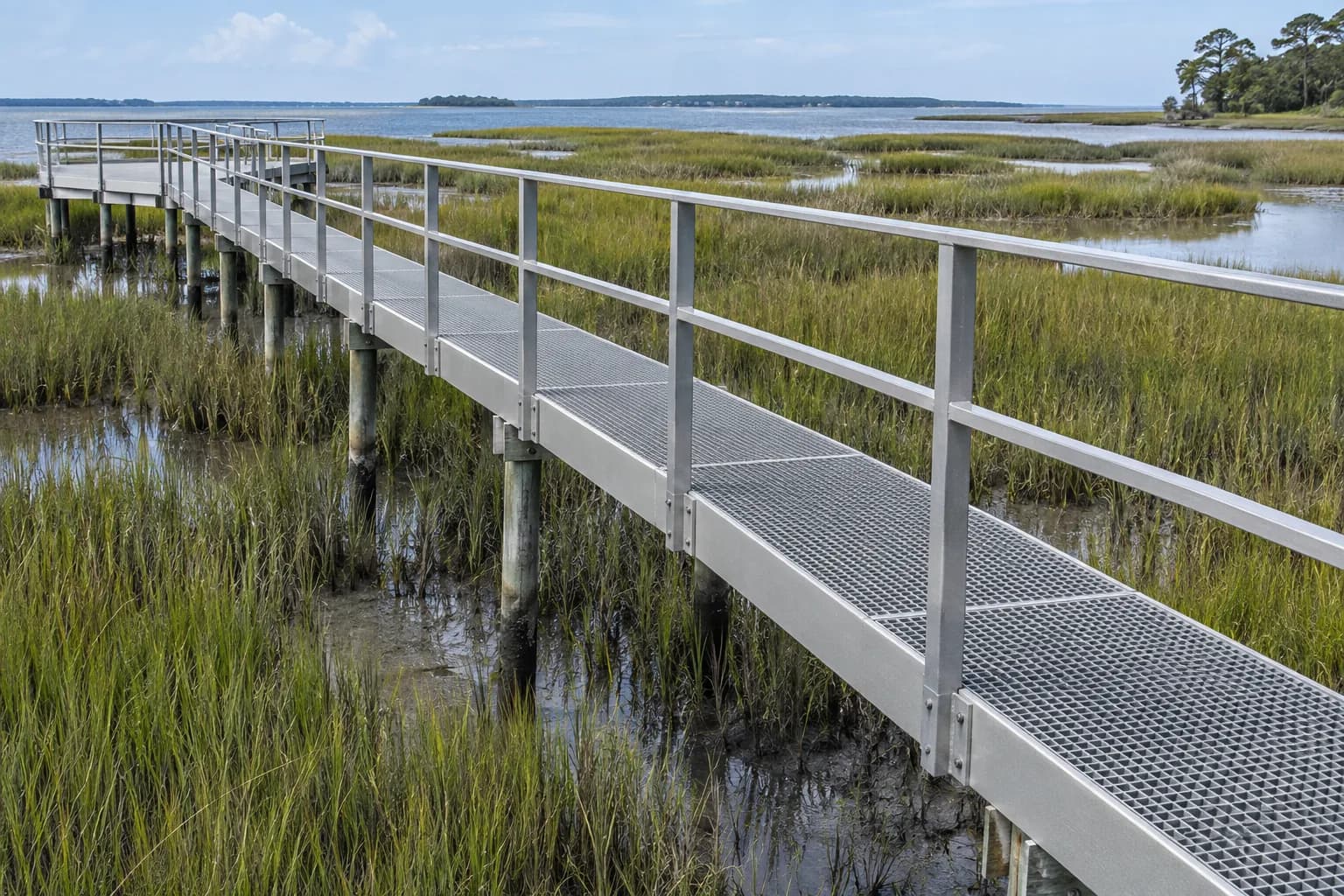
Open grating can shed water and allow some light through the walkway. The effect beneath a real boardwalk depends on its height, width, direction, support framing and surroundings, so habitat and permit requirements belong in the early layout.

Match the panel to the route: a public promenade may need smaller openings or a continuous surface where mobility aids, narrow wheels or dropped-object concerns govern. A maintenance-only branch may use a different mesh and access arrangement. On either route, check the grit surface, panel edges, transitions and replaceable sections.

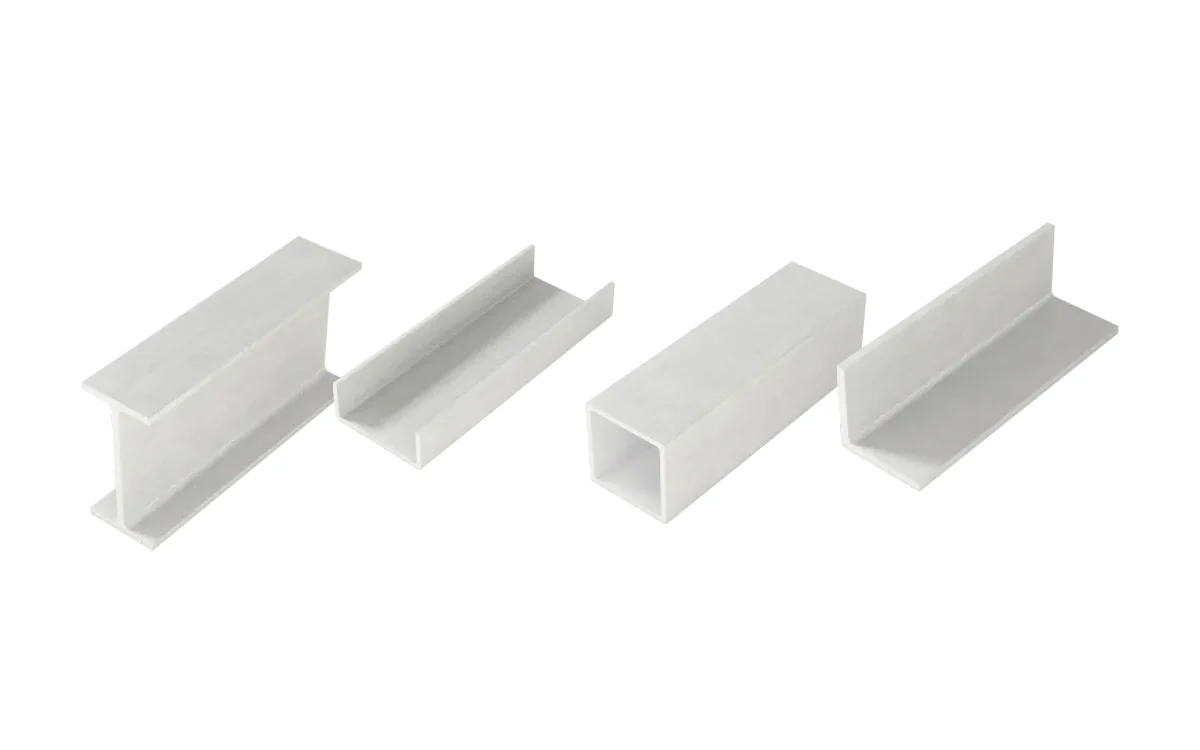
Pultruded beams, channels or tubes can form an engineered support frame; FRP handrail components can complete the edge. The project engineer must check wind, pedestrian loads, deflection, connections, foundations and any flood or wave action at the site.

FIG. 2 Coastal boardwalks
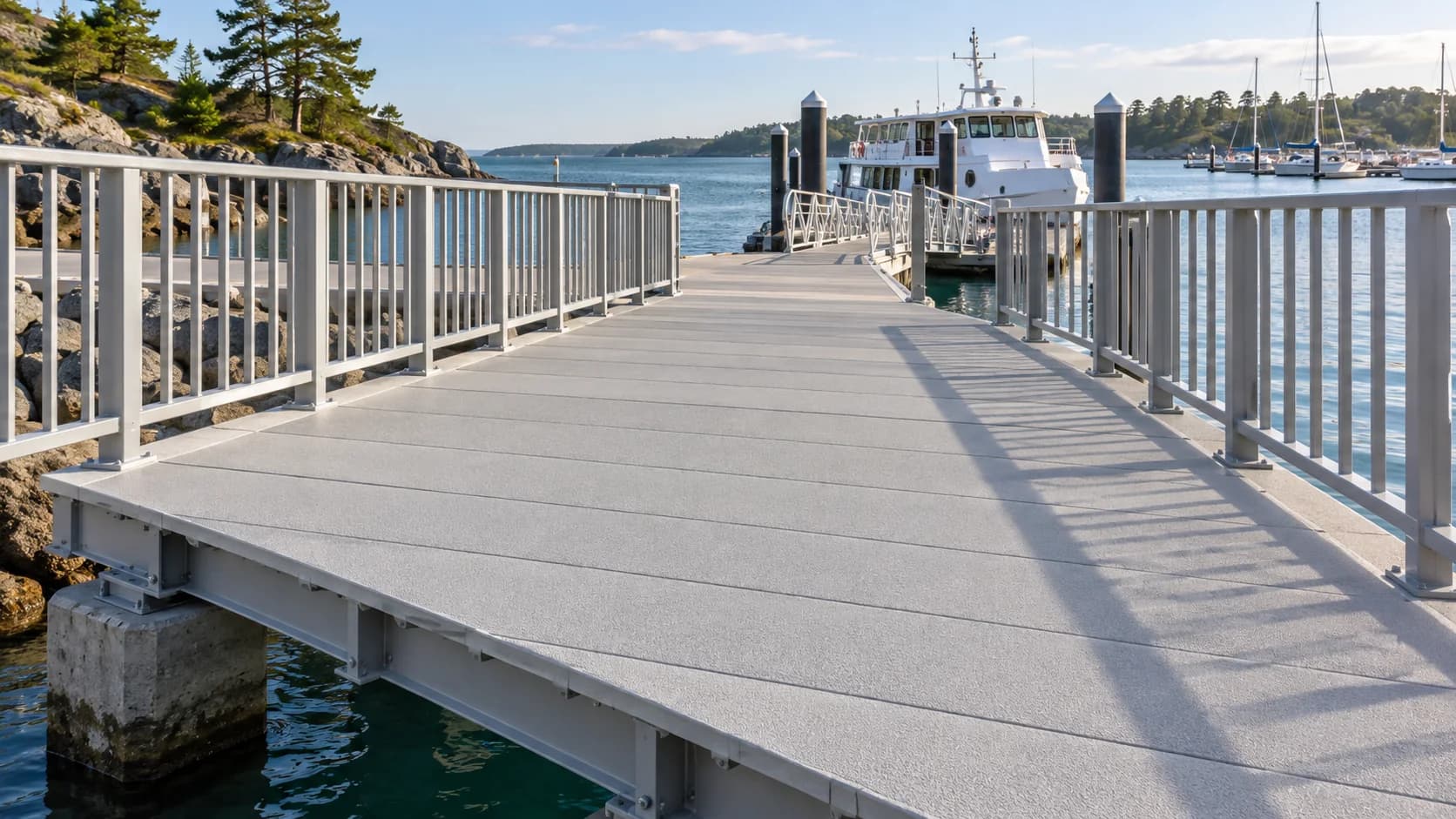
Raised coastal boardwalk with open fiberglass grating and edge rails beside a tidal shoreline

Bring to the specification

  • Public-access loads, wheel paths and permitted openings
  • Flood level, tidal splash, UV and cleaning exposure
  • Under-deck shading, supports and local habitat conditions
  • Guardrail loads, anchorage and replaceable deck details

03 · Offshore secondary access

Specify walkways around the actual hazard area

Offshore wind and energy facilities need routes to equipment, inspection points and service landings that remain usable in exposed, wet conditions.

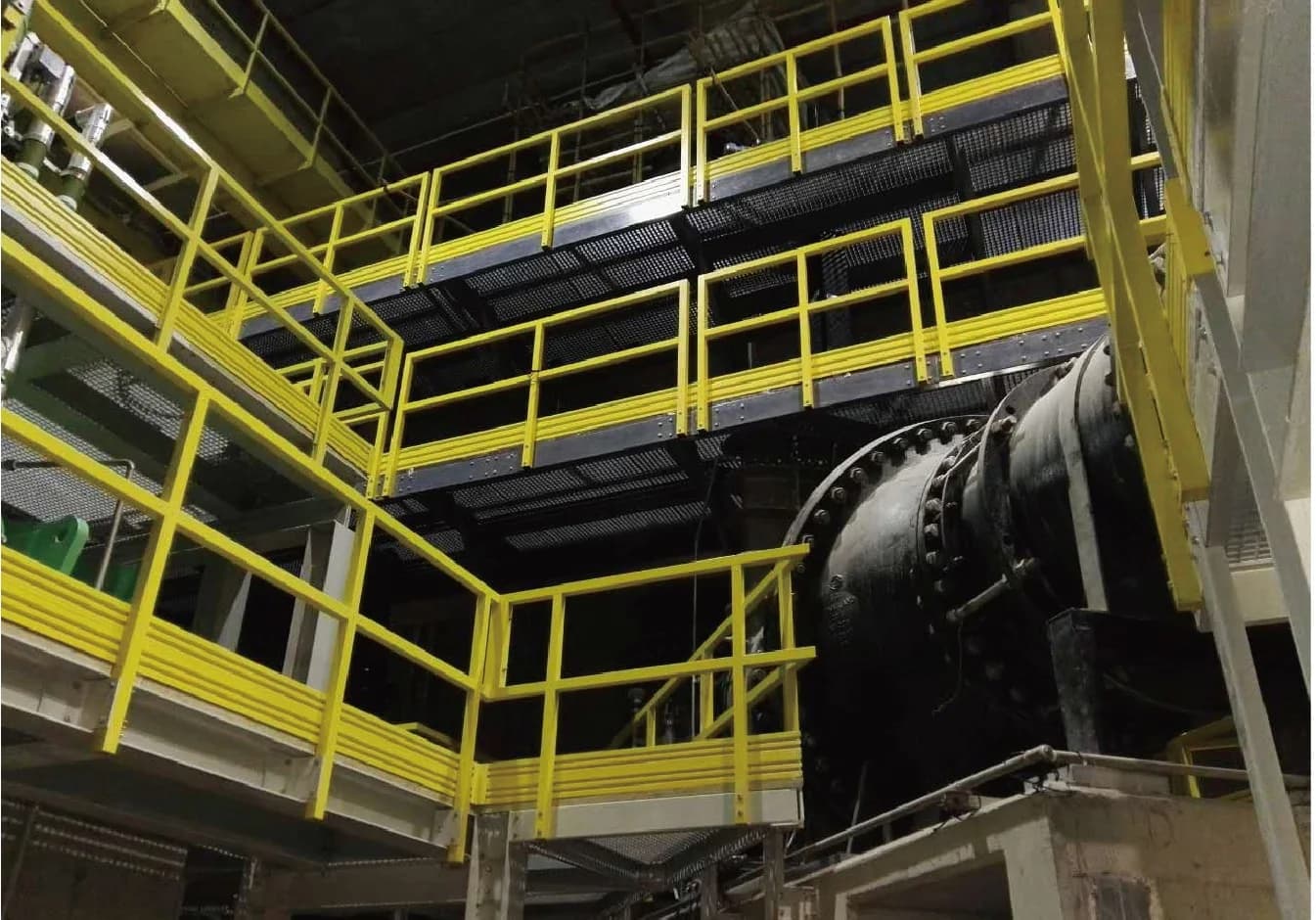
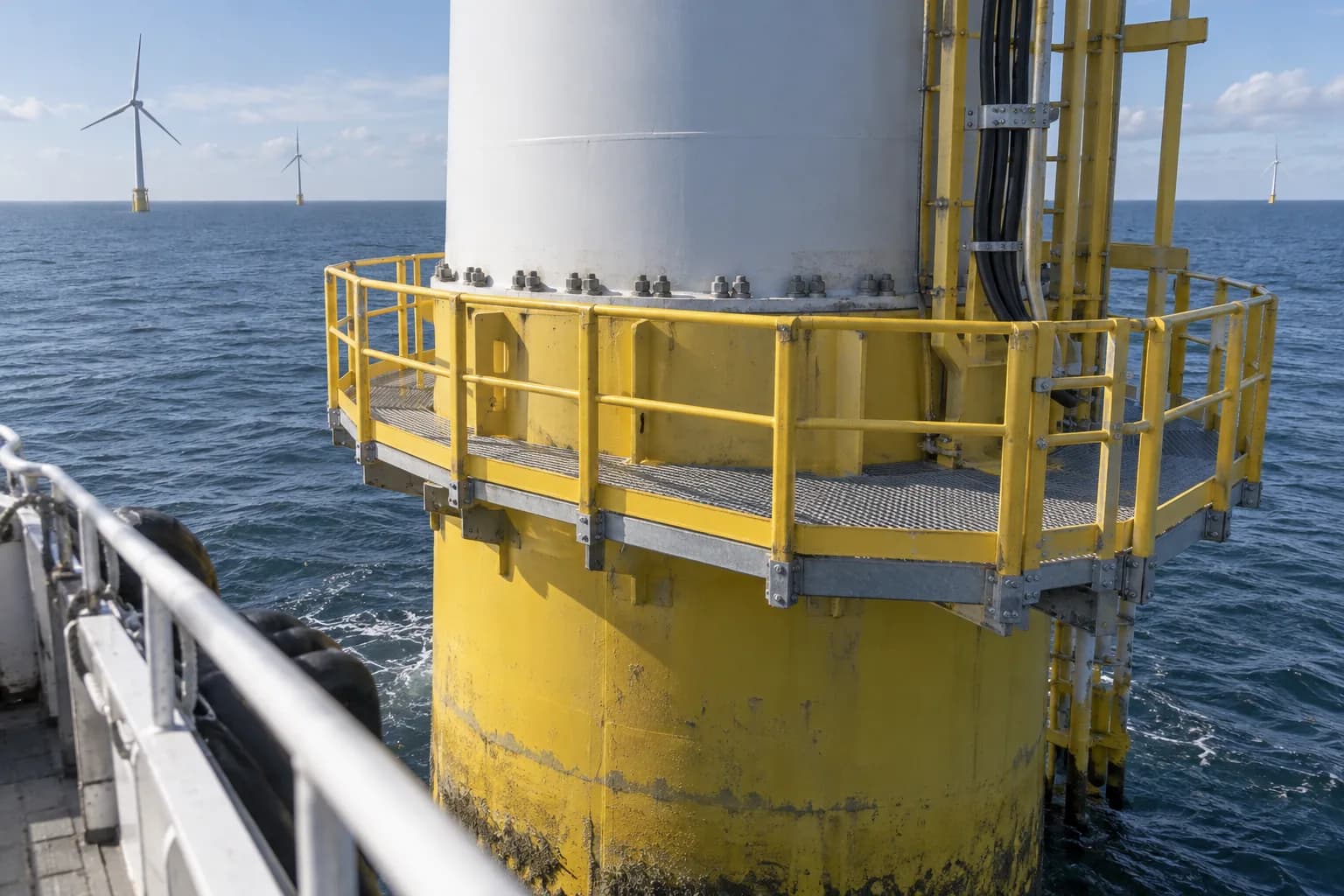
FRP grating, stair treads, ladders, handrails and pultruded members can be considered as a coordinated secondary access package. Identify the bearing direction and support spacing for each panel, then check personnel and equipment loads, deflection, fastening, dropped-object risk and the route to a safe exit.

Fire and blast exposure, emergency escape function and platform rules can govern material choice. A resin description or a generic flame-spread result does not approve an installed offshore assembly. Request evidence for the proposed product and have the platform designer or relevant authority review it against the project's acceptance basis.

On a vessel, a removable service grating or maintenance access member is a separate design case. Shipboard location, fire zone, flag-state and class requirements must be established before offering a part for that duty. Passenger spaces, primary escape routes and ship structures require their own approval path.

FIG. 3 Offshore secondary access
Offshore service platform with open fiberglass walkway grating, handrails and a ladder near equipment

Bring to the specification

  • Access function, personnel and equipment loading, escape route
  • Fire scenario and project or class acceptance basis
  • Wind uplift, vibration, support spacing and fixing inspection
  • Product-specific reports for the proposed resin and assembly

04 · Seawater & aquaculture

Keep pumps, tanks and feeding equipment accessible

Intake structures, pump stations and aquaculture service areas need removable access around pipes and equipment, often with frequent washdown.

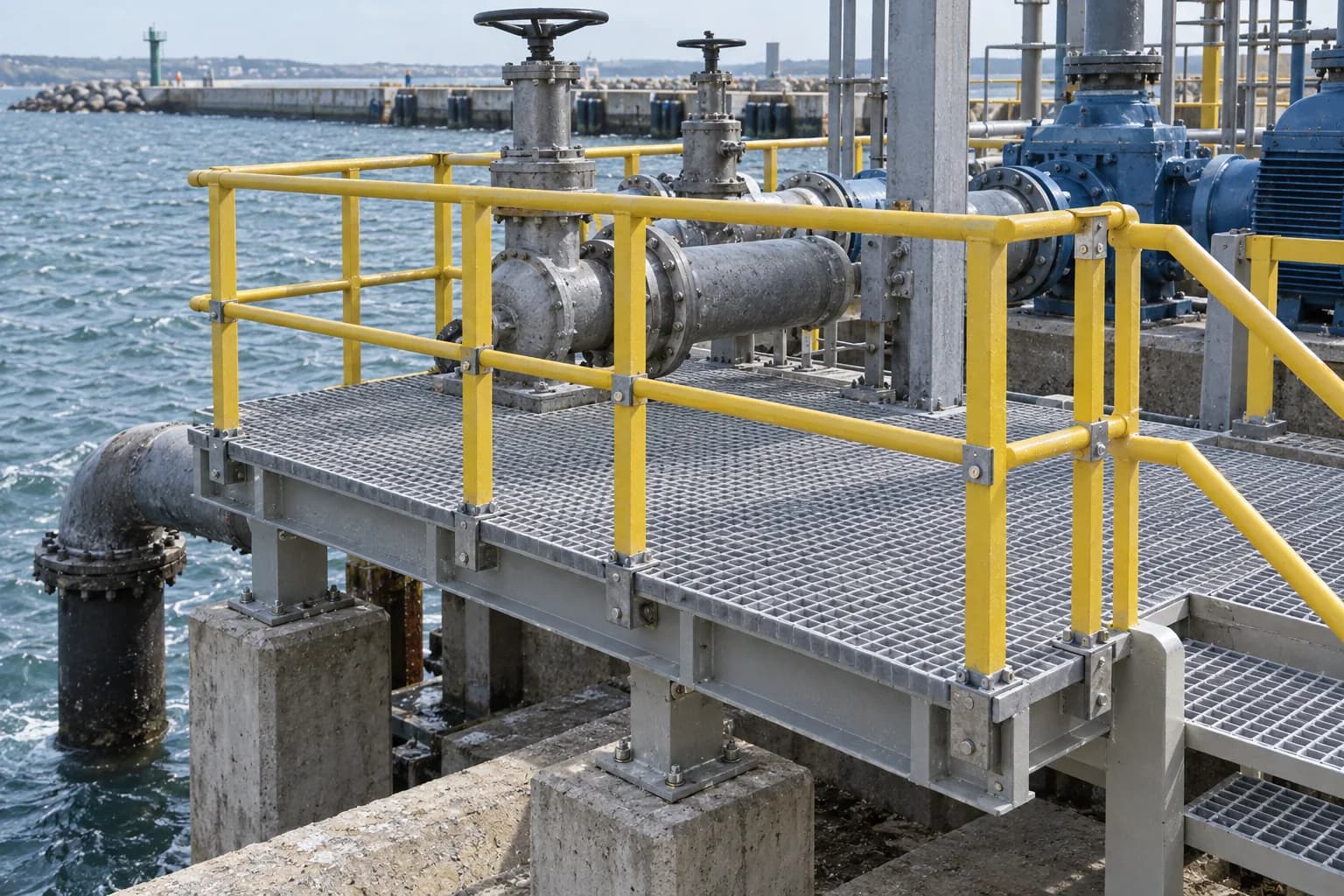
Molded grating is useful to evaluate where the plan contains multiple pipe penetrations or irregular panels; pultruded grating can be evaluated where one-way span or stiffness is the primary driver. Mark cutouts and lifting points on the panel drawing so each removable piece retains bearing and a defined hold-down pattern.

A complete access package may combine structural channels or beams, grating, stairs, ladders and handrails. Lay out valve reach, pump withdrawal, hose routes and safe cleaning access before choosing panel widths or post positions. Equipment handling loads need their own check; a pedestrian grating selection does not establish machine support capacity.

Specify the actual liquid and cleaning chemicals, concentration, temperature, immersion or splash frequency, outdoor exposure and fastener environment. Resin, surfacing veil, cut-edge sealing and metal hardware are then reviewed for the service conditions and documented in the approved order data.

FIG. 4 Seawater & aquaculture
Seawater pump service platform with fiberglass grating, structural supports and edge protection

Bring to the specification

  • Pipe penetrations, removable panels and maintenance clearances
  • Foot traffic versus equipment and lifting loads
  • Seawater, cleaning chemicals, temperature and UV exposure
  • Resin selection, cut-edge treatment and fastener material

Choose the component by its job

Molded grating, pultruded grating and closed deck panels are different constructions. Compare the proposed part with its supports, connections and surface treatment before selecting a fiberglass deck.
Design conditionProduct to evaluateCheck before release
Frequent cutouts or changing panel directionMolded gratingMesh opening, local bearing at cuts, surface and hold-downs
Defined one-way grating spanPultruded gratingBearing-bar direction, load table, deflection and support width
Continuous walking surfaceClosed deck panelsJoint load transfer, drainage, slip surface and edge closure
Framing and edge protectionStructural shapes and handrailsMember and connection loads, anchors, hardware and inspection access

Documents

  • Data sheetPDF · 3 MB

    FRP Profile Design Manual — DOC-PF-2026-EN Rev. B

    Issued by
    F1 Composite
    For
    Structural shapes

    Revision B (October 2026), generated from the website's catalog, laminate and design-basis data: EN 13706 E23 laminate values beside the grade minimums, section properties of all 114 catalog sizes, allowable uniform loads to the published LRFD screening basis, application guides, durability stated by resin formulation, fabrication and inspection. A preliminary-sizing reference, not a project approval or batch certificate; it supersedes the withdrawn Rev. A.

  • CertificatePDF · 142 KB

    EPD & Carbon Footprint — Pultruded GFRP Composite Profiles

    Issued by
    CABR
    For
    Standard profiles

    Environmental Product Declaration and product carbon footprint analysis for F1 Composite pultruded GFRP composite profile products, with 1 m² functional unit. Calculation reference CABR-CFC-01(02)-2025(20030)1, cradle-to-gate 33,934.34 g CO₂e/m², distribution 254.59 g, cradle-to-grave 36,099.32 g. Standards: GB/T 24025-2009 (ISO 14025-aligned Type III EPD), GB/T 32161-2015, ISO 14067, PAS 2050. Issued by China Academy of Building Research Co., Ltd. (CABR) Certification Center on April 30, 2025.

  • CADOn request

    Standard Profiles — CAD Library

    Issued by
    F1 Composite
    For
    Standard profiles

    2D and 3D CAD models for all standard I-beam, channel, angle, and tube profiles.

  • CatalogOn request

    Product Catalog 2024

    Issued by
    F1 Composite
    For
    All products

    Complete catalog of standard pultruded FRP profiles with dimensions, properties, and ordering information.

  • CertificateOn request

    ISO 9001:2015 Certificate

    For
    All products

    Request the current quality-management certificate holder, validity and scope for your proposed supply.

  • CertificateOn request

    CE Declaration of Performance

    For
    All products

    Request product-specific performance and applicable conformity documentation; confirm the intended use and assessment route.

All downloads and CADTest reports and their scope

Questions buyers ask

Does FRP corrode in seawater?

Glass FRP does not rust. The resin and the cut edges still have to suit the immersion or splash, so vinyl ester and sealed edges are usual in marine work; confirm the laminate for the exposure.

Which FRP deck is best for a marina finger pier?

Start with the pier's clear span, support layout, pedestrian or trolley loads, allowable deck openings, wet slip requirement and local overwater permit. Molded grating, pultruded grating and closed deck panels solve different layout problems; select the panel and its fixings as one assembly.

Does open FRP grating satisfy a dock light-transmission permit?

An open panel may help transmit light, but compliance depends on the local permit and the complete dock. Framing, floats and equipment can block light below a panel. Submit the proposed panel open area and full overwater layout for permitting review.

Can a marine FRP grating carry carts, equipment or vehicles?

Only if it is designed for them. Wheel and leg loads can govern differently from pedestrian loading, and pedestrian grating is not a vehicle deck. Specify the load and its footprint, the span and support conditions, and request load and deflection data for the exact grating configuration.

Which fire rules and approvals apply offshore or on a ship?

They depend on the location, the fire scenario and the governing project, flag-state or class rules; no general offshore or shipboard approval is claimed here. State them in the RFQ so the resin, for example phenolic or fire-retardant vinyl ester, and the test route can be agreed, and have the responsible designer or authority review the finished assembly.

Which fasteners suit marine FRP structures?

Stainless A4-316 bolts with oversized washers, or FRP threaded rods and nuts where a non-metallic joint is wanted. Isolate dissimilar metals and follow the connection detailing for the profile.

Quote FRP for marine & offshore

Send a marked plan with the loads, exposure and approvals that apply, and ask for load and deflection data for the selected panel and span. We reply within one business day; a formal quotation follows once the specification and delivery are reviewed.

Layout and spans
A marked plan of each deck, support, stair, ladder and rail, with spans, support widths, openings and clearances.
Loads
Pedestrian, cart, equipment, wheel and maintenance loads stated separately, plus moving dock joints and flood or wave action.
Exposure and permits
Immersion, splash, salt air, UV, temperature and cleaning media; slip, opening, accessibility and overwater permit requirements.
Approvals and supply
Fire, offshore, flag-state or class rules; resin, color, fixings, reports, quantities and destination.
Get a quoteWhatsApp