 FRP windows and doorsPultruded window and door profiles, and finished units.View the product
 Case study· Construction
Qinling Station, Antarctic Ross Sea — GFRP Window Project
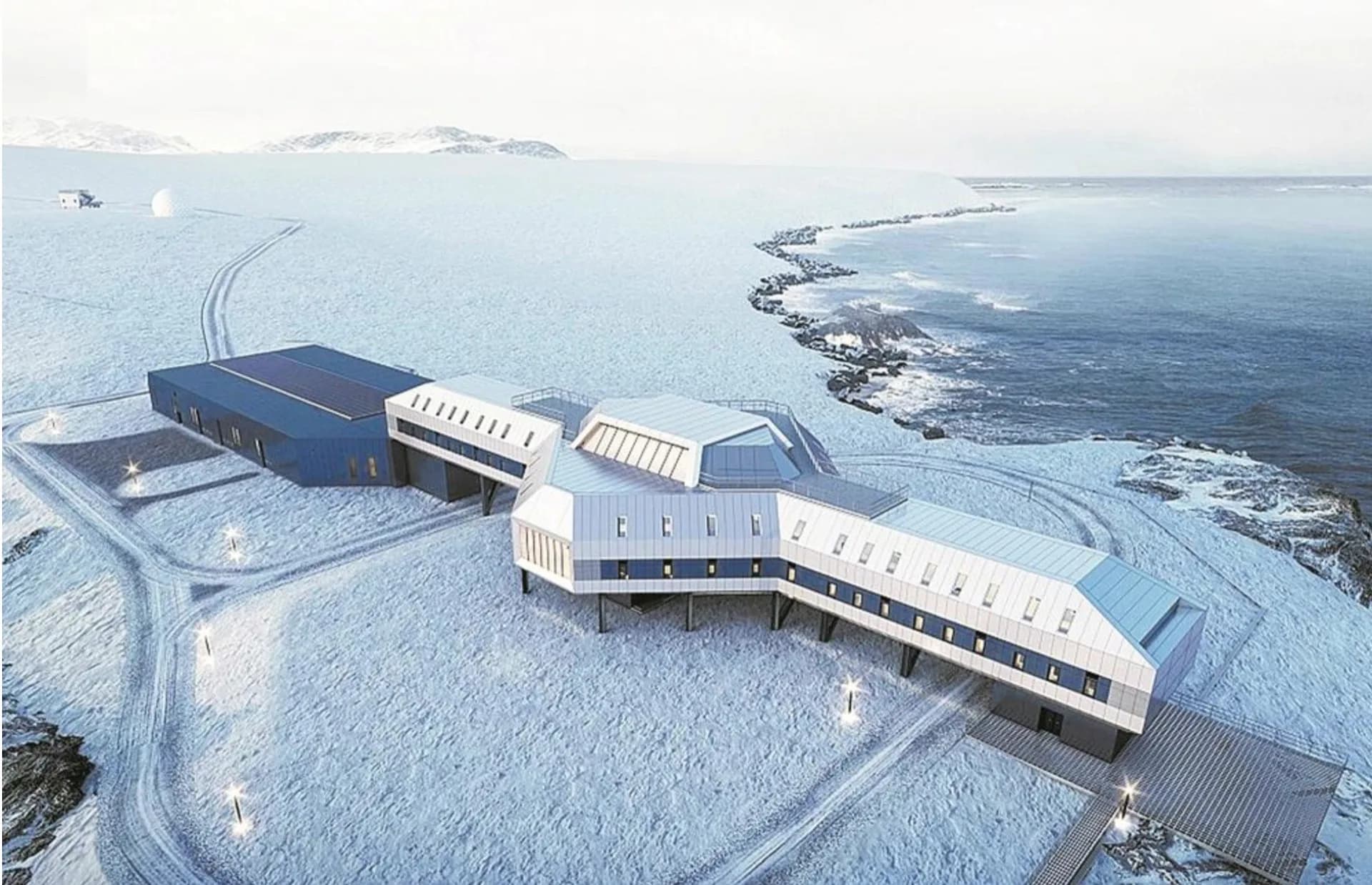
90-series GFRP windows with insulated glazing for Qinling Station, China's research station on the Ross Sea, opened in February 2024.
FIG. 1 Qinling Station
The challenge
Qinling Station, China's research station on the Ross Sea, opened in February 2024. Its windows had to cope with Antarctic conditions and a short shipping season: the project account gives a design low of about −60 °C and winds up to 45 m/s. Those site conditions go well beyond the climate zone covered by the window's PHI component certificate.
What F1 supplied
The windows used 90-series GFRP frames with insulated glazing, assembled in the factory. The related document is PHI component certificate 2491wi03 for the Fengdu Passive GFRP 90 Series, issued to Chongqing Xianju New Material Co., Ltd., a FengDu subsidiary. It certifies the window for the cool-temperate climate zone at efficiency class phB, with Uw 0.78 W/(m²·K) and Ug 0.70, valid until 31 December 2026. It is not an Arctic rating and does not cover the station as a whole. For a similar project, ask for the drawings, assembly tests and acceptance records of the configuration actually supplied.
Results
Qinling is F1's reference for GFRP windows in extreme cold. The PHI certificate on its own does not prove Antarctic wind resistance, service life or fuel savings for every installed unit; those need project-specific tests and supply records.
- Component efficiency class
- phB
- Design Low
- −60°C
- Katabatic Wind
- 45 m/s
- PHI Component ID
- 2491wi03
Products used 1 product family
- FRP windows and doorsPultruded window and door profiles, and finished units.View the product
Construction industryAll pultruded FRP profilesFRP vs steel and aluminumWhat is FRP?All case studies
Certificates and downloads
- CertificatePDF · 0.4 MB
PHI Certificate
- Issued by
- Passive House Institute
- Valid until
- For
- FRP windows and doors
Passive House Institute component certification — 90-series GFRP, Component-ID 2491wi03, phB efficiency class for the cool-temperate climate zone.
Discuss a similar project
Tell us how your project differs from this one: the site, the loads and the requirements. We reply within one business day; a formal quotation follows once the specification and delivery are reviewed.
- Your project
- What the parts do and where they are installed, with drawings or photos.
- Site conditions
- Loads, spans, chemicals, climate and UV exposure at your site.
- Requirements
- Codes, fire, thermal or electrical requirements and the documents you need.
- Quantities and delivery
- Quantities, destination and program.