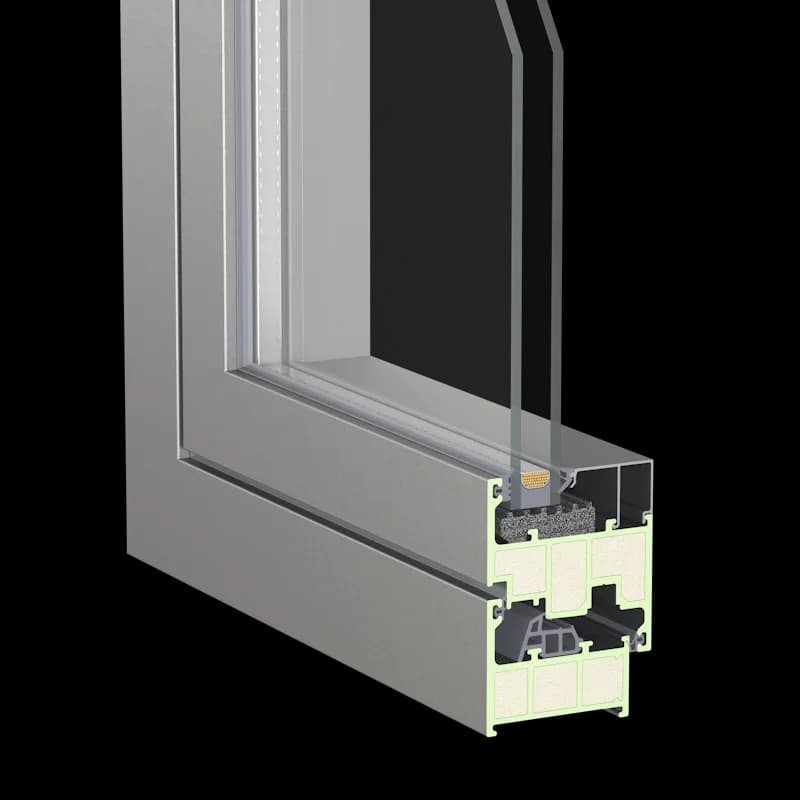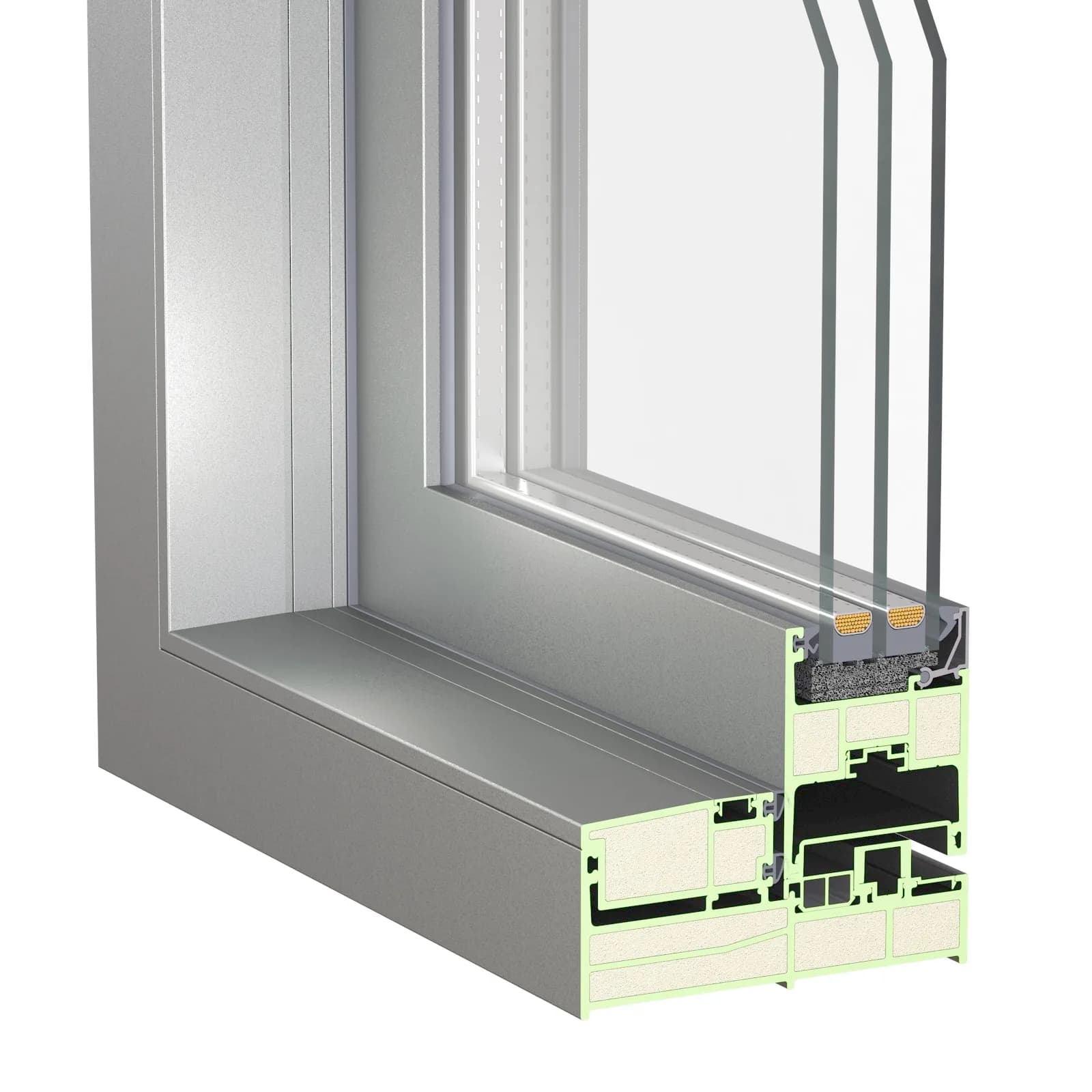
Most articles about the "FRP window profile market" open with a market-size figure and a compound annual growth rate. We are not going to do that. For a niche segment of the fenestration industry that no analyst service tracks on its own, those numbers would be estimates stacked on estimates. What a fabricator, specifier, or procurement team actually needs is a working map: what this market sells, who sells it, why demand is growing, and how to qualify a supplier. That map can be drawn from verifiable facts.
One Market, Two Businesses
The first thing search results blur is that "FRP window profiles" covers two distinct businesses with different buyers.
Profile (lineal) supply. A pultruder manufactures the window profile set (frame, sash, mullion, transom, glazing bead) and sells it to window fabricators, who cut, join, glaze, fit hardware, and sell finished windows under their own brand. The buyer is a manufacturing business; the purchase decision runs on dimensional consistency, tooling economics, resin specification, and continuity of supply. This is the business the phrase "window lineals" refers to in North America.
Finished window supply. The pultruder (or a window company that owns pultrusion lines) assembles the profiles into complete, glazed, tested window units. The buyer is a developer, contractor, or distributor; the decision runs on certified whole-window performance (U_w values, air-tightness classes, structural test reports) and delivered cost.
Some suppliers do only one of these. A few, including F1 Composite, run both models from the same profile set, which matters for buyers because the certification evidence from the finished-unit business (EN 14351-1, NAFS, PHI component certification) also de-risks the profile-supply relationship: the lineals you are buying are the same sections the supplier certifies windows with.
There is also a third, adjacent product this market includes: pultruded fiberglass reinforcement cores that replace galvanized steel inserts inside uPVC window chambers. It is a component business that sells into vinyl window systems rather than competing with them.
What Is Actually Pulling Demand
Demand for FRP window profiles is code-pulled, not fashion-pulled. Four mechanisms are verifiable:
Energy codes have moved below aluminum's comfort zone. Germany's GEG 2024 and the BEG funding thresholds, Canada's BC Energy Step Code upper steps, ENERGY STAR Northern-zone criteria, and the UK's Part L revisions all set whole-window U-values that thermally-broken aluminum reaches only with expensive multi-chamber break assemblies, and Passive House targets (U_w ≤ 0.80 W/m²·K for cold-climate certification) sit below what most aluminum systems reach at all. A pultruded frame conducts heat at roughly 0.3 W/m·K against aluminum's 160, so the FRP frame starts where aluminum systems strain to arrive.
uPVC's physical limits cap its share of the performance segment. Above roughly 1.2 m spans, uPVC needs internal steel reinforcement that re-introduces a thermal bridge; dark frame colors on sun-exposed elevations push uPVC toward its softening range; and deep-cold embrittlement makes severe-cold codes cautious about it. Each limit hands the performance tier of the market to stiffer, more temperature-stable frame materials.
The passive house pipeline is growing from a small base. Certified-component fenestration (the segment where FRP frames are structurally advantaged) tracks the growth of passive house and near-zero-energy construction in Germany, the Nordics, Canada, and the northern US. The Passive House Institute's public component database is the verifiable proxy: the number of certified window systems, including fiberglass entries such as F1's Component Certificate 2491wi03 at the phB efficiency class for the cool-temperate climate zone, grows year over year.
Trade friction on competing frame materials. Aluminum extrusions face anti-dumping duties into the EU and, for Chinese material, Canada's 25% surtax on steel and aluminum: measures that do not apply to FRP profiles. This does not create demand by itself, but it shifts relative landed costs at the margin where frame-material decisions are made.
The Supplier Landscape
Supply is more concentrated than the demand story would suggest, because the barriers are real (more on those below). The landscape, described rather than ranked:
North American lineal specialists. Tencom (Ohio) is known for custom fiberglass window and door lineals; Creative Pultrusions (Pennsylvania, part of Creative Composites Group) runs fenestration profiles inside a broad pultrusion program; Inline Fiberglass (Toronto) both sells lineals and manufactures its own finished fiberglass windows. These are established, capable manufacturers serving primarily the North American fabricator base.
Vertically integrated window brands. Marvin (Ultrex fiberglass line) and Pella (Impervia line) pultrude for their own finished-window brands rather than selling profiles. They shape the consumer fiberglass-window market but are not lineal suppliers a fabricator can buy from.
European suppliers. Europe's pultrusion industry is strong in structural profiles, but dedicated window-lineal supply is thinner than in North America; much of Europe's high-performance window market runs on timber-aluminum hybrids and premium uPVC instead. This is one reason certified fiberglass systems imported into the EU compete on performance rather than against entrenched local FRP suppliers.
Factory-direct exporters from China. F1 Composite supplies a nine-series fenestration range (50–140 mm nominal frame depths) through separate system-profile and finished-unit purchasing paths. Match evidence, including the configuration-specific PHI Component 2491wi03 certificate, to the offered assembly and destination requirements; confirm the delivery term in the quotation. For a fuller like-for-like evaluation against the North American lineal suppliers, see our comparison page.
The Materials Story Inside the Market
Within the market there is a quiet materials migration worth tracking. The volume tier runs on polyester and vinyl ester resins: proven, economic, fully adequate for most residential systems. The performance tier is moving toward polyurethane pultrusion (GFRP-PU): higher transverse strength where hardware screws and corner joints load the profile, thinner walls and higher glass content for slimmer sightlines, and better deep-cold impact behavior. Buyers evaluating suppliers for passive-house or severe-cold programs should ask specifically which resin system the quoted profile runs, because "FRP window profile" spans both tiers.
Why Supply Stays Concentrated: The Real Barriers
Three barriers keep the supplier list short, and they are the same three things a buyer should probe:
Tooling. Every profile in a window system needs its own pultrusion die, and a complete system is a dozen or more dies. That is a capital commitment per system, which is why most pultruders quote windows as custom programs rather than stock catalog items.
Certification. A window system without EN 14351-1 / NAFS / PHI evidence is a commodity; with it, it is a specifiable product. Building the certification stack takes tested assemblies, accredited labs, and time, and most lineal-only suppliers leave that burden with the fabricator.
Fabricator qualification cycles. A window fabricator switching profile suppliers re-qualifies its whole production line: corner joining, gasket fit, hardware screw retention, finished-unit testing. That switching cost cuts both ways: it protects incumbents, and it means a new supplier must make qualification cheap and evidence-rich to win the business.
What Buyers Should Verify (Instead of Trusting Market Copy)
If you are entering this market as a buyer, the verification list follows directly from the barriers:
1. Dimensional consistency, in writing. ASTM D3917 tolerance class on the drawing, batch mill certificates, and a first-article dimensional report against the die drawing, before production release, not after. 2. The certification stack, at the right level. Component-level (PHI, EN ISO 10077-2 profile data) and unit-level (EN 14351-1, NAFS) evidence, matched to whether you are buying profiles or finished windows. 3. Resin system by name. Polyester, vinyl ester, or polyurethane: specified per profile, not per brochure. 4. A staged qualification path. First-article run, third-party inspection (SGS/BV) if importing, then production volumes. Any supplier confident in run-to-run repeatability will agree to this structure readily.
The FRP window profile market rewards exactly one kind of participant on each side: suppliers who carry verifiable evidence, and buyers who ask for it. Fabricators can compare series, sections and documents on our fiberglass window and door profiles page.