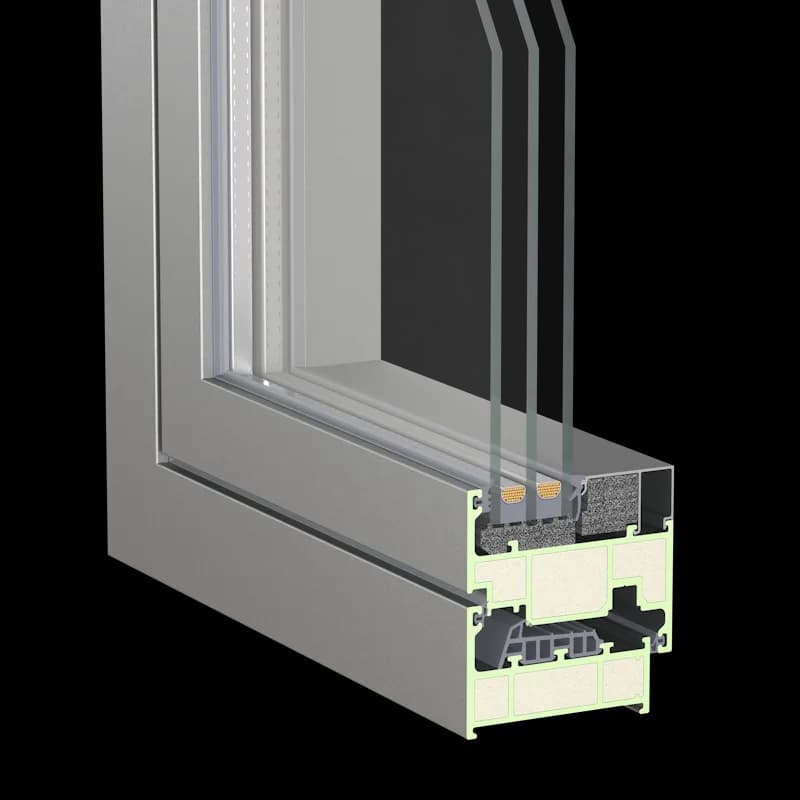
 TechnologyPolyurethane pultrusion windowsWhy the PU resin in our window profiles allows thin walls and tough frames, and what PHI certificate 2491wi03 covers.
Germany
FRP passive house windows for German projects
Pultruded fiberglass (GFK) window frames for Passivhaus, Effizienzhaus and GEG projects, with PHI certificate 2491wi03 (Uw 0.78, phB) from the Passive House Institute in Darmstadt. FRP frames fall outside the EU anti-dumping duties on Chinese aluminum and outside CBAM.
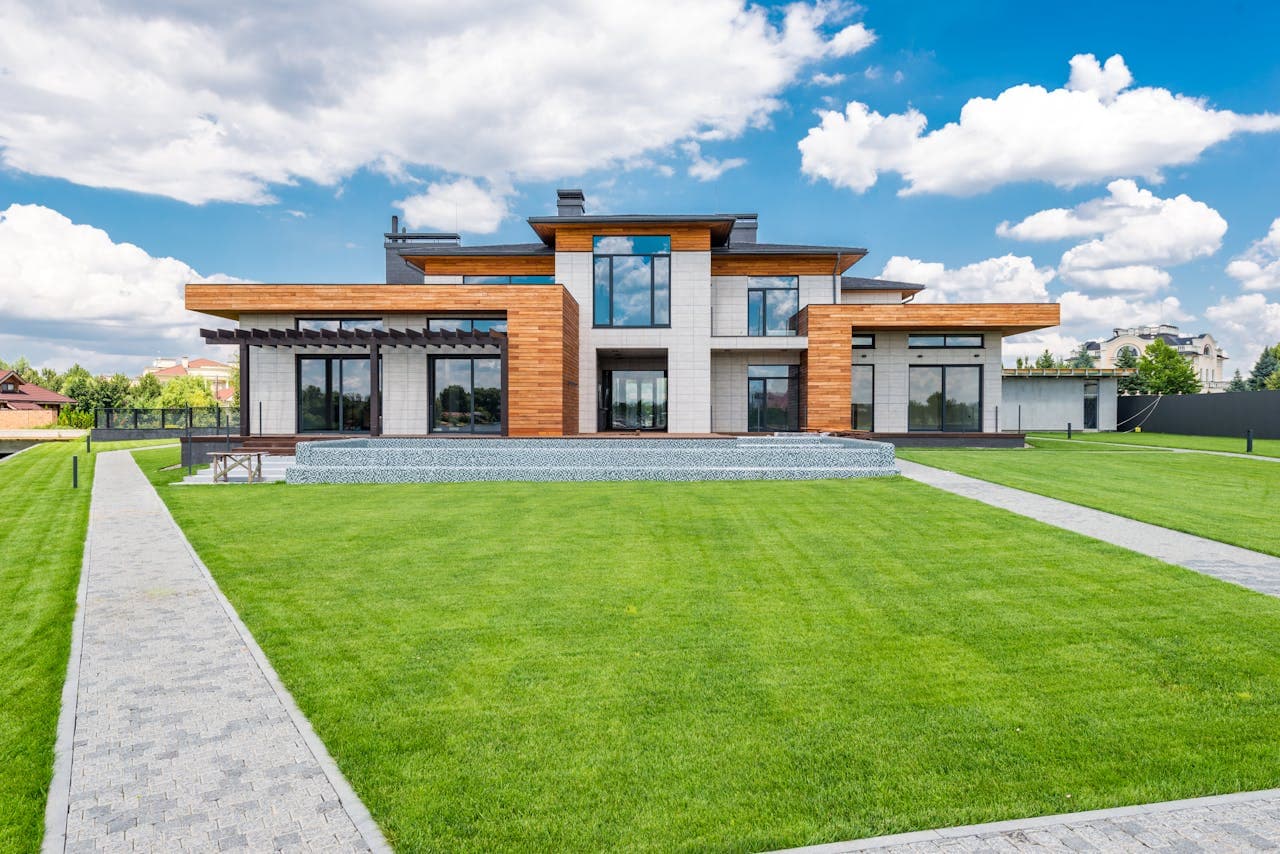
FIG. 1 Passive house in GermanyIllustrative photo
Why FRP frames suit German energy targets
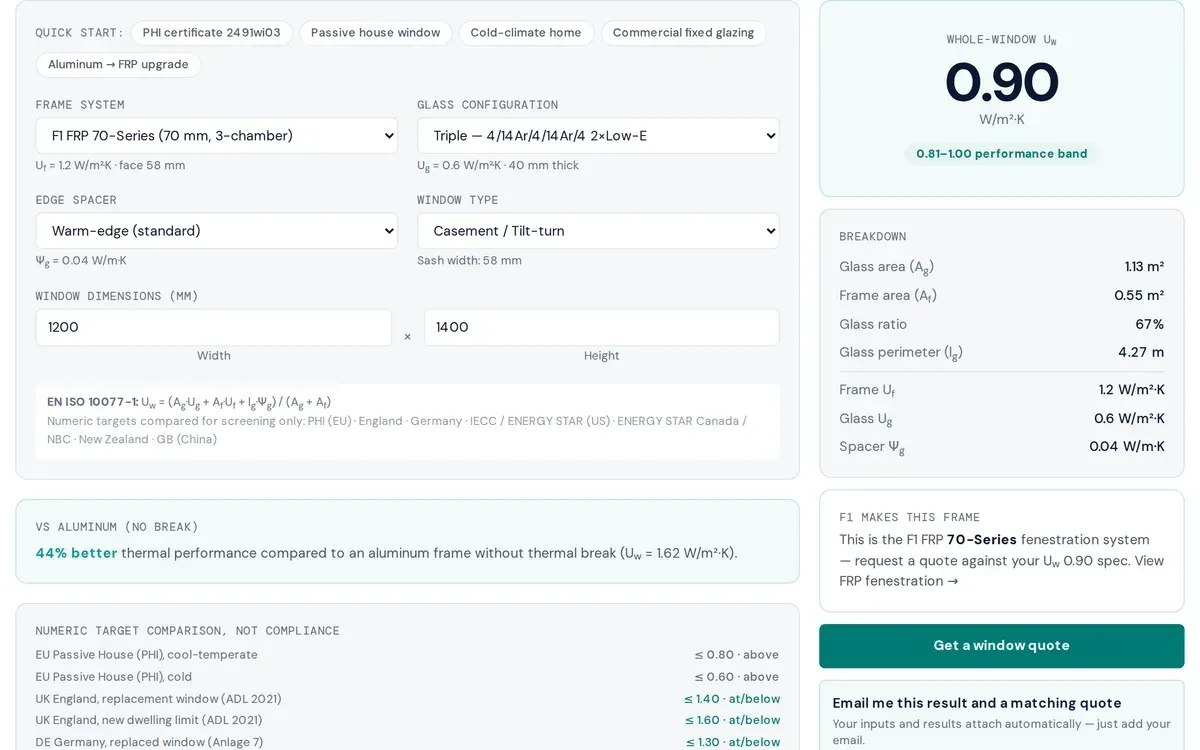
German energy law keeps raising the bar for windows. The GEG reference building assumes a window Uw of 1.3 W/m²·K, BEG funding for replacement windows asks for Uw ≤ 0.95, and Passivhaus and Effizienzhaus 40 projects usually aim below 0.80. Much of that is decided at the frame: thermally broken aluminum needs very high-performance glazing to get there, and larger uPVC sashes carry steel reinforcement that conducts heat.
A pultruded FRP (GFK) frame conducts about 0.3 W/m·K of heat, against about 160 for aluminum, so it needs no metal thermal break. In its certified configuration our 90-series window reaches Uw 0.78 W/m²·K, confirmed by PHI component certificate 2491wi03 (phB class) from the Passive House Institute in Darmstadt.
Trade costs are worth checking too. Chinese aluminum extrusions carry EU anti-dumping duties of 21.2–32.1% (Implementing Regulation (EU) 2021/546), and since January 2026 CBAM charges for the embedded carbon of imported aluminum and steel goods, including aluminum window frames. Pultruded FRP is a glass-fiber composite, so neither applies to it under current rules. Normal EU duty and 19% import VAT are itemized in the DDP price.
German projects choose the supply model: complete factory-glazed window units, including tilt-and-turn (Dreh-Kipp) openings, or pultruded profile sets for a German window fabricator to assemble. Frames can be powder coated with AAMA 2604 / 2605 systems in RAL colors.
CE, GEG, BEG and Passive House documents
What a German specification usually asks of the window, and the document we supply for each requirement.
| Requirement | German or EU standard | What F1 provides | Documentation |
|---|---|---|---|
| CE marking | EN 14351-1 (windows and external doors) | Air, water and wind type testing per project | Test reports and declaration of performance on request |
| Thermal calculation | EN ISO 10077, DIN 4108 | Uw 0.78 W/m²·K (90-series, certified size) | Calculation on request |
| Passive House thermal | PHI component certificate | Uw 0.78, certificate 2491wi03, phB | PHI certificate (published) |
| GEG reference building | Reference window Uw 1.3 | 0.78 in the certified configuration | Project U-value calculation |
| BEG window funding | Replacement windows Uw ≤ 0.95 | 0.78 in the certified configuration | U-value calculation on request |
| Trade costs | EU anti-dumping duties (aluminum), CBAM (aluminum, steel) | FRP falls outside both under current rules | HS classification in the quote |
| Architectural coating | AAMA 2604 / 2605 | Powder coating in RAL colors | Coater report on request |
From FengDu's plants to your German site
One quote covers the frames, freight, EU duty and import VAT, so the landed cost is known before the order.
Step 1
RFQ and DDP Germany quote
Send a drawing or window schedule, the quantity and the delivery region. We reply within one business day, then quote DDP in EUR or USD with EU duty and 19% import VAT itemized, the HS classification and an estimated delivery date.
Step 2
Production and documents
Window projects take 6–12 weeks in FengDu's production network. The document set includes PHI component certificate 2491wi03, plus EN ISO 10077 calculations, coating reports and CE type-test reports on request for your configuration.
Step 3
Ocean freight and DDP delivery
Ocean transit takes about 30–35 days to Hamburg, Bremerhaven or Rotterdam. Inland sites such as Munich, Frankfurt, Berlin and the Ruhr are served DAP by truck or rail from the port. The quote gives an estimated delivery date for your site.
Frequently asked questions
Are FRP windows from China subject to EU anti-dumping duties or CBAM?
Not under current rules. The EU's anti-dumping duties on Chinese aluminum extrusions (Implementing Regulation (EU) 2021/546, 21.2–32.1%) apply to aluminum profiles, so aluminum window systems made from Chinese extrusions carry that cost. CBAM, in its definitive period since January 2026, charges for the embedded carbon of imported iron, steel and aluminum goods, including aluminum doors, windows and frames (CN 7610) and steel ones (CN 7308 30). Pultruded FRP fenestration is a glass-fiber composite, classified under HS 3925.20 or 7019 depending on the configuration, so it falls outside both. We confirm the treatment for the classification we use when we quote. Normal EU customs duty and Germany's 19% import VAT (Einfuhrumsatzsteuer) still apply and are itemized in the DDP Germany price.
Which German and EU standards do F1 Composite FRP windows follow?
Windows placed on the EU market carry CE marking under EN 14351-1 with a declaration of performance. Type testing for air permeability, watertightness and wind-load resistance (classified to EN 12207, EN 12208 and EN 12210) is arranged per project at an accredited European laboratory such as ift Rosenheim. Thermal performance is calculated to EN ISO 10077. The published Passive House document is PHI component certificate 2491wi03 for the 90-series window (Uw 0.78 W/m²·K, phB class), issued by the Passive House Institute in Darmstadt.
Do F1 FRP windows meet GEG, BEG funding and Passivhaus targets?
The certified 90-series configuration does. Its Uw of 0.78 W/m²·K (PHI 2491wi03, phB) is below the GEG reference window value of 1.3, the BEG threshold of 0.95 for replacement windows and the PHI criterion of 0.80 for the cool-temperate climate zone. The whole frame insulates (about 0.3 W/m·K, against 160 for aluminum), with no metal thermal break and no steel reinforcement as in uPVC frames. GEG compliance and BEG funding are assessed for the building or the measure, so confirm the Uw for your window sizes and glazing in the energy calculation.
What are the lead times and shipping options to German sites?
Window projects take 6–12 weeks in production from an approved order, depending on the series, finish and quantity. Ocean transit takes about 30–35 days to Hamburg, Bremerhaven or Rotterdam. Inland sites such as Munich, Frankfurt, Berlin and the Ruhr are served DAP by truck or rail from the port of entry. The quote gives an estimated delivery date for your site. Samples and replacement parts can go by air freight at extra cost.
Can F1 supply EUR-priced, DDP quotes for German projects?
Yes. We quote DDP to your German site in EUR or USD, with EU customs duty and 19% import VAT itemized so your quantity surveyor sees the landed cost up front. We state the HS classification (3925.20 or 7019, depending on the configuration), our EU customs broker handles clearance, and supply-chain traceability documents ship with each order.
Does F1 supply profiles to German window fabricators, or only finished windows?
Both. For Passivhaus and Effizienzhaus projects that want the glazing and gaskets fitted in the factory, we ship complete GFRP-PU window units, including tilt-and-turn (Dreh-Kipp) openings. For Germany's window-fabrication trade (Fensterbau), we supply the pultruded profile set (frame, sash, mullion, transom and glazing bead) with EPDM gaskets and fabrication drawings, so a German fabricator assembles locally. FengDu's production network has more than 1,000 existing dies on 370 lines across 5 bases, so many profiles need no new die. Frames can be powder coated with AAMA 2604 / 2605 systems in RAL colors.
Evidence and further reading
- TechnologyPolyurethane pultrusion windowsWhy the PU resin in our window profiles allows thin walls and tough frames, and what PHI certificate 2491wi03 covers.
 ComparisonFRP vs PVC window framesWhy FRP frames need no steel reinforcement, and what that means for sash size and thermal bridges.
 Case studyWanhua Yantai zero-carbon community13,657 m² of 65- and 90-series GFRP-PU windows at Uw 0.99 W/m²·K, against a 1.0 requirement.
Request a DDP Germany quote for FRP passive house windows
Send the window schedule or drawings, the Uw target and the delivery region. We reply within one business day.