Every hurricane-zone window specification eventually comes down to the same question: what, exactly, does the window have to survive, and who decides it survived. Three references answer that: ASTM E1996, ASTM E1886, and, for the two counties that enforce it, the Miami-Dade Notice of Acceptance (NOA). None of them certify a frame material. All three certify a finished assembly.
What ASTM E1996 Actually Sets
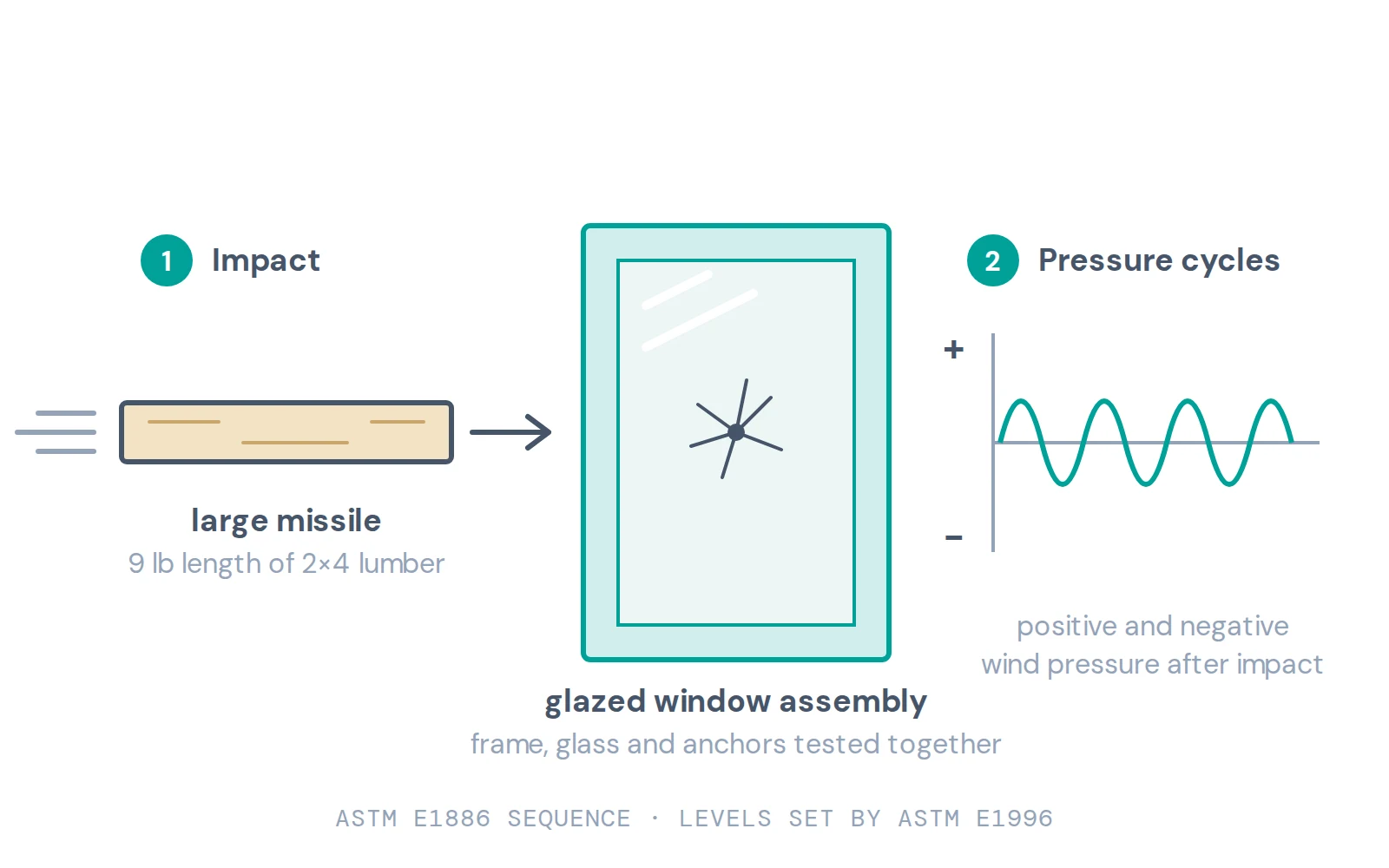
ASTM E1996 is the specification that defines windborne-debris impact levels for exterior windows, curtain walls, doors, and impact protective systems in hurricane-prone regions. The test itself is ASTM E1886, which defines the apparatus, the impact-then-pressure-cycling sequence and the pass criteria. The two standards are almost always cited together for exactly that reason: E1996 says what has to be survived, E1886 says how survival is measured.
The two missile levels in E1996 are a large missile (a nominal 9 lb section of 2×4 lumber, meant to simulate construction debris and framing members thrown by hurricane-force wind) and a small missile, sized to simulate gravel and roofing aggregate. Large missile is the more demanding requirement and the one most commercial and coastal residential glazing specifications reference.
AAMA 506 and Where It Sits
AAMA 506 (now AAMA 506-23, aligned to NAFS-22) is FGIA's voluntary specification for impact and cycle testing of fenestration products. It builds on E1996 and E1886 and adds a structured qualification path, so that a manufacturer's finished window or door line, not just a coupon sample, has a documented basis for claiming compliance across a product family.
Miami-Dade: The Standard Above the Standard
Miami-Dade County and neighboring Broward County, Florida's High Velocity Hurricane Zone (HVHZ), require design wind speeds up to 175 mph (Miami-Dade) and 170 mph (Broward) for Risk Category II buildings, and every window, door, shutter, and roof assembly installed there needs a Miami-Dade NOA or an accepted equivalent. HVHZ testing runs under Testing Application Standards TAS 201, 202, and 203: the large-missile protocol fires a 9 lb, 2×4 lumber section at 50 ft/s at the glazing, twice, followed by 9,000 pressure cycles simulating sustained hurricane wind loading. It is a materially stricter protocol than the baseline ASTM sequence, which is why an NOA is treated as the reference standard in the industry rather than just one more regional variant.
Where Frame Material Actually Matters
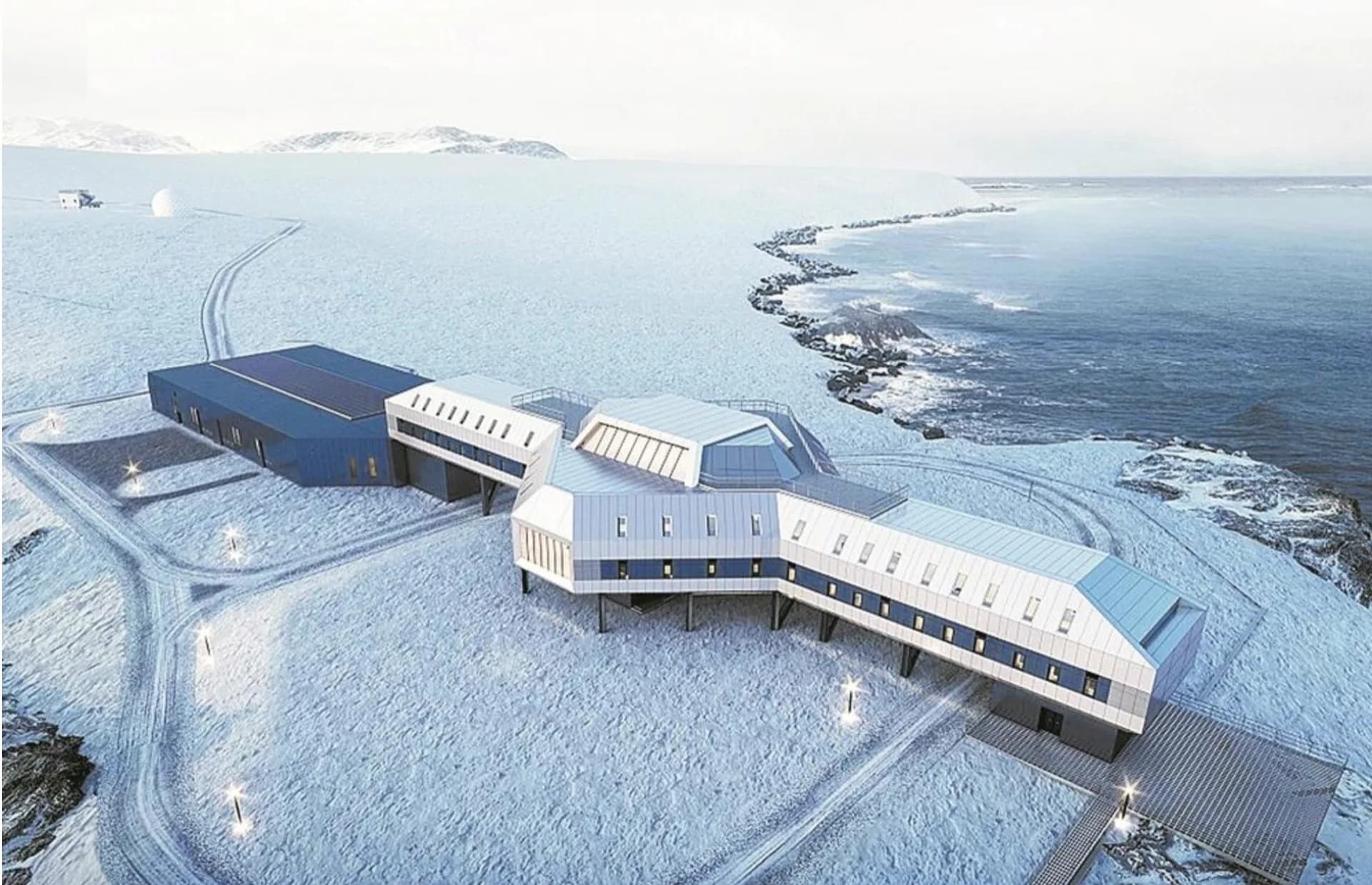
None of these standards test frame material in isolation. They test the assembled window or door. But frame material behavior under impact still determines how much margin a design has going into that test. This is where pultruded FRP's structural profile is relevant: F1's higher-performance fenestration series use a hybrid fiber architecture (unidirectional E-glass roving for longitudinal stiffness combined with ±45-degree multiaxial fabric at the corners specifically for impact resistance and corner rigidity) rather than a single fiber orientation optimized for stiffness alone. Aluminum frames dent under large-missile impact; PVC frames can crack, and lose additional impact strength at low temperature. Pultruded FRP retains its impact strength and stiffness across a wide temperature range: the same property that lets F1's 90-series hold PHI Component Certificate 2491wi03 and survive 45 m/s katabatic wind gusts at Qinling Station, Antarctica, is structurally the same impact-retention behavior a hurricane-zone assembly needs at the other end of the temperature scale.
The Honest Limit of This Argument
Frame material impact resistance is a necessary input, not a finished credential. F1 Composite does not currently hold a Miami-Dade NOA or an ASTM E1996 assembly certification for a hurricane-zone window line. That testing is run on the complete glazed assembly, with the specific glass makeup, anchoring, and hardware a project calls for, and it has to be commissioned per product line and, in HVHZ counties, per NOA renewal cycle. A specifier moving a project into E1996, AAMA 506, or HVHZ territory should treat frame-material impact behavior as the reason to shortlist a system, and assembly-level test certification as the separate, non-negotiable step that has to happen before it ships.
F1 Composite engineers pultruded FRP window and door frame systems for high-wind and extreme-climate projects, and supports project teams through the assembly-level testing and documentation that hurricane-zone and high-velocity-wind-zone specifications require.