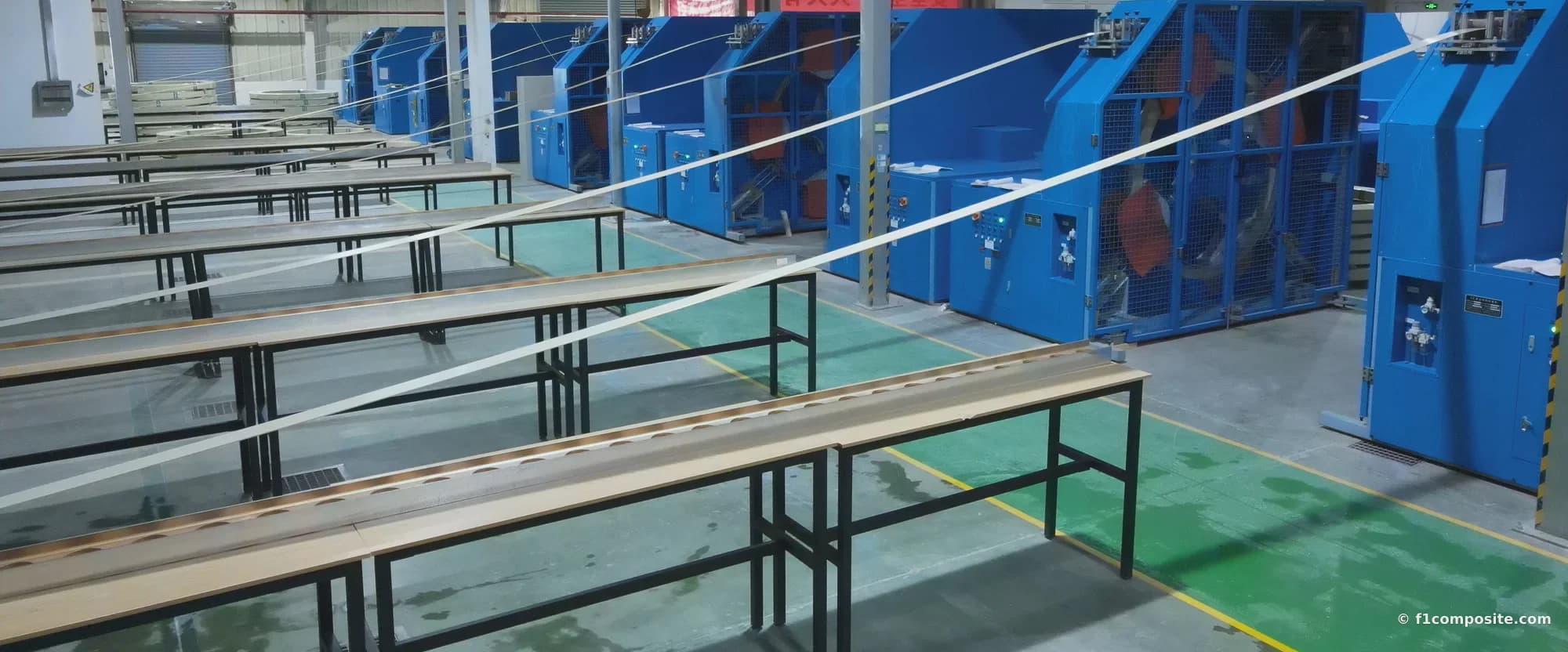
The pultrusion industry in 2026 is no longer spending most of its energy explaining what the process is. The market now understands the basic value proposition: lightweight sections, corrosion resistance, repeatable constant cross-sections, electrical insulation, and fast installed systems. The harder discussion today is about qualification, predictability, and scale. These are the seven questions that now dominate serious customer conversations.
1. Which design standard should the engineer trust?
This has become a central question because the standards landscape is improving but still not uniform across regions and project types. The publication of ASCE/SEI 74-23 and the emergence of CEN/TS 19101 are important signals that pultruded FRP is moving deeper into formal structural design practice. But on real projects, engineers still need help translating those documents into section properties, connection details, safety factors, and approval packages that local reviewers will accept.
2. What is the real installed cost, not just the line-item material cost?
Buyers are far less interested in price-per-kilogram than they were five years ago. They are asking what the system costs to install, what it costs to maintain, and what it costs to shut down later for repair. That is why lifecycle cost and installed labor have become standard commercial questions in infrastructure, wastewater, marine, energy, and industrial access projects.
3. Can the manufacturer prove long-term durability with application-specific data?
Owners do not want a general brochure. They want chemical resistance fit, UV behavior, fire data, structural test results, and a traceable explanation of how the laminate was chosen for their environment. The market is rewarding suppliers that can connect material choice to service condition with actual documentation.
4. How fast can a custom section move from drawing to qualified production?
Pultrusion is attractive because the output is repeatable once the process window is stable. But custom geometry still needs die design, fiber architecture definition, process validation, and first-article evidence. That is why lead time and qualification speed are now strategic questions, not only purchasing questions.
5. How should fire and smoke performance be handled?
Fire performance has moved upstream in the sales cycle. Customers in buildings, transportation, offshore, and public infrastructure increasingly ask for a credible route to flame spread, smoke, and code compliance before they ask for a quotation. A supplier that treats fire as an afterthought will be screened out early.
6. What does circularity look like for thermoset pultrusion?
Sustainability questions are becoming more precise. Buyers are asking about waste reduction, scrap reuse, recycled reinforcement options, resin choice, and what happens at end of life. The industry does not yet have a single perfect answer, but the direction is clear: environmental claims now need to be operational, not rhetorical.
7. Can the supply chain stay stable while the application gets more demanding?
The last several years taught buyers to worry about resin availability, roving consistency, finish quality, and tooling lead time. That concern remains. The more technically demanding the profile becomes, the more the customer wants proof that the supplier can hold process discipline at production scale rather than only in prototype conditions.
The common thread
These seven questions share one root: a good material case no longer wins the project on its own. The manufacturer that gets specified is the one that answers the engineering, commercial, quality, and compliance questions in a single package: section data, lead time, test evidence, and a code path the reviewer will accept.
At F1 Composite, the projects that move fastest are the ones where the buyer has stopped asking whether pultrusion is interesting and started asking whether we can make it low-risk. That is the commercial filter in 2026.