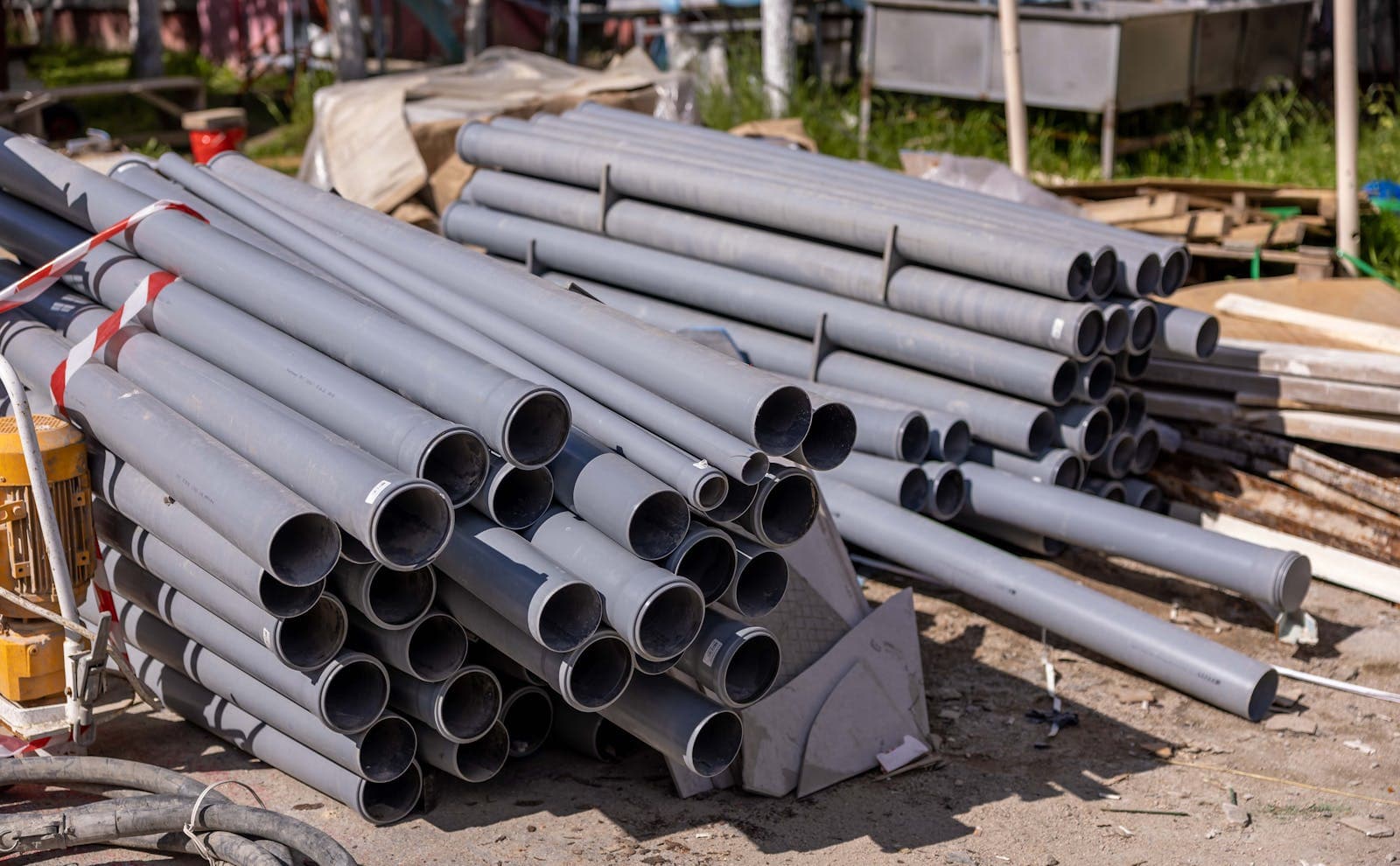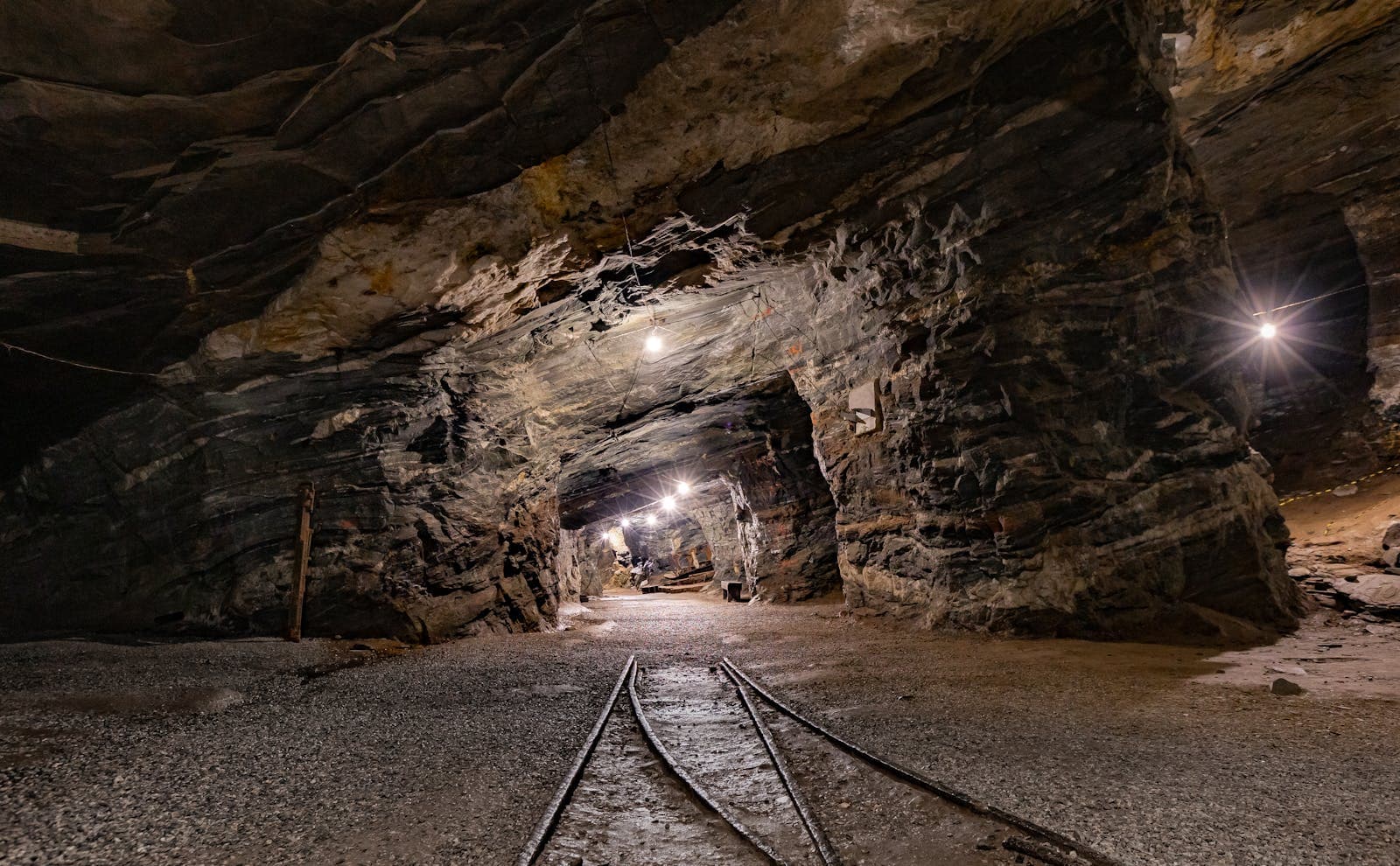
Underground coal mining releases methane, and the gas has to be drained through a piped network before it can build to an explosive concentration. That pipe carries a flammable gas through an environment where one spark can be fatal, so it answers to two requirements most pipe never sees: it must not build a static charge, and it must not sustain a flame. Pultruded glass-fiber pipe meets both at the material level, which is why this is one of the few piping jobs where pultrusion is the first choice rather than a fallback.
A moderate-pressure, axial-friendly duty
Gas drainage runs at 0.6–1.6 MPa (90–230 psi) in diameters from DN25 to DN300 (1–12 in). That sits squarely inside what pultrusion does well: small to medium bore, moderate pressure, long straight runs, no need for the heavy hoop reinforcement that pushes high-pressure pipe toward filament winding. A pultruded GFRP drainage pipe gives a smooth internal bore that lowers flow resistance and pumping energy, around 50 years of service life, full corrosion resistance against the damp and acidic mine atmosphere, and a fraction of the weight of steel, which matters when every length is carried and hung by hand underground.
The two safety properties that define the product
Anti-static. A pultruded pipe is an insulator by default, so it can accumulate surface charge as gas and dust move through it. In a methane atmosphere, that charge is an ignition source. The fix is a conductive surface: a carbon veil or conductive additive that pulls surface resistance below 10⁶ Ω, low enough to bleed charge to ground instead of releasing it as a spark.
Flame-retardant. The resin system has to self-extinguish rather than feed a fire. In China the benchmark is the 45° flame test in GB 16413, paired with the oxygen-index and anti-static methods in MT 113. Clearing both with margin, not just scraping the minimum, is the entry ticket.
The standards that gate the market
| Standard | What it covers |
|---|---|
| MT 558.3 | Underground coal-mine plastic pipe — fiberglass (FRP) section |
| GB 16413 | Safety performance of FRP products in coal mines — 45° flame test |
| MT 113 | Flame-retardant and anti-static test methods for mine polymer products |
Mine drainage pipe carries the KW designation (gas drainage) in the Chinese mine-pipe classification, alongside water lines (KS), grout-spray lines (KJ), and ventilation lines (KFZ/KFF). The hardest gate is the mine-safety mark (MA) approval, which any product needs before it can be bought for underground use. The pipe specification is the easy part. No MA, no sale, however good the pipe is.
Where the existing pipe fails
Field studies of non-metallic mine pipe point to a consistent set of failures, and they are where a better product earns its place:
- Joint-seal leakage, the largest single failure mode. A leaking joint pulls air into a vacuum drainage line and drops capture efficiency. - Embrittlement and aging under the combination of high humidity and sustained stress. - Anti-static and flame-retardant performance fading over years of service. - Mechanical damage to the wall from underground handling and roof movement.
F1 Composite Series 02: in serial production
F1 Composite supplies pultruded coal-mine methane drainage pipe as a stocked, serial-production line, not a one-off custom run. The product clears the MT 558 / GB 16413 / MT 113 envelope and goes underground with a 50-year design service life, as a low-maintenance replacement for carbon steel (which corrodes against the wet, acidic mine atmosphere) and standard polyolefins (which fail the flame-retardant and anti-static limits).
Series 02: Mine Methane Drainage Pipe
| Spec | Value |
|---|---|
| Diameter range | DN25 – DN300 mm |
| Working pressure | 0.6 – 1.6 MPa |
| Working temperature | −20 °C to +80 °C |
| Surface resistance | ≤ 3 × 10⁸ Ω (MT 558.2) |
| LOI / flame class | ≥ 28 % · UL 94 V-0 |
| Resin systems | Vinyl-ester · Epoxy · Polyurethane |
| Flame package | ATH 50 / APP 8 / AOM 3 + carbon-veil outer layer |
| Surface enhancement | Glass veil · biaxial fabric · carbon veil |
| Jointing | Bell-and-spigot · quick-lock |
| Service life | 50-year design service life · low maintenance |
| Pultrusion speed | 0.8 – 1.4 m/min |
| Standards | MT 558.2 · GB 16413 · MT 113 · ISO 4589-2 · UL 94 V-0 · ASTM E84 Class I |
| Capacity | FengDu base · 5 sites · 370 pultrusion lines · 150,000 t/yr |
The matrix library lets us pick the resin to the duty. Brominated bisphenol-A (or halogen-free FR) vinyl-ester is the primary MT 558 matrix; epoxy and polyurethane variants cover the structural and non-FR runs. The ATH–APP–AOM package gives UL 94 V-0 and LOI ≥ 28% in a single pull, and a conductive carbon-veil outer layer brings surface resistance to ≤ 3 × 10⁸ Ω for the anti-static limit. Beyond methane drainage, Series 02 also covers auxiliary mine-ventilation ducting, acidic mine-water transfer (pH 2 – 6), compressed-air supply mains, outdoor UV-exposed vent and drainage runs, and combined service runs along mine roadways.
The 3-page edition 2026.06 product catalog has the full specification, the resin / flame-package matrix, and the qualified application list:
Download the F1 Composite Pipe Catalog 2026 (PDF, 3 pages)
For a mine operator weighing a switch from steel or PE, the case rests on fewer failures and a 50-year design service life, which is an argument about total cost rather than purchase price. Send the diameter, the working pressure, and the drainage layout, and we can scope a section and a resin system against it.