 SchematicFRP Fundamentals · Fiberglass Reinforced Plastic: Composition, Types, Properties, and UsesA practical guide to what fiberglass reinforced plastic is, how glass and resin work together, which manufacturing forms exist, and where structural GFRP is a better fit than metal or unreinforced plastic.
Author
Haifeng Gong, Ph.D.
R&D Lead for composite materials, pultrusion process development and standards
- Field
- R&D and materials science
- Signed articles
- 17
- Latest update
- Sep 27, 2026
Profile
Haifeng leads materials and process R&D at F1 Composite. The work covers resin selection (polyester, vinyl ester, polyurethane and phenolic), fiber layouts that add transverse strength without print-through on the surface, fire and thermal performance, and the standards work needed before a lab result can go into a customer specification.
Expertise
- Composite materials science
- Pultrusion process development and simulation
- Resin chemistry and fire-retardant systems
- Thermal performance and Passivhaus certification work
- Thermoset FRP recycling and sustainability research
Knows about
- Vinyl ester and polyurethane pultrusion
- Phenolic FRP for fire-rated applications
- EN 45545-2 rolling stock fire compliance
- PHI Passivhaus component certification
- Pultrusion patent and forum landscape
- Chemical degradation recycling of thermoset composites
Articles by Haifeng Gong 17 articles
Newest first.
- SchematicFRP Fundamentals · Fiberglass Reinforced Plastic: Composition, Types, Properties, and UsesA practical guide to what fiberglass reinforced plastic is, how glass and resin work together, which manufacturing forms exist, and where structural GFRP is a better fit than metal or unreinforced plastic.
 Product photoEngineering Guide · FRP Material: Properties, Types, and an Engineering Selection GuideHow to read FRP material data and select the right fiber, resin, manufacturing process, test values, and design checks for a structural or industrial application.
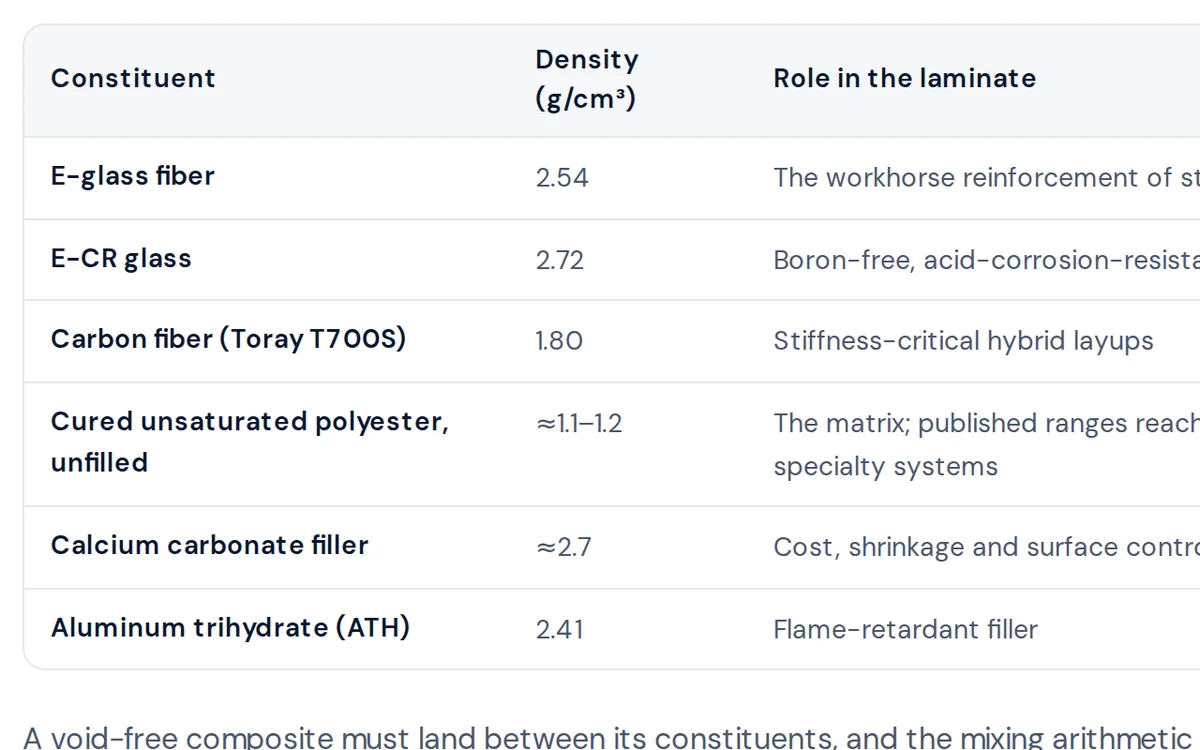 Material Science · FRP Density Explained: How Fibers, Mats, Fabrics and Resin Set the Density of a Pultruded ProfileSteel has one density. A fiberglass profile has a recipe: glass fiber at 2.54 g/cm³, cured resin near 1.2, plus fillers and voids. Where a pultruded profile lands between those poles (and what that single number tells you about the laminate inside) is all arithmetic.
 Illustrative photoThermal Performance · How the Whole-Window U-Value Is Actually Calculated (EN ISO 10077-1)Specifiers compare windows by U-value every day, yet the number on the datasheet is the output of a calculation most spec sheets never show. Here is the EN ISO 10077-1 method in full: the three-zone formula, a worked example on the reference window, why European and North American numbers refuse to match, and why the frame decides the result.
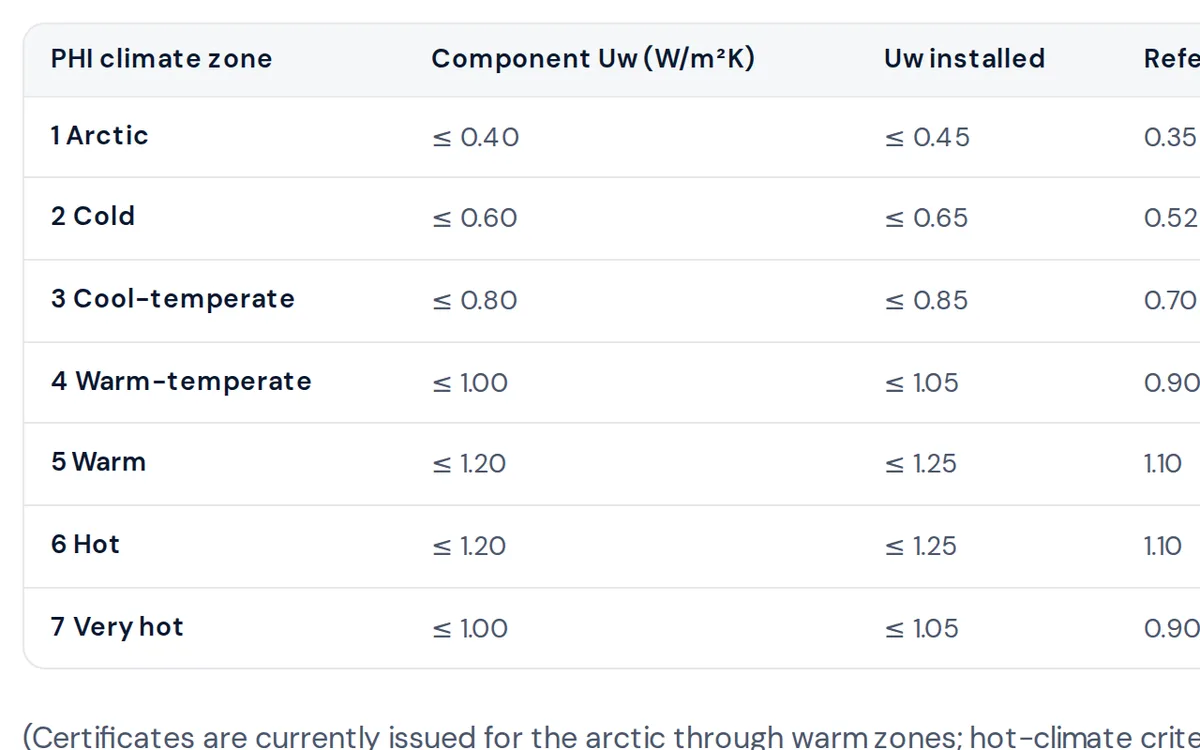 Thermal Performance · Passive House Window U-Value Requirements: PHI Climate Zones, Phius, and What QualifiesThe 0.80 W/m²K number every passive house designer quotes is real, but it is one row of a seven-zone table. It applies to the whole window rather than the glass, and it comes with an installed-state limit, a comfort criterion, and efficiency classes that decide how a window actually gets certified. Here is the full PHI requirement set, the Phius counterpart, and what frame constructions can meet them.
 Illustrative photoThermal Performance · U-Value vs SHGC: The Two Window Numbers and How to Set Them by ClimateOne number describes how a window leaks heat, the other how it harvests or blocks the sun, and specifying fenestration is largely the art of setting both for your climate. Definitions, the g-value vs SHGC reporting trap, ENERGY STAR 7.0's zone table, and where the frame material quietly shapes both numbers.
 Illustrative photoThermal Performance · Pultruded Thermal Break Profiles for Aluminum Windows: What Changes When the Break Is GFRP, Not PolyamideThe polyamide strip is one of the quiet success stories of building products: two extrusions of PA66-GF25 turned thermally hopeless aluminum frames into code-compliant windows, and two European specialists wrote the rulebook. But strip extrusion has geometric and mechanical ceilings, and wide sliding doors sit right at them. Here is what the research from Technoform and Ensinger actually establishes, and where a pultruded GFRP break changes the design space.
 Illustrative photoThermal Performance · Why Aluminum Window Frames Stream Water in Cold Climates — the Physics and the FixThe service call every cold-climate building manager knows: water pooling on aluminum window sills in January, frost on the frame by February, and a mold remediation quote by spring. The window is not faulty. The frame material is doing exactly what physics says it must. Here is the mechanism, the metric that predicts it, and what actually fixes it.
 Illustrative photoEngineering Deep-Dive · FRP Pultruded Curtain Wall Mullions and Transoms: Why E23 Runs Out, and What Carbon/Glass Hybrid, Braided Pultrusion Is Built to SolveF1's curtain wall isolator profiles already carry glass dead load across the thermal break. The next step is harder: a primary structural mullion or transom that replaces the aluminum extrusion itself, at the stiffness a modern unitized facade demands. This is why that step needs carbon/glass hybrid reinforcement and braided pultrusion, not just more glass roving.
 Illustrative photoEngineering Deep-Dive · FRP Thermal Break Profiles for Curtain Walls: The Isolator Is a Structural Member, Not a SpacerThe thermal break in a curtain wall is not the same part as the thermal break in a window. It sits in the primary load path: clamped by pressure-plate screws, pulled by wind suction, and on transoms, loaded around the clock by the dead weight of the glass, transverse to the pultrusion axis. That load case is why F1 laminates isolator profiles with balanced 0°/90° moduli.
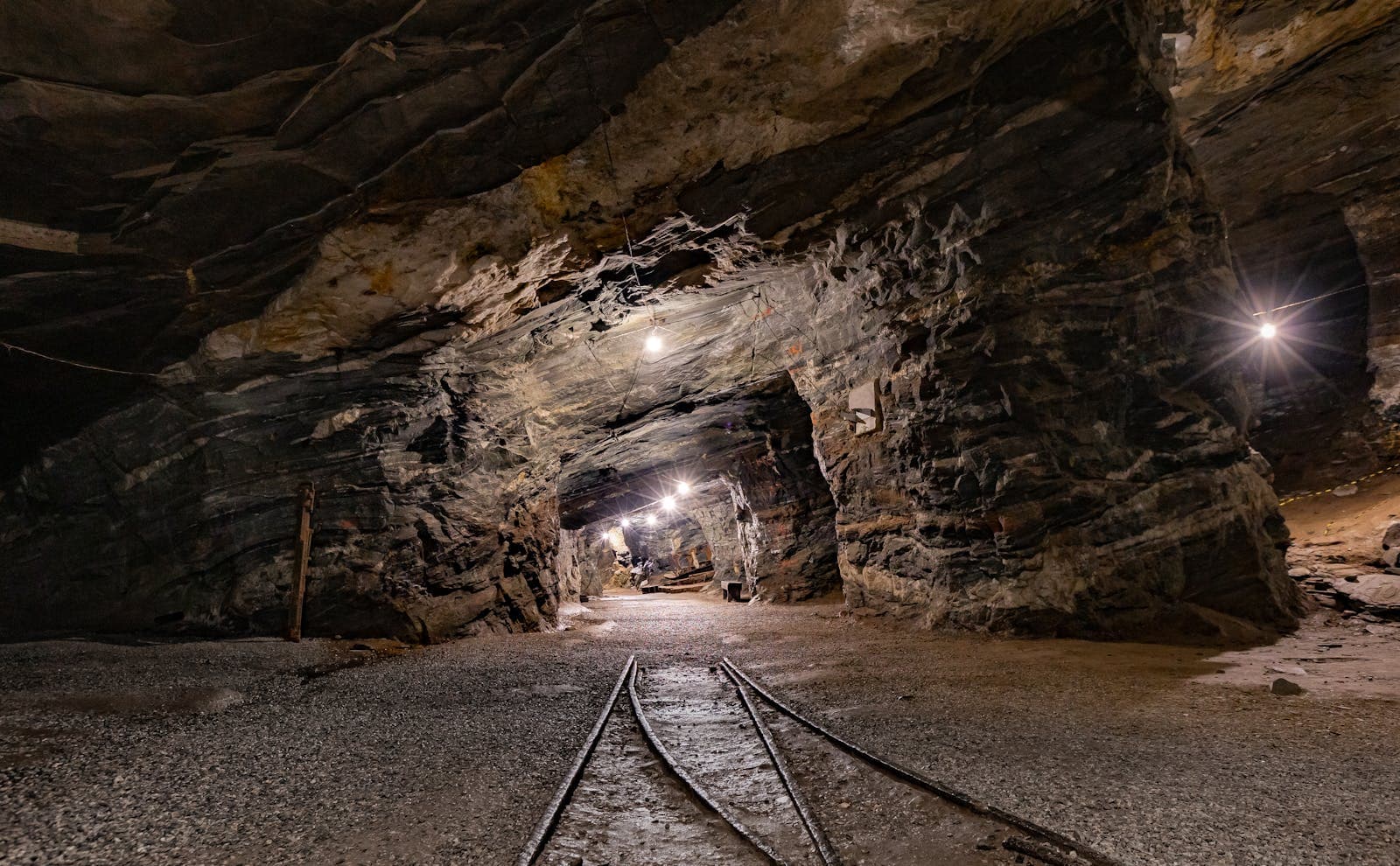 Illustrative photoCoal Mine Safety · Pultruded FRP Pipe for Coal Mine Gas Drainage: Anti-Static and Flame-Retardant by DesignDraining methane underground demands a pipe that will not spark and will not carry flame. Pultruded GFRP pipe, anti-static and flame-retardant by formulation, is one of the few cases where pultrusion is the best process, not a compromise.
 Product photoMaterial Innovation · The Surface Finish Question — How Transverse-Reinforced Pultrusion Removes Glass-Fiber Telegraph from FRP Window ProfilesWhy premium architectural fenestration still chooses aluminum over fiberglass, and how a transversely reinforced pultrusion architecture places cross-direction reinforcement deeper in the profile to produce powder-coated finishes that are indistinguishable from aluminum.
 Report photoSustainability · Thermoset FRP Is Now Recyclable: How Chemical Degradation Recovers Glass Fibers and ResinThermoset FRP composites were long considered non-recyclable. A new chemical degradation process dissolves cured polyester and vinyl ester matrices at just 100 °C, recovering clean glass fibers for reuse and reclaiming the solvent in a closed loop.
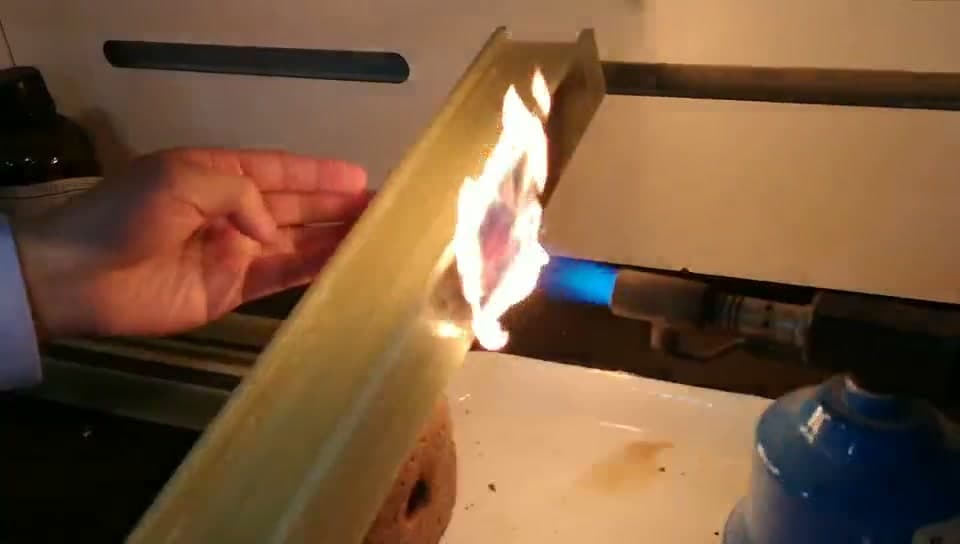 Reference photoTechnical Guide · Fire Resistance of FRP Profiles: Ratings, Resin Chemistry, and Real-World ApplicationsHow do pultruded FRP profiles behave in fire? This guide explains the fire-resistance mechanisms of fiber reinforced polymers, the role of resin chemistry and flame-retardant additives, classification standards from Euroclass to ASTM E84, and where fire-rated FRP is already deployed.
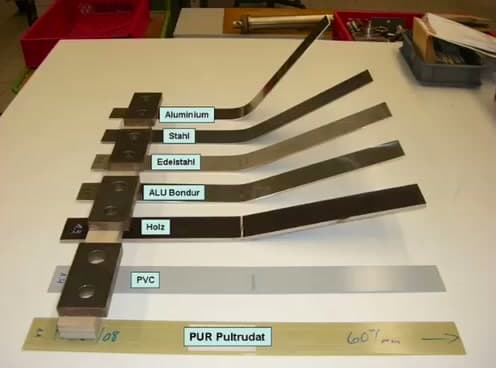 Reference photoMaterial Science · Pultruded FRP vs Steel, Aluminum, PVC, and Wood: Impact Resistance Under 3-Point Bending Drop TestA 3-point bending drop test by Covestro's polyurethane research team puts seven materials head-to-head: sheet steel, stainless steel, two aluminum alloys, PVC, plywood, and polyurethane pultruded composite. The results reveal why FRP's unique combination of toughness and elastic recovery outperforms every conventional alternative.
 Thermal Performance · FRP Fenestration: How Pultruded Window Frames Achieve Passivhaus CertificationPultruded FRP window frames achieve Passivhaus certification through inherent material properties: 500x lower thermal conductivity than aluminum, CTE matching glass, and slim profiles that maximize glazing area.
 Illustrative photoFenestration · Thermal Performance of FRP Window Frames: Uf, Thermal Bridging and CondensationPultruded FRP window frames deliver thermal conductivity 500× lower than aluminum. We break down the physics, the U-value impact, and the energy savings.
Questions for Haifeng Gong? Send them to our engineering team.
Send the article, your question and the project it concerns. We reply within one business day.