FRP cooling tower profiles for wet and chlorinated service
Pultruded FRP cooling tower profiles for wet, chlorinated and high-humidity structures: beams, tubes, louvers, handrails and access members.
Cooling towers attack galvanized steel through constant humidity, chlorides, biocides, and wet-dry cycling. F1 Composite supplies pultruded beams, tubes, angles, louvers, and grating supports in fiberglass that keep structural stiffness while removing corrosion-driven maintenance.
Best fit: industrial cooling towers, power plant cooling systems, HVAC towers, chemical plants, and replacement programs where steel members require repeated recoating.
Specify the component supply scope
Identify raw profile lengths, cut or drilled components, grating panels and any agreed assemblies. Confirm fasteners, engineering and installation responsibilities on the quotation. The application describes how the products are used; it does not by itself include complete project delivery.
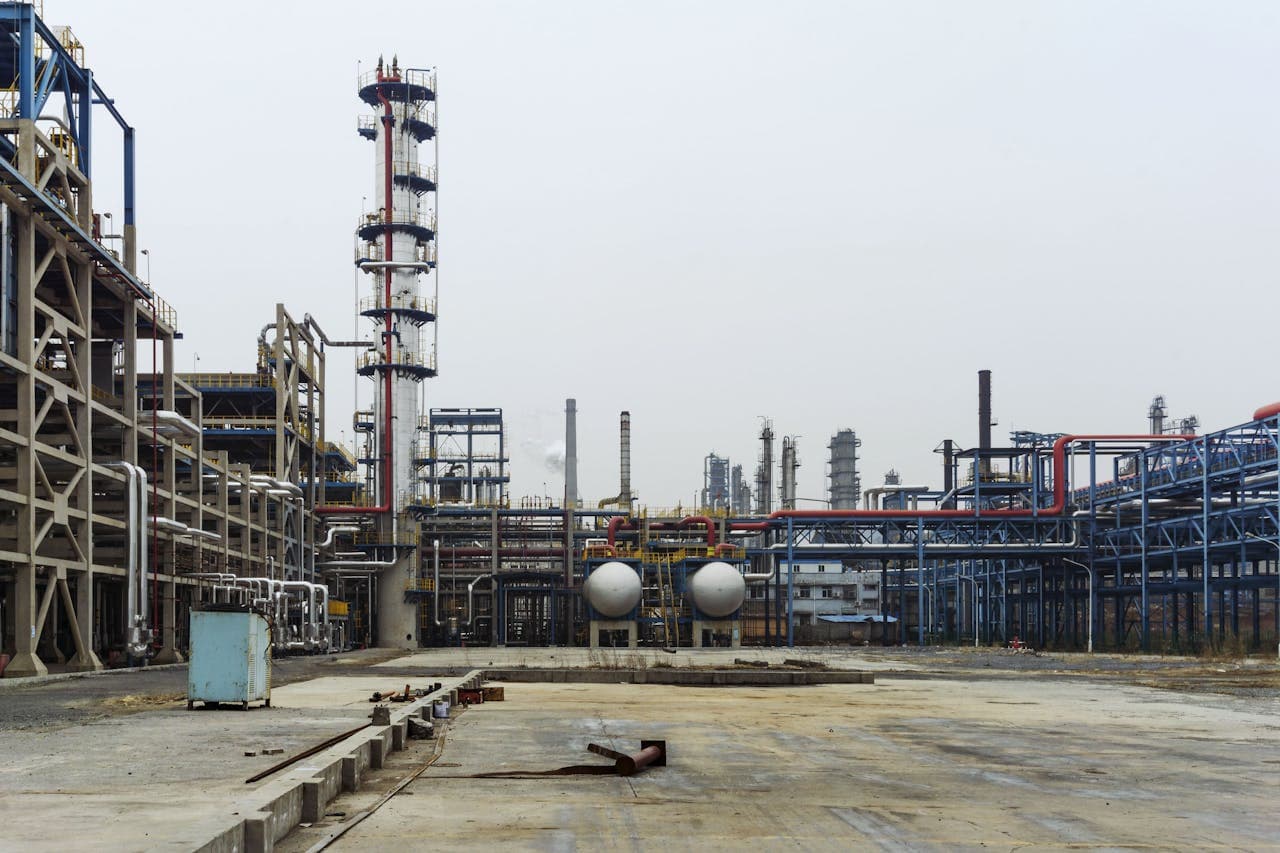
I-beams and channels for primary support members
Square tubes for frames, posts, and bracing
Angles for edge supports and louver framing
Custom thin-wall pultrusions for drift eliminators and louvers
Resin recommendation
Vinyl ester is recommended for chlorinated water, high humidity, and aggressive cooling tower chemistry. Isophthalic polyester can be used for mild HVAC towers with controlled water treatment.
Common standards
FRP cooling tower profiles: design and specification checks
Water chemistry and temperature
Provide chloride concentration, pH, biocide program, operating temperature, and cleaning chemicals. Resin selection must be checked against the combined exposure rather than against humidity alone.
Buckling and sustained load
Columns, diagonal braces, and fan-deck members require global and local buckling checks. Permanent equipment and casing loads also require the applicable long-duration design factors.
Connections in saturated service
Connection plates, bolt bearing, drainage details, and cut-edge sealing need to be coordinated so trapped water and repeated wet-dry cycling do not create avoidable local damage.
Why FRP cooling tower profiles work in saturated service
A cooling tower is close to a worst-case environment for coated steel: the structure sits in saturated air at elevated temperature, gets sprayed with chlorinated and chemically dosed water, dries out, and is wetted again — thousands of cycles a year. Galvanizing sacrifices itself, coatings blister at cut edges and bolt holes, and every recoating cycle means a plant outage with confined-space access. Pultruded fiberglass removes the failure mechanism instead of slowing it down: the glass-fiber laminate is immune to electrochemical corrosion, and a vinyl ester matrix resists the chlorides, biocides, and pH swings of open recirculating water.
The industry recognized this decades ago — fiberglass pultrusions are now the default structural material for new field-erected towers, and the Cooling Technology Institute maintains a dedicated specification (CTI STD-137) for pultruded structural products used in them. Typical member mapping in a tower frame: I-beams and channels for columns, girts, and fan-deck framing; square tubes for diagonal bracing and casing support; angles for louver frames and connection cleats; and thin-wall custom sections for louvers and drift-eliminator supports. All of these come from the same standard families listed in our size catalog, with published weights per meter.
For replacement programs, the practical route is to match the existing steel member geometry at equal stiffness rather than equal depth — fiberglass runs at roughly a quarter of the weight of the steel it replaces, which usually means the old crane and access plan can be downsized or eliminated. Send the existing framing drawings and water-chemistry report with your RFQ; we return a member-by-member substitution list with section sizes, resin recommendation, and hardware notes, priced per meter.
Have a question about this product?
Our FRP Engineering Advisor answers spec, sizing, and chemical-compatibility questions instantly — and routes complex ones to the right human.
Pre-filled question: “I am evaluating FRP cooling tower profiles. Please recommend profile families, resin system, standards, and RFQ details for my project.”
Need a quote for FRP cooling tower profiles?
Send the dimensions, quantity, service environment, and destination. We acknowledge requirements within one business day.