Fiberglass stakes for plants, trees, vineyards and marking
Factory-direct pultruded FRP stakes for plant support, nursery trees, vineyard training, garden crops and site identification. Start with the 5–19 mm public-market planning band below, then release the actual diameter, length, surface, color and end treatment by quotation.
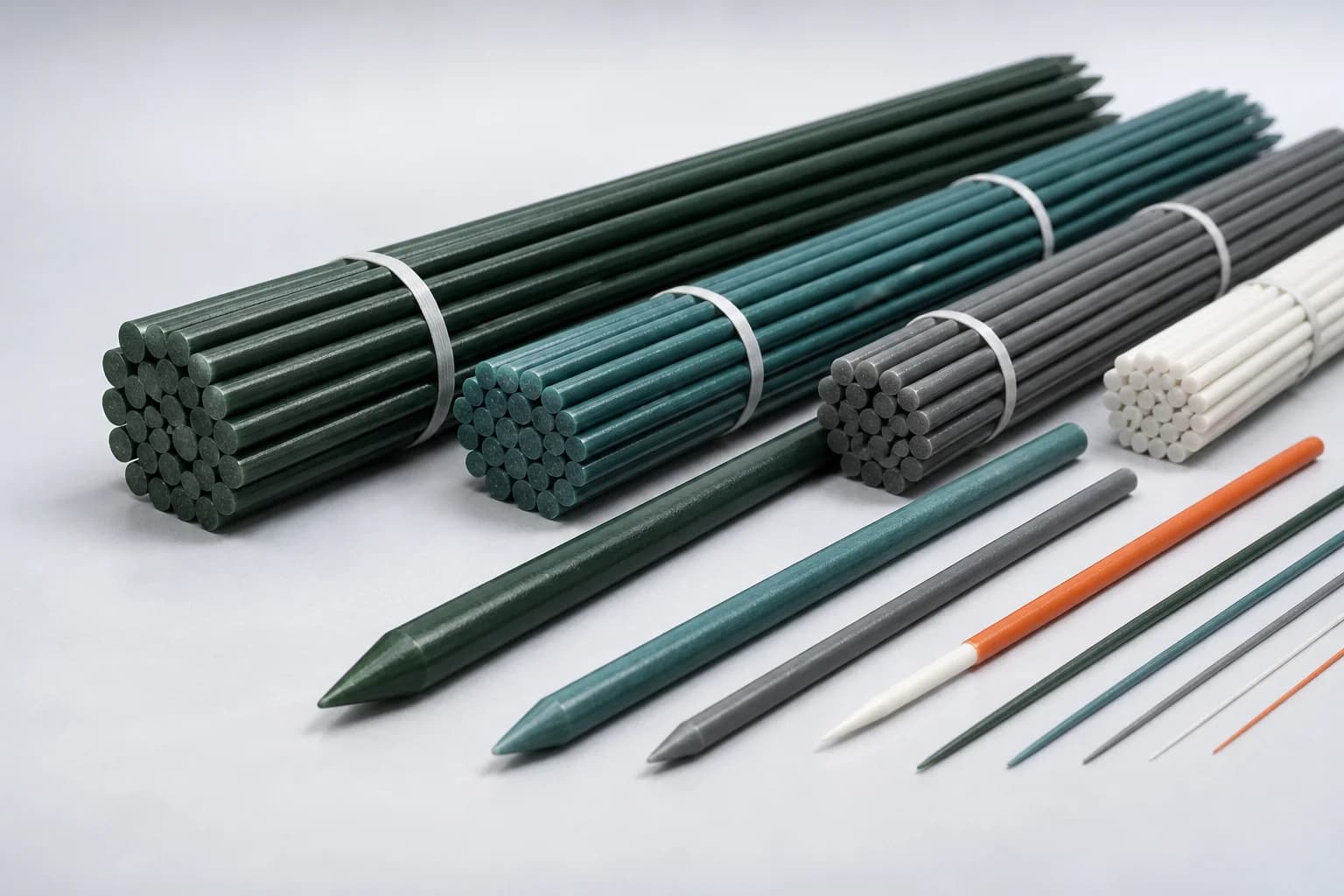
One pultruded rod platform, configured around the application
Fiberglass stakes are solid pultruded rods built from continuous glass reinforcement and a polymer matrix. The controlled geometry, low weight and corrosion-free body make them a reusable alternative to irregular bamboo, wood stakes and steel markers when the diameter, surface and installation are selected together.
F1 quotes fiberglass plant stakes, tree supports and general site-marker rods on this page. For reflective plow guides and driveway visibility programs, use the dedicated fiberglass snow markers page. Each application needs its own stiffness, embedment, color and accessory set.
Common fiberglass stake sizes for RFQ planning
| Nominal diameter | Metric reference | Listed length reference | Public pack reference | Surface / color | Planning use |
|---|---|---|---|---|---|
| 1/5 in | ≈ 5 mm | 42 in / 1.07 m | 100 pcs | Smooth · dark green | Light plant and garden support |
| 5/16 in | ≈ 8 mm | 72 in / 1.83 m | 100 pcs | Smooth · white | Plant support and visible marking |
| 3/8 in | ≈ 9.5 mm | 60 or 72 in / 1.52 or 1.83 m | 50 pcs | Smooth · green, white or orange | Nursery, vineyard, tree and visible site-marker inquiries |
| 1/2 in | ≈ 12.7 mm | 60 or 72 in / 1.52 or 1.83 m | 20–40 pcs | Optional surface veil · blue-green | Medium-duty plant and site support |
| 5/8 in | ≈ 15.9 mm | 72 in / 1.83 m | 20 pcs | Optional surface veil · gray | Heavy plant, tree or marking applications |
| 3/4 in | ≈ 19.1 mm | 72 in / 1.83 m | 10 pcs | Optional surface veil · gray | Heavy support and construction-marker inquiries |
Source and release boundary
Sources were accessed on August 30, 2026 and establish only a public market reference. They do not publish diameter tolerance, bending stiffness, breaking load, resin grade, fiber content or verified outdoor life. F1 confirms those requirements for the proposed production grade before order release.
Six inputs that select the stake before diameter
Input 1
Mature height and supported load
Describe the mature plant, crop, marker or attachment—not only its current height. Fruit, foliage, snow and accessories can control the real demand.
Input 2
Wind and impact exposure
State the site wind, row orientation, machinery clearance and expected contact. Flexibility is a design variable; it is not a universal impact rating.
Input 3
Soil and embedment
Give soil type, available insertion depth, drainage and whether the end is driven, pre-augered or installed into a sleeve. The exposed height depends on embedment.
Input 4
Tie, clip or wire interface
Name the attachment and its spacing. Soft horticultural ties, trellis wire, reflectors and fence insulators create different local loads and abrasion points.
Input 5
Surface and handling
Choose a smooth resin-rich finish or request a surface veil when repeated handling and surface integrity matter. Confirm cut-end sealing and inspection criteria.
Input 6
Color, packing and destination
Specify color, cut length, tapered or flat ends, bundle count, pallet limits, labeling, quantity, destination and Incoterm for a binding export quotation.
FRP plant stakes, fiberglass tree stakes and visible marker rods
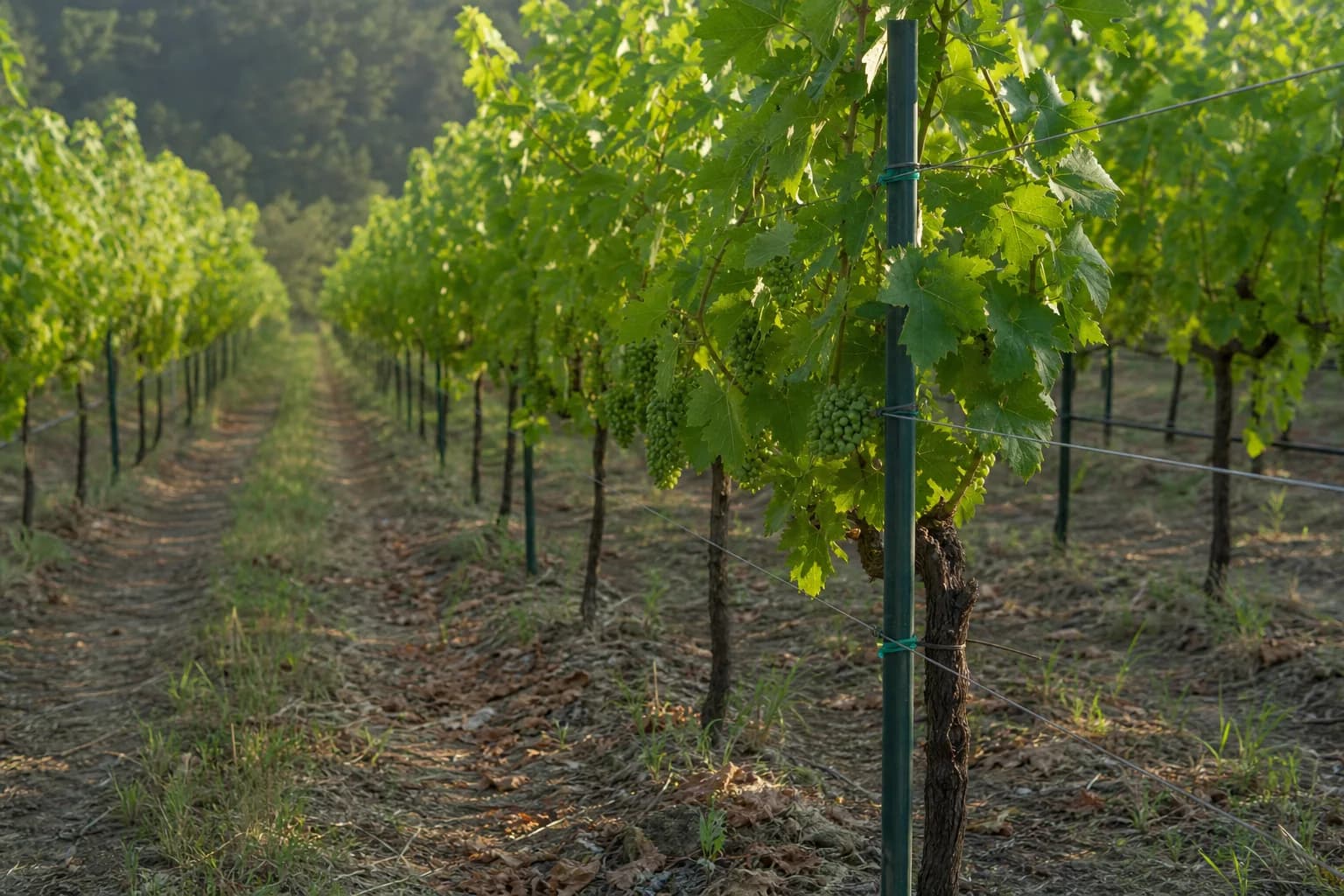
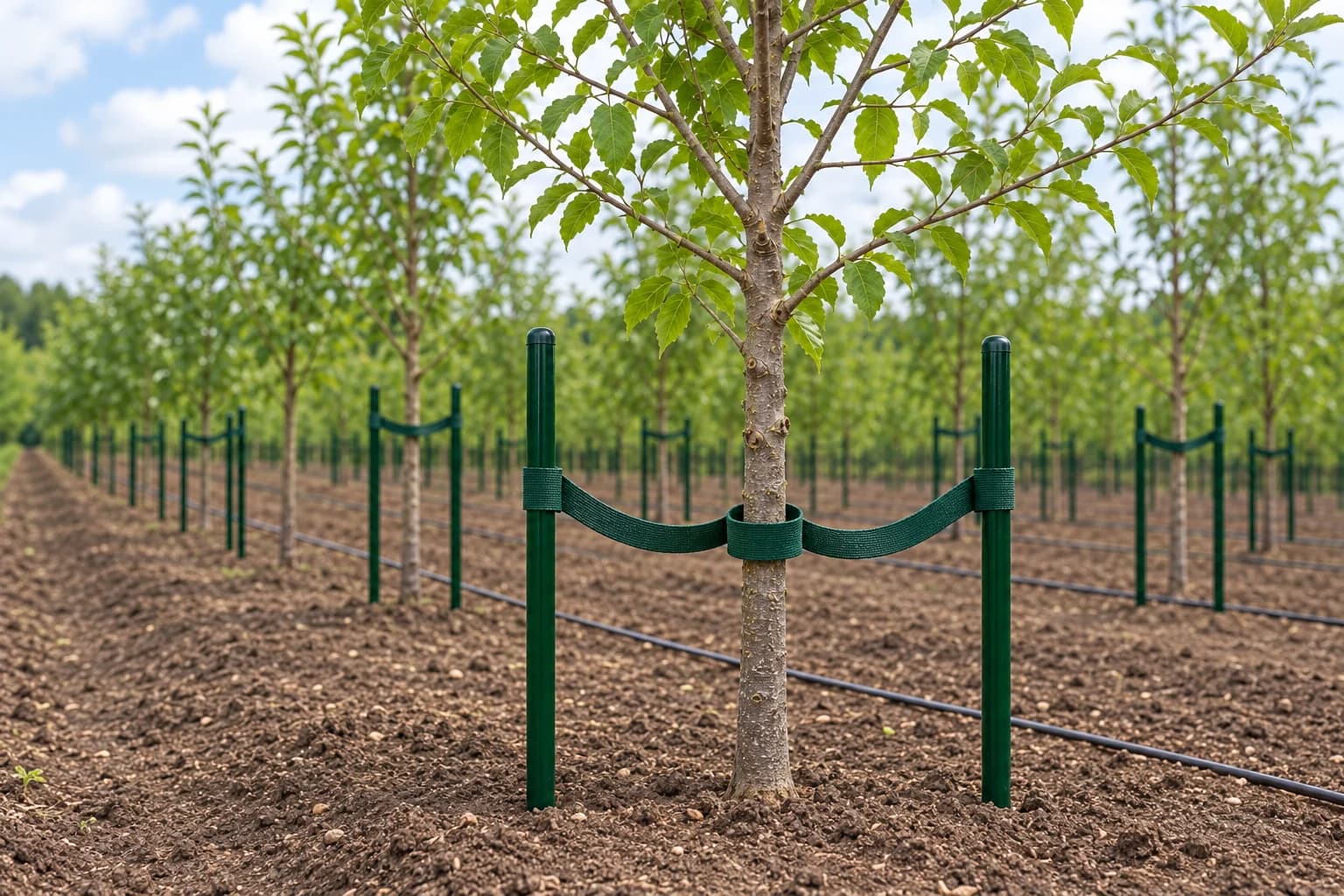
Fiberglass stakes vs bamboo, wood and steel markers
| Topic | Fiberglass / FRP stake | Bamboo / wood stake | Steel marker |
|---|---|---|---|
| Moisture and corrosion | Does not rust; resin and surface system still need to match UV, chemicals and temperature | Can absorb moisture, rot, split or vary from cane to cane | Can rust after coating damage or repeated wet exposure |
| Weight and handling | Low mass and consistent round geometry for bundled transport and repeated placement | Usually light, with natural variation in diameter and straightness | Higher density; long bundles and repeated field handling are heavier |
| Flexibility after contact | Diameter, fiber architecture and resin tune the response; qualify repeated-impact needs | May bend, split or snap depending on species, moisture and defects | High stiffness, but overload can leave permanent bends |
| Electrical behavior | Glass-fiber/polymer rod is normally insulating; wet contamination and attachments still need review | Generally low conductivity, but moisture content changes behavior | Electrically conductive |
| Surface consistency | Controlled color and finish; optional veil can improve handling-surface integrity | Knots, splinters and taper vary by plant and processing | Coating, rust and cut ends need handling controls |
Define the finished stake, not only the raw rod
A complete quote locks down the product that arrives at the field: geometry, handling surface, installed end, visibility, pack count and documentation. If you only need an unfinished solid round profile, compare the separate fiberglass rod page. FRP rebar is a different concrete-reinforcement product with bond surfaces and code requirements.
- 01Application and supported item
- 02Diameter or flexibility target
- 03Overall and exposed length
- 04Embedment and ground condition
- 05Smooth or surface-veil finish
- 06Tapered, flat or capped ends
- 07Color, reflector or identification
- 08Quantity, pack, destination and Incoterm
Fiberglass stake questions
What are fiberglass stakes made from?
Fiberglass stakes are normally pultruded solid round rods made from continuous glass fibers held in a thermoset polymer resin. A resin-rich surface or optional veil protects the outer fibers. The exact glass architecture, resin, UV package, color and finish must be tied to the quoted production grade.
Which fiberglass stake sizes are available?
Public wholesale listings commonly span about 5 to 19 mm diameter and 1.07 to 1.83 m length. F1 uses that band for RFQ planning, then confirms the offered diameter, tolerance, cut length, end treatment, color, surface and pack count in the quotation. Do not treat the market table as a certified stock schedule.
Are FRP stakes better than bamboo or wood stakes?
They are more consistent in diameter and straightness and do not rot or rust, which can support repeated outdoor use. Bamboo and wood may still be the lower-cost or biodegradable choice for short seasonal use. Compare the full program cost, handling, required stiffness and end-of-life plan instead of choosing by material name alone.
Can fiberglass plant stakes be cut or sharpened?
Yes, but cutting FRP creates glass-fiber dust and exposes the composite end. Use suitable PPE, local dust extraction and carbide or diamond tooling, then deburr and seal the cut end with a compatible resin. A factory-tapered or finished end is preferable for repeat orders.
Are fiberglass stakes electrically safe?
A clean glass-fiber/polymer rod is normally electrically insulating, unlike steel. That does not make an assembled stake system automatically safe around energized equipment: moisture, contamination, reflectors, fasteners, wires and minimum approach distances still require a site-specific electrical review.
How long do fiberglass stakes last outdoors?
There is no defensible universal year count. Outdoor life depends on resin, UV stabilization, surface veil, color, temperature, chemicals, flexing, impact, cut ends and inspection. Put the service environment and acceptance criteria on the RFQ if a durability commitment is required.
What should a wholesale fiberglass stake RFQ include?
Send the application, diameter or stiffness target, overall and exposed length, embedment method, color, surface veil, end treatment, ties or accessories, quantity, bundle and pallet limits, labeling, test requirements, destination and Incoterm. A sample approval is recommended before a volume production run.
Send your stake use case
Describe the use and the stake you have now. We return a size, finish and packing review, with a sample before a volume run. We reply within one business day; a formal quotation follows once the specification and delivery are reviewed.
- Application
- What the stake supports (plant, tree, vine, marker) and the diameter or flexibility target.
- Length and ground
- Overall and exposed length, embedment method and the soil condition.
- Finish
- Color, smooth or surface-veil finish, tapered, flat or capped ends and any reflector.
- Quantity and delivery
- Quantity, bundle and pallet limits, labelling, destination and Incoterm.