I have a BOQ or drawing
Send your bar schedule, specifications or bending details. Add the project country and required delivery date if known.
Send my scheduleGFRP straight bars, factory-formed stirrups and reinforcement mesh. Start with your concrete application, then confirm the bar grade, dimensions and documents for your project.
Send your bar schedule, specifications or bending details. Add the project country and required delivery date if known.
Send my scheduleBuild a short list of straight bars, stirrups or mesh. Keep length and quantity units with each line item.
Build a rebar scheduleExplain the application, exposure and documents required. Discuss product suitability or samples before fixing the order.
Request technical reviewCatalog sizes are for inquiry planning. Availability and project qualification are confirmed for the proposed grade.
Schedule by diameter, length and quantity
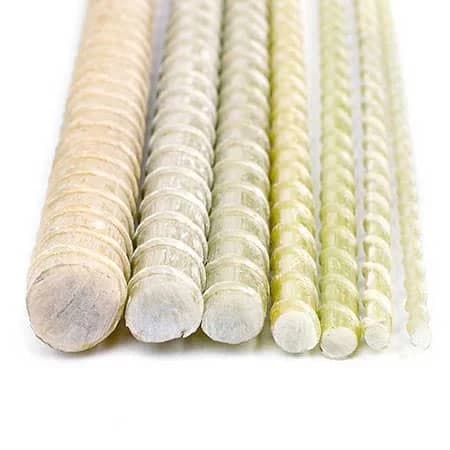
Glass-fiber reinforcing bars with an enhanced bond surface. The source catalog lists 15 metric diameters; confirm the resin, surface profile and cut length for your order.
For your inquiry: Diameter or bar designation · cut length · number of bars · surface requirement
Quote straight bars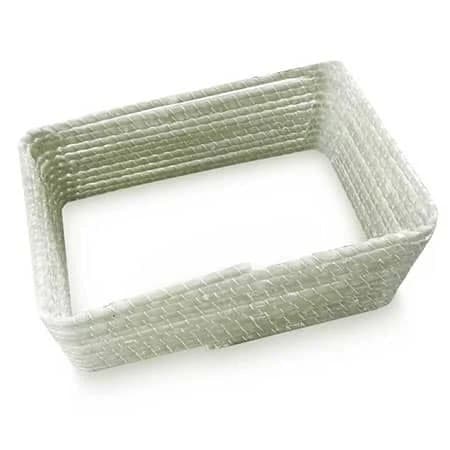
Make the shape before it reaches site
Rectangular stirrups and project bends are reviewed against your drawing. Confirm the inside bend radius, leg dimensions, tolerances and bent-section performance before manufacture.
For your inquiry: Bar diameter · shape drawing · inside radius · dimensions · quantity
Send a bending schedule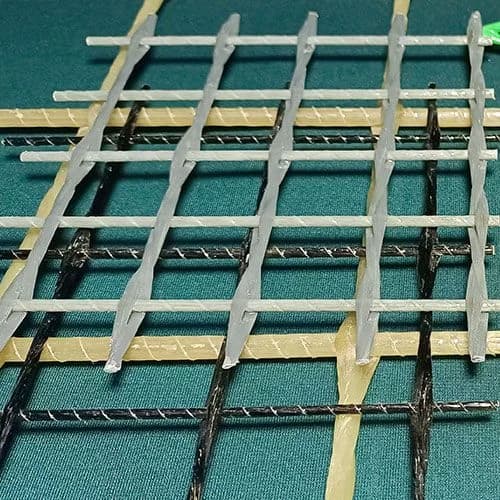
Specify both directions and the intersection
The source offers glass-fiber and epoxy-resin mesh with custom spacing and panel dimensions. Rod properties alone do not establish the performance of the assembled mesh or its joints.
For your inquiry: Rod sizes in both directions · spacing · panel dimensions · joint type · number of sheets
Quote reinforcement meshSeawalls, retaining elements and precast coastal components
Ground slabs, panels and repeat concrete elements
Concrete components in wet or chemically exposed environments
Concrete in magnetically or electrically sensitive areas
Bridge decks, approach slabs and related concrete elements
Project-specific reinforcement in TBM breakthrough zones
GFRP behaves differently from steel. Tensile strength alone does not determine bar size or spacing; stiffness, serviceability, bond and the applicable design rules matter.
Read the evidence-based fiberglass rebar vs steel comparison →Looking for plant, tree or vineyard stakes rather than concrete reinforcement? See our fiberglass stakes.
| Nominal diameter | Supply basis |
|---|---|
| Ø6 mm | Cut length and grade by quotation |
| Ø8 mm | Cut length and grade by quotation |
| Ø10 mm | Cut length and grade by quotation |
| Ø12 mm | Cut length and grade by quotation |
| Ø14 mm | Cut length and grade by quotation |
| Ø16 mm | Cut length and grade by quotation |
| Ø18 mm | Cut length and grade by quotation |
| Ø20 mm | Cut length and grade by quotation |
| Ø22 mm | Cut length and grade by quotation |
| Ø25 mm | Cut length and grade by quotation |
| Ø28 mm | Cut length and grade by quotation |
| Ø30 mm | Cut length and grade by quotation |
| Ø32 mm | Cut length and grade by quotation |
| Ø34 mm | Cut length and grade by quotation |
| Ø36 mm | Cut length and grade by quotation |
Diameter names are catalog designations. US bar numbers and metric sizes are not automatically interchangeable. Use the project specification and the offered grade data.
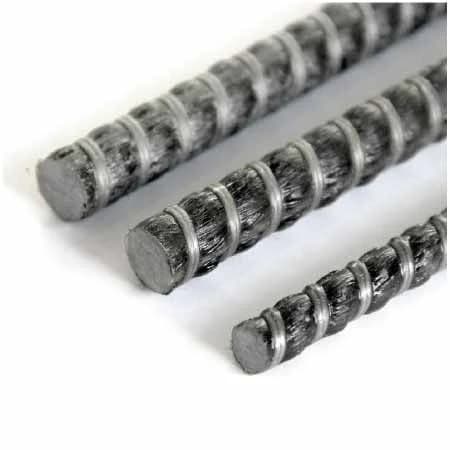
Confirm the surface with its bond test data. Color and texture alone do not identify a qualified material grade.
Grade, fiber/resin, surface, measured area, unit mass, tensile force and modulus for each offered size.
Requested test methods and editions, laboratory, specimen scope, bond, alkali exposure and retained properties.
Approved shape drawings, bent-section data, mesh intersections, tolerances and the relevant inspection requirements.
Agreed batch identification, inspection records, packing list and handling instructions for the released order.
ASTM D7957/D7957M-26 is the current GFRP bar specification. ACI CODE-440.11-22 addresses covered concrete structures and references D7957-22. Use the edition required by your project and the actual edition stated on each report. Neither reference is a claim that every offered product is approved.
Pre-manufactured mesh is outside D7957’s scope. Bent sections, mesh intersections and project-specific approvals need separate review. For Canada, Australia and other markets, include the governing local requirements with your inquiry.
Have the project designer establish bar area, spacing, cover, anchorage and lap details. Recheck the design when changing reinforcement material.
Specify the required shapes before manufacture. Do not field-bend, heat or weld cured GFRP reinforcing bars.
Check labels, quantities and damage on arrival. Follow the supplied storage instructions; protect bars from unnecessary impact and prolonged exposure.
Use the approved product cutting procedure and suitable protective equipment. Steel-style shearing can damage the fibers.
Use appropriate supports and ties. Check the approved spacing, cover, laps and stability so reinforcement remains in position during casting.
Fire resistance, seismic use, sustained loading and chemical exposure require project-specific review. ACI SPEC-440.5-22 covers construction requirements within its stated scope. Shapes, bend schedules and mesh are covered in our GFRP stirrups and bent bars guide. Handling, storage, supports, ties and flotation on site are in the GFRP rebar installation guide.
Step 1
Confirm destination, standard, grade, straight lengths, shapes and quantities. Resolve missing details before the order.
Step 2
Agree product data, sample needs, inspection scope, price basis, MOQ, lead time and shipping terms.
Step 3
Freeze drawing revisions and the acceptance criteria. Identify batches and check the dimensions and records agreed for the order.
Step 4
Agree labels by bar mark, bundle quantities, protection and shipment phases. Check bar length against the actual packing and transport plan.
Buying for distribution? Share the target market, size mix, initial quantity, sample needs and labeling requirements.
Discuss distributor supplyOrganize the products you need. Your selection carries to the contact form, where you can add drawings and send the inquiry.
FRP REBAR INQUIRY

Requested next step: Project quotation

Application: To be confirmed

Project standard / edition: To be confirmed

Item 1: Straight GFRP rebar
Diameter / designation: To be confirmed
Cut length: To be confirmed
Quantity: To be confirmed
Shape / mesh / surface / drawing details: To be confirmed

Documents requested: To be confirmed

Delivery / destination: To be confirmed

Product grade, qualification, availability and all unspecified details require quotation review.
This is an inquiry schedule. Grade, qualification, dimensions, quantities and delivery are reviewed before an order is released.
The manufacturing-source catalog lists nominal metric diameters of 6, 8, 10, 12, 14, 16, 18, 20, 22, 25, 28, 30, 32, 34 and 36 mm. These are inquiry sizes, not a stock list. Confirm the offered grade, tolerance, length and supporting reports with your quotation. Other sizes can be submitted for review.
Do not assume a one-for-one substitution. Stiffness, cracking, deflection, bond, anchorage and sustained loading must be checked along with strength. The project designer must approve the reinforcement layout and the offered bar properties.
Cured GFRP bars must not be field-bent, heated into shape or welded. Submit the required factory-formed shapes with dimensions, inside radii and quantities before production.
Tell us which standard, edition and approval documents your project requires. We confirm the evidence available for the proposed grade and manufacturing source. A management-system certificate or a reference to a standard is not a product approval.
Give the rod diameter and center-to-center spacing in both directions, overall sheet dimensions, joint requirements, quantity and approved drawing. Mesh and its intersections require their own acceptance basis; a straight-bar test report does not qualify the complete mesh.
Basalt reinforcement can be raised as a technical inquiry and needs its own material data. Cut lengths, minimum quantities, samples, packing and shipping dates are confirmed for the requested product and destination. Share your bar schedule, port and required delivery date.
Send your bar schedule or BOQ, the shapes and mesh, the documents required and the destination. We reply within one business day; a formal quotation follows once the specification and delivery are reviewed.