Skip to content
Specialist component specification

Specify a pultruded profile for a railway qualification program

The purchase definition needs a part drawing and a controlled material construction, followed by evidence matched to the OEM's component requirements. A hazard-level label alone is not a complete specification.

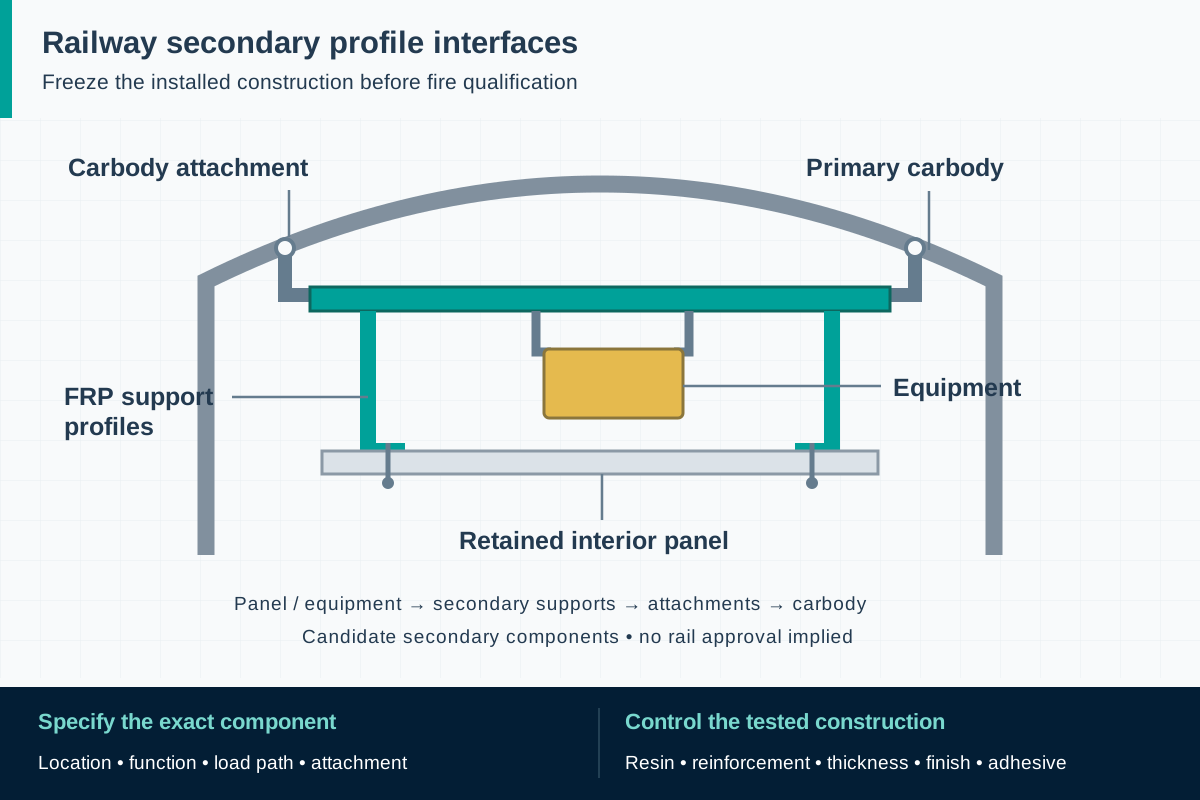
FIG. 1 Fire-retardant rail profile componentsComponent schematic · not to scale
Carbody brackets support the secondary FRP frame. Separate brackets carry equipment, while fasteners retain the ceiling panel; primary vehicle structure is outside the profile scope.

Component scope and material selection

Custom-profile qualification inquiry. F1 can assess drawings and required evidence; railway test coverage, classification, approval and serial production release must be confirmed for the specific offered construction.

Select the complete material system

Specified glass-fiber laminate, fire-retardant resin and surface system controlled to the evaluated component construction.

Components to specify

  • Panel-retention and support sections
  • Secondary frames and cover-edge profiles
  • Custom channels and closure sections for an OEM-defined component

Specify a part number rather than a material label

The purchase drawing should define section geometry, wall thickness, length, tolerances and the datums that control fit. Identify visible and hidden surfaces, mating parts and the interfaces that retain a panel or cover. Detail holes, slots, cut ends and any required edge treatment. Provide the finished-part drawing even when the initial quotation concerns a raw length, because later machining can influence the section and manufacturing proposal.

Clarify delivery scope: unmachined profile, cut and drilled component, coated part or an assembled item. Include appearance criteria and a reference sample where useful, with a method for judging color and visible defects. State which variations are functional, cosmetic or subject to OEM review. This allows an inspection plan to target the characteristics that actually control installation and acceptance.

ReferencesRöchling: rail-component design, fabrication and assemblyNEN-EN 45545-2:2020+A1:2023

Freeze the constituents and finish that matter to qualification

Create a material schedule covering reinforcement, resin, relevant additives, surface veil, coating and any bonded interface included in the supplied component. Identify the process and the production characteristics that must remain consistent with the accepted samples. A generic formulation description cannot support meaningful change control; the customer and supplier need a shared method for identifying the approved construction and subsequent revisions.

BÜFA's resin offering provides a useful example of material selection for pultrusion. It does not authorize an assertion that a profile made with a named resin meets a rail requirement. Obtain the evidence for the actual proposed construction and record any restrictions. If the customer changes finish or geometry during development, review the evidence implications before simply carrying the earlier material description onto the new drawing.

ReferencesBÜFA Composite Systems: resins and pultrusionBÜFA: fire-retardant systems brochure

Match the evidence package to the customer's requirements

Request the vehicle program, component location, applicable standard edition, requirement set and hazard level. The supplier's response should identify available reports, the represented material construction and any gaps requiring new work. Keep report identity and sample identity connected. A purchasing phrase such as 'rail approved' leaves the acceptance object unclear; name the component and the evidence the customer will use to approve it.

Mechanical acceptance needs its own schedule alongside fire evidence. Define which requirements apply to the material, machined profile or complete assembly and who supplies the associated tests or calculations. Equipment vibration standards have defined scopes; they should not be added to every profile order without an applicability decision. Resolve this division before commissioning samples so the specimens are representative of the work they are intended to support.

ReferencesNEN-EN 45545-2:2020+A1:2023IEC 61373:2026: rolling-stock equipment shock and vibration

Release production with traceability and change control

Agree on the sequence from drawing approval through representative samples and first-article inspection to serial release. The inspection plan should specify dimensional checks, surface condition, machining quality and identification. Where qualification remains pending, show that status explicitly on commercial and technical documents. Do not allow a prototype delivery or a successful fit check to be mistaken for the completion of all program requirements.

Define batch marking, certificate content, retained records and packaging that protects exposed edges and finished faces. Establish how nonconforming pieces are segregated and who approves repairs. Require notification of changes to constituents, geometry or processes that could affect the accepted configuration. For spares, retain the approved drawing and material revision so a later order does not introduce an undocumented substitute into a vehicle already in service.

ReferencesISO 22163:2023: railway quality-management scopeRöchling: rail-component design, fabrication and assembly

Standards, regulations and acceptance evidence

The project authority determines the governing jurisdiction and adopted edition. The scope of each reference matters: a material test, an equipment requirement and a workplace rule answer different questions.

Standard · EU rail vehicles within the LOC&PAS TSI, and other railway programs and contracts adopting this standard

EN 45545-2:2020+A1:2023

Reaction-to-fire performance of railway-vehicle materials and products. Operation and design categories under Part 1 inform the hazard level.

Application boundary: The vehicle customer must identify the component requirement set and hazard level. A result does not establish structural fire resistance, crash performance or approval of an entire vehicle.

ReferencesNEN-EN 45545-2:2020+A1:2023

Standard · Railway equipment programs where this test standard is applicable

IEC 61373:2026

Shock and vibration testing of equipment attached to the vehicle's main structure, within the stated equipment scope.

Application boundary: Not a blanket test standard for every profile: the main vehicle structure and mechanical substructures without electrical, electronic or pneumatic components are excluded. The OEM determines applicability to the equipment assembly. This edition replaces 2010.

ReferencesIEC 61373:2026: rolling-stock equipment shock and vibration

Public source scopes were reviewed on . These references do not establish certification of an F1 product. Agree the offered grade, finished component, test specimen and acceptance criteria in the project specification.

Fire-retardant rail profile components: practical questions

Are all profiles on this page already HL3 classified?

No. This page describes a qualification inquiry. Classification and report coverage must be established for the offered construction and the component's specified requirements.

Can the same report cover different wall thicknesses and coatings?

Only where the report and accepted scope support the proposed variants. The customer should review the actual construction and documented coverage rather than assume all changes are included.

What should a first inquiry include?

Send the component drawing, its installed location, material and finish requirements, the OEM's fire and mechanical criteria, quantities and the intended qualification schedule.

Technical sources and further reading

Industry sources establish where the application is used. Authority sources define the published scope of standards and regulations. The design and procurement checklists above are an original engineering synthesis for project review.
  1. Industry application evidence

    BÜFA Composite Systems: resins and pultrusion

    Resin-system supplier evidence for pultrusion and fire-retardant formulations. A resin offering does not qualify a finished railway profile.

  2. Industry application evidence

    BÜFA: fire-retardant systems brochure

    Explains the significance of laminate construction, thickness and surfaces for fire behavior. Its infusion and RTM examples must not be treated as tested pultruded profiles.

  3. Standard or public authority

    NEN-EN 45545-2:2020+A1:2023

    Official national standards-body description of reaction-to-fire requirements for materials and products on railway vehicles.

  4. Standard or public authority

    IEC 61373:2026: rolling-stock equipment shock and vibration

    Current edition published July 2026. Its equipment scope excludes the vehicle main structure and certain purely mechanical substructures.

  5. Industry application evidence

    Röchling: rail-component design, fabrication and assembly

    Application evidence for engineering, machining, bonding, screw connections, painting and quality checks. Its certifications do not apply to F1; the drawing and interface questions here are an original procurement framework.

  6. Industry application evidence

    Strongwell (ACMA Pultrusion Conference): FRP connection limit states

    Technical presentation hosted by Strongwell, especially slide 19, identifies bearing, shear-out, net-section and prying failure modes. This is background for reviewing connections, not a railway design standard or source of numerical F1 allowables.

  7. Standard or public authority

    ISO 22163:2023: railway quality-management scope

    Official overview establishes railway supply-chain quality and defect-prevention context. The release checklist is original engineering guidance, not a reconstruction of its clauses; no F1 certification is asserted.

Prepare a component qualification brief

Provide the application and acceptance requirements so we can assess material, geometry, sampling and the proposed supply scope. We reply within one business day; a formal quotation follows once the specification and delivery are reviewed.

01 · OEM program, installed function, standard editions, requirement set and hazard level.
02 · Part-numbered section and finished-component drawings, datums, wall thickness and tolerances.
03 · Delivery stage: raw length, machined part, finished part or defined assembly.
04 · Material and surface schedule, colors, coatings, adhesives and proposed changes from tested construction.
05 · Required fire evidence, mechanical acceptance basis, representative samples and first-article review.
06 · Production release authority, marking, batch records, change control, spares and delivery program.
Get a quoteWhatsApp