Fiberglass Flat Bars (FRP Bar Stock)
Solid rectangular pultruded fiberglass bars from 12×3 mm to 305×25 mm. Tolerances ±0.25 mm.
Start with your name and email. Product details and drawings can follow.
The most versatile pultruded profile
FRP flat bars serve as stiffeners, splice plates, wear strips, and spacer elements. High-modulus options with up to 70% glass content are used for concrete reinforcement and pre-stressed applications. Dimensional tolerances of ±0.25 mm on thickness and ±0.5 mm on width ensure reliable fit-up.
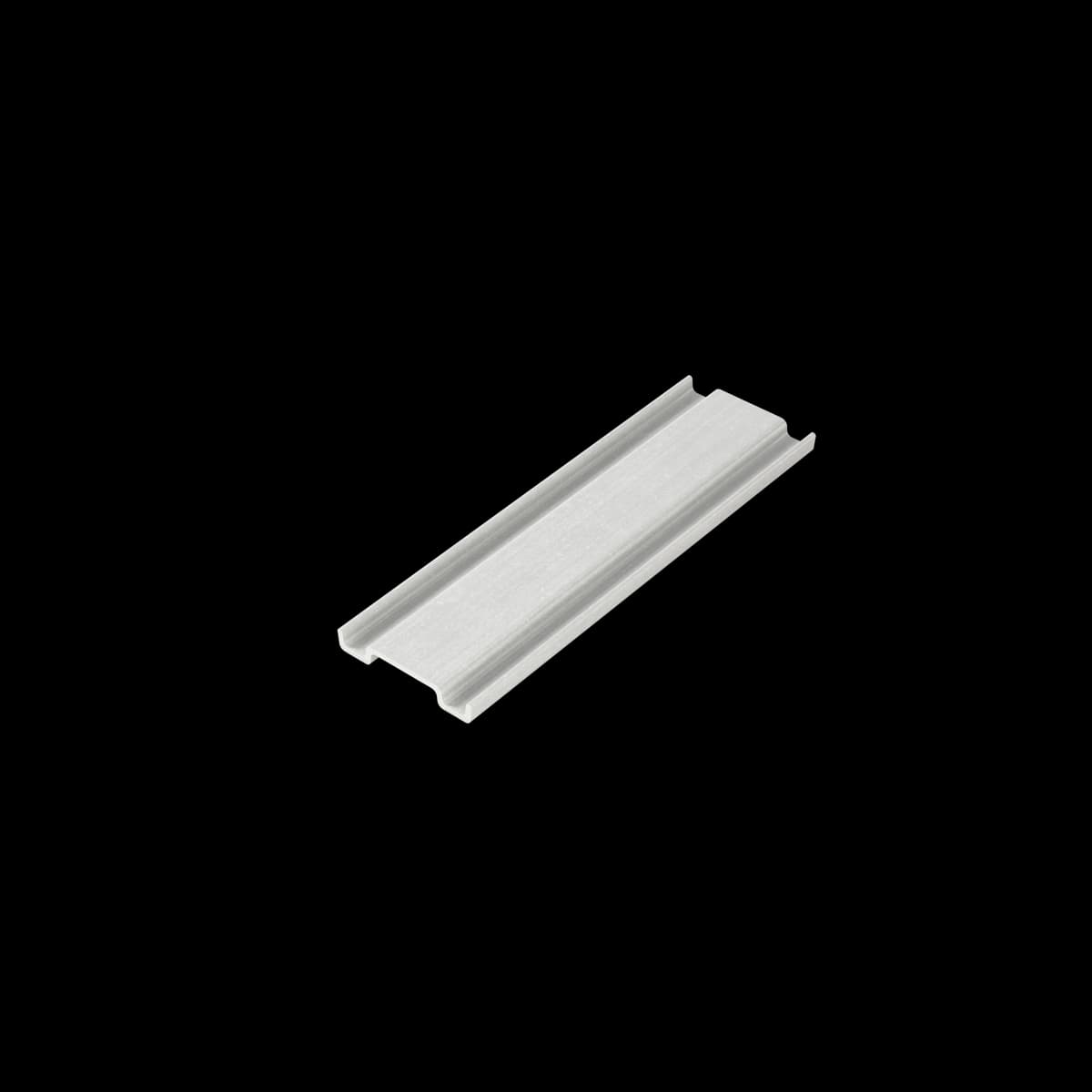
Available sizes
| Model | Width (mm) | Thickness (mm) | Weight (kg/m) |
|---|---|---|---|
| FB 12×3 | 12 | 3 | 0.07 |
| FB 20×3 | 20 | 3 | 0.11 |
| FB 25×3 | 25 | 3 | 0.14 |
| FB 25×5 | 25 | 5 | 0.23 |
| FB 30×4 | 30 | 4 | 0.22 |
| FB 38×4.8 | 38 | 4.8 | 0.33 |
| FB 50×5 | 50 | 5 | 0.45 |
| FB 50×6 | 50 | 6 | 0.55 |
| FB 50×10 | 50 | 10 | 0.91 |
| FB 75×6 | 75 | 6 | 0.82 |
| FB 75×10 | 75 | 10 | 1.36 |
| FB 100×6 | 100 | 6 | 1.09 |
| FB 100×10 | 100 | 10 | 1.82 |
| FB 100×15 | 100 | 15 | 2.73 |
| FB 150×10 | 150 | 10 | 2.73 |
| FB 150×15 | 150 | 15 | 4.09 |
| FB 200×15 | 200 | 15 | 5.45 |
| FB 305×25 | 305 | 25 | 13.86 |
Related FRP profiles
Frequently Asked Questions
What are pultruded FRP flat bars used for?
FRP flat bars are used as stiffeners, splice plates, wear strips, spacer elements, and rebar replacements in corrosive environments. High-modulus pultruded flat bars (up to 70% glass content) are also used in concrete reinforcement and pre-stressed structural applications where steel rebar would corrode.
How does FRP flat bar compare to steel flat bar?
Pultruded FRP flat bar is approximately 75% lighter than equivalent steel flat bar (1.9 g/cm³ vs 7.85 g/cm³), does not rust, and is non-conductive and non-magnetic. Tensile strength is comparable to mild steel (240–400 MPa for FRP vs 400 MPa for A36), so per kilogram FRP is stronger. Stiffness is roughly 1/10 that of steel, so deflection often governs design.
What tolerances do F1 Composite flat bars hold?
Standard tolerances are ±0.25 mm on thickness and ±0.5 mm on width, in line with EN 13706 and ASTM D3917. Lengths are typically supplied at 6 m (or per cut order) with ±5 mm length tolerance. Tighter tolerances are available for precision applications on request.
Can FRP flat bars replace steel rebar in concrete?
Yes. Pultruded FRP flat bars and rods with 65–70% unidirectional glass roving are used as non-corrosive reinforcement in concrete, especially in marine structures, parking decks, MRI rooms, and chemically exposed slabs. They eliminate corrosion-induced cracking and have a 50–100 year design life. Sand-coated or helically wound surfaces improve concrete bond.
From selection to a project quotation
Catalog dimensions identify standard section options, not live inventory. Confirm tooling, material, quantity and production timing in the quotation.
1. Check the application
Platform components and design inputsCheck section properties and preliminary response2. Review supporting evidence
FRP profile design manual and scopeFactory access staircaseConfirm that the document and project match your proposed product.
3. Send the specification
Include the drawing, resin or environment, loads, quantity and destination.
Request a specification reviewNeed engineering data or a quotation for flat bar profiles?
Send the dimensions, quantity, service environment, and destination. We acknowledge requirements within one business day.