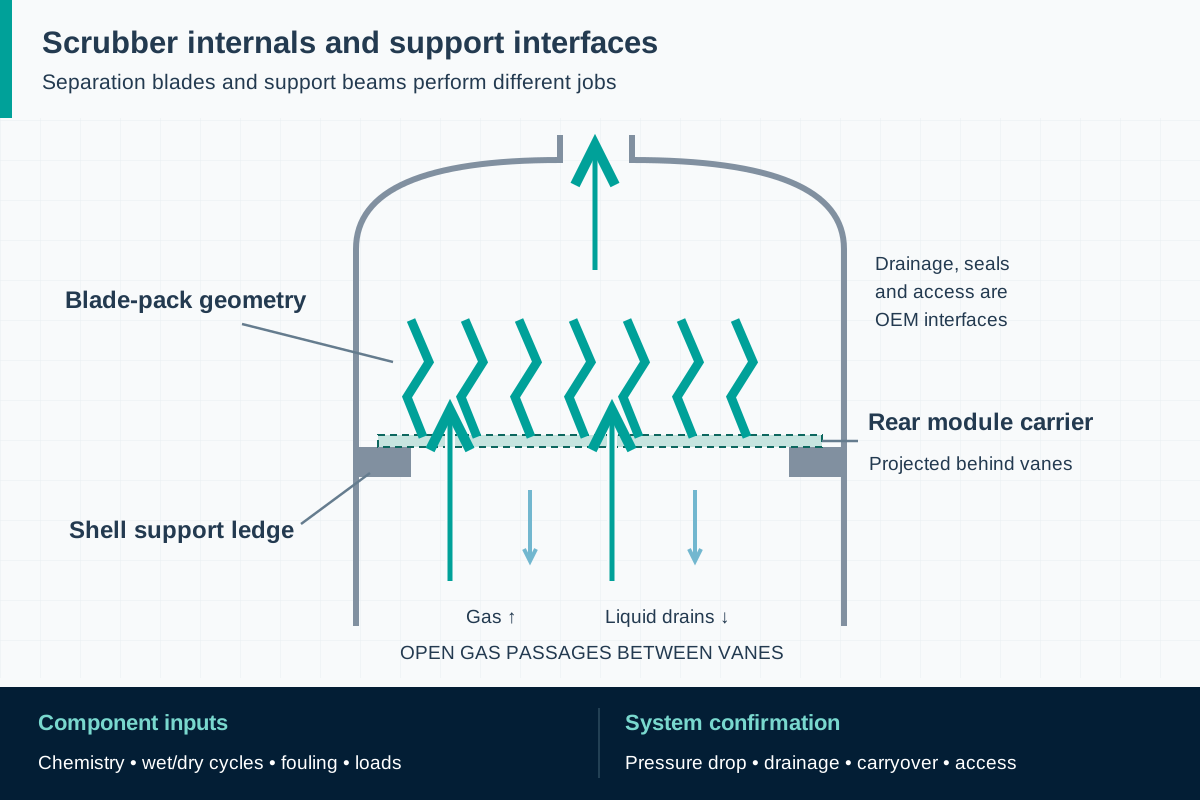
List the gas constituents and condensate chemistry separately from the recirculating wash liquid. Include concentration ranges, oxidizers, suspended solids, cleaning agents and temperature at the internal component. A bulk sump reading may not describe a local inlet zone. Record whether the surface is continuously wet, intermittently sprayed or exposed to hot gas during loss of irrigation; ask the process designer to define credible duration and temperature excursions.
Choose a resin grade, reinforcement and surface protection as a laminate system. A resin manufacturer's chemical table often assumes a defined corrosion barrier or veil; a thin pultrusion is not automatically equivalent to that construction. Check drilled holes, cut ends and abrasion-prone edges. If a proposed sealant or repair coat is part of the protection, include its chemistry, adhesion and reapplication procedure in the qualification.
Use exposure testing to resolve an identified evidence gap. State the reagent, concentration, temperature, duration, specimen construction and retained-property criteria beforehand. Unstressed liquid immersion under ASTM C581 can support resin selection, while an installed member may also need evidence for mechanical stress, gas exposure and thermal cycling. Neither a resin-family name nor an isolated immersion result establishes service life.