Skip to content
Pultrusion application guide

Pultruded FRP access and support components for pulp and paper mills

A paper mill contains wet stock preparation, chemical handling, bleaching and hot equipment zones. Map the actual duty before specifying a walkway, support frame or replacement component.

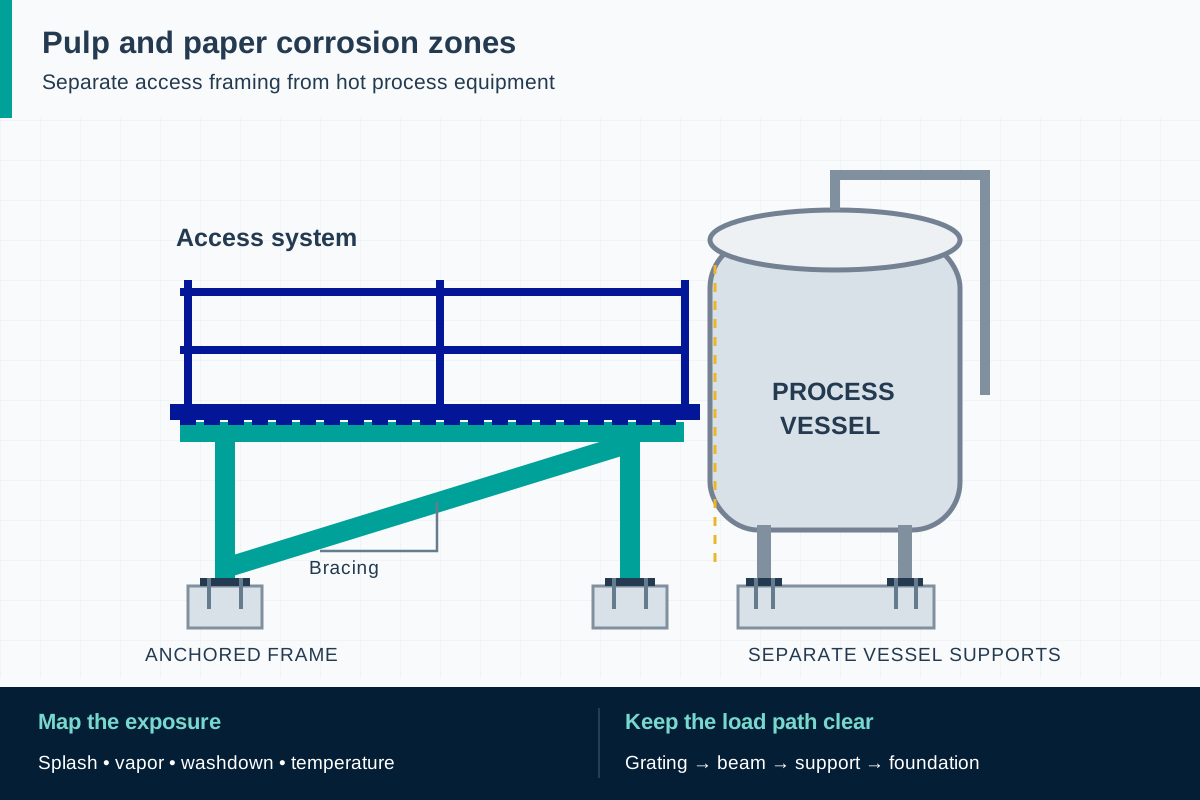
FIG. 1 Pulp and paper mill componentsApplication schematic · not to scale
Follow platform loads through the grating, beams, braced columns and anchored bases. The vessel has its own supports, and the pipework clears the access platform.

Component scope and material selection

F1 can assess pultruded beams, channels, tubes, angles and grating components for an agreed access or support package. Process vessels, pressure equipment, paper-machine internals, machinery certification and plant installation require separate specialist scopes.

Select the complete material system

Select a documented glass-fiber laminate for the identified chemical exposure, temperature, cleaning regime, mechanical duty and fire requirements. Assess metal connections and repaired or cut surfaces within the same exposure review.

Components to specify

  • I-beams and channels for access framing
  • Tubes and angles for bracing and guardrail components
  • Pultruded grating and stair components
  • Custom support or mounting profiles under an approved drawing

Map the mill into distinct service zones

Begin with a marked plant layout, not a blanket requirement for corrosion-resistant material. A route beside stock preparation may face persistent water, fibers and cleaning operations. Access around chemical dosing or bleaching equipment has a different exposure schedule. A structure close to hot process equipment needs its own temperature assessment, including radiated heat and foreseeable leakage. One material choice need not suit all three locations.

Describe what the component enables an operator to do: reach a valve, remove a pump, inspect an instrument or cross a process line. The route should provide the required working space without blocking isolation points, ventilation, emergency equipment or a lifting operation. A platform that is comfortable during normal operation may be too narrow when a maintenance team brings tools and a replacement component.

Bedford identifies pulp and paper access structures as an FRP application. Lifetime, conductivity and corrosion claims made for another supplier's products do not transfer to this mill's brief. Keep process-contact equipment and ordinary access components distinct so the inquiry reaches the correct specialist review.

ReferencesBedford: pulp and paper applicationsOSHA 29 CFR 1910.261: pulp, paper and paperboard mills

Build an exposure schedule before selecting the resin

Obtain chemical names, working concentrations and temperature ranges from the mill. Typical entries include bleach-plant oxidants such as chlorine dioxide, hydrogen peroxide and hypochlorite, sodium hydroxide in extraction stages, sulfuric acid, white or black liquor and hot washdown water. Record cleaning solutions and occasional upset conditions as well as routine production. Include contact mode: airborne mist, splash, trapped deposits or sustained wet contact can create different conditions at the same location. A process-area name such as bleach plant is not enough information to select a laminate.

Ask the material supplier to identify the evidence supporting the offered formulation. Match the evaluated exposure to the intended duty and record any unresolved conditions. If a special chemical assessment is required, define the exposure and the properties to be examined before and after it. ASTM D543 provides a framework, but the project must still choose relevant conditions; the standard's name alone is not a chemical-compatibility result.

Evaluate the surface package and fabrication as well as the resin. Holes, cut ends, bonded interfaces, fasteners and trapped liquid around brackets can become important service locations. State how field cuts will be protected and who supplies compatible repair materials. Keep heat resistance, fire behavior and chemical resistance as separate questions; evidence for one does not answer the other two.

ReferencesASTM D543-21: evaluating the resistance of plastics to chemical reagentsOSHA 29 CFR 1910.261: pulp, paper and paperboard mills

Choose the product form around access and cleanability

Pultruded beams and channels can form a regular support frame, while tubes and angles serve selected posts, braces and mounting details. A grating layout must identify the bearing direction and actual supports. Check a cutout near a column, pipe or valve individually: removing bearing members can change how the remaining panel carries load. Avoid treating an uninterrupted panel's capacity as a rating for every field-cut shape.

Select openings and surface treatment around footwear, the objects that may fall through, drainage and the site's cleaning method. Fibers and pulp deposits can affect drainage and footing even when the original surface has a traction finish. Provide access for cleaning both the top surface and the support ledges below it. A solid insert may solve one dropped-object concern while creating a new drainage or lifting issue.

Divide removable panels into pieces that fit the handling plan and access route. Identify positive restraints, lifting arrangements and the means of protecting the opening while a panel is removed. A rail post fixed to a removable panel needs particular coordination. Show which components remain in place during maintenance so the worker does not remove the protection needed for the next step.

ReferencesBedford: pulp and paper applicationsOSHA 29 CFR 1910.22: walking-working surfacesOSHA 29 CFR 1910.29: fall-protection system criteria

Check serviceability, connections and the existing structure

A replacement with the same outer dimensions as steel does not establish equivalent behavior. Ask the structural designer to review the offered laminate's directional properties, member deflection, stability and connection response. Include duration of load and the relevant environmental conditions in the design basis. Review vibration or repeated equipment loads if the frame is intended to support a running machine rather than only maintenance access.

Separate pedestrian loading from stored materials, maintenance equipment and pipe reactions. A walkway must not silently become a storage deck or a lifting anchor because it is close to the work. Mark prohibited or separately designed lifting locations on the plant documentation. If a pipe support is included, the piping designer must establish its reactions and movement requirements; the profile supplier should not infer them from a pipe diameter.

At bolted joints, coordinate hole locations, bearing surfaces, washers or backing details, access for tightening and the approved installation procedure. Assess retained concrete, steel and anchors, not just new FRP members. Where corrosion has reduced an old support, changing the platform material does not restore the support's capacity. Document responsibility for the full connection through to the existing building or foundation.

ReferencesASTM D7290-06(2022): composite material characteristic valuesASTM D3917-23: dimensional tolerances of pultruded shapesOSHA 29 CFR 1910.22: walking-working surfaces

Plan fabrication and installation around the shutdown

Measure the location while relevant equipment is accessible, and reconcile the measurements with the controlled drawing revision. Survey pipe clearances, obstructions, support elevations and the path for bringing long members into the mill. Off-site cutting and drilling can reduce work inside a congested area, but only when the interface data is dependable. Include a defined method for resolving discrepancies discovered during installation.

The mill controls work permits, process isolation and safe access. U.S. pulp and paper requirements include provisions for bleaching areas and machinery, while general servicing and entry rules may also apply. Choosing a nonmetallic component does not eliminate the need to control a nearby drive, incoming chemical or open vessel. The site's responsible personnel must identify the applicable procedures before replacement work starts.

Deliver parts marked to an assembly drawing and protect fabricated surfaces during storage and lifting. Follow the approved drilling, fastening and cut-surface treatment instructions; do not use a universal torque value copied from a metal assembly. During handover, verify panel restraint, bearing, rail continuity, opening protection and the actual maintenance clearances. Retain the revised drawings and photographs so future crews can identify what was installed.

ReferencesOSHA 29 CFR 1910.261: pulp, paper and paperboard millsOSHA 29 CFR 1910.147: control of hazardous energyOSHA 29 CFR 1910.146: permit-required confined spacesOSHA 29 CFR 1910.29: fall-protection system criteriaASTM D3917-23: dimensional tolerances of pultruded shapes

Inspect where the process and the structure interact

Establish a baseline inspection after installation, then set a schedule around exposure and operating experience. Record the laminate identification, panel arrangement and critical joints. Compare later observations with that baseline rather than assuming every color change is structural damage or every intact-looking member is adequate. Pay particular attention after an abnormal chemical release, impact or unauthorized modification.

Useful inspection locations include fastener holes, member ends, grating bearings, concentrated-load points and places that collect deposits. Record cracking, damaged fibers, loosened attachments, movement, blocked drainage and loss of traction. Have the responsible designer evaluate defects that affect a load path. Local repair needs an agreed method and acceptance criteria; covering damaged material with a surface coating is not evidence that capacity has been restored.

Maintenance should also revisit the user's task. New equipment may obstruct a previously clear escape route or require a heavier replacement pump to cross the deck. Changes to cleaning chemicals can alter the exposure basis. Keep the structural and exposure records linked to plant modifications, and reassess the affected components before the new duty begins rather than waiting for a visible failure.

ReferencesOSHA 29 CFR 1910.22: walking-working surfacesASTM D543-21: evaluating the resistance of plastics to chemical reagentsOSHA 29 CFR 1910.29: fall-protection system criteria

Illustrative workflow: replacing a wet-area maintenance walkway

This example is a procurement method, not a claim about an F1 installation. A mill plans to replace a deteriorated walkway beside a process tank during a scheduled shutdown. The initial brief includes a measured layout, the tank and piping interfaces, the chemical and cleaning schedule, photographs of existing damage and a description of routine maintenance tasks. A survey identifies which supports can be retained for engineering review.

The designer establishes the load cases, member arrangement and guard system, while the supplier proposes the documented laminate and fabrication package. The team reviews a representative connection and the most congested removable panel before releasing all parts. The purchase order assigns anchors, hardware, engineering review, installation and inspection to named parties and defines the evidence needed at each release point.

Before shutdown, the plant confirms access, isolation, temporary edge protection and the delivery sequence. At completion, the team checks the installed configuration against the accepted design and records remaining issues. The mill receives an as-built arrangement, material identities and inspection instructions. This gives purchasing a repeatable spare-parts reference and gives maintenance a clear basis for evaluating changes in service.
ReferencesBedford: pulp and paper applicationsOSHA 29 CFR 1910.147: control of hazardous energyOSHA 29 CFR 1910.22: walking-working surfacesOSHA 29 CFR 1910.29: fall-protection system criteria

Standards, regulations and acceptance evidence

The project authority determines the governing jurisdiction and adopted edition. The scope of each reference matters: a material test, an equipment requirement and a workplace rule answer different questions.

Regulation · U.S. pulp, paper and paperboard mills

OSHA 29 CFR 1910.261

Contains industry-specific workplace requirements; paragraph (h) addresses bleaching operations and includes guarded platform interfaces.

Application boundary: Apply provisions to the actual equipment and process. This rule does not certify an FRP resin or provide a complete composite structural design method.

ReferencesOSHA 29 CFR 1910.261: pulp, paper and paperboard mills

Standard · Where specified for the project material assessment

ASTM D543-21

Can organize evaluation of the laminate against identified chemical exposures.

Application boundary: It supplies test practices, not a universal approval for bleach chemicals, hot cleaning or all mill locations.

ReferencesASTM D543-21: evaluating the resistance of plastics to chemical reagents

Standard · Civil structural composite design using an accepted characteristic-value basis

ASTM D7290-06(2022)

Provides a statistical basis for material property values used by the structural designer.

Application boundary: Does not replace checks for members, connections, environment, fire or the installed workplace assembly.

ReferencesASTM D7290-06(2022): composite material characteristic values

Public source scopes were reviewed on . These references do not establish certification of an F1 product. Agree the offered grade, finished component, test specimen and acceptance criteria in the project specification.

Pulp and paper mill components: practical questions

Can one vinyl ester specification cover the whole bleach plant?

A resin-family label is insufficient. Identify the actual formulation, chemicals, concentrations, temperature, contact duration and cleaning conditions, then review relevant evidence. Different locations may require different materials or additional evaluation.

Can a fiberglass section directly replace an identical steel section?

Only after design review. Stiffness, directional behavior, connection details and service conditions differ. Evaluate the whole support arrangement, including retained anchors and structure, rather than matching outside dimensions alone.

Does an FRP access package include chemical tanks or paper-machine parts?

Not by default. This inquiry concerns access and support components. Pressure equipment, process-contact vessels and machinery internals need distinct specifications, qualified suppliers and clearly assigned engineering responsibilities.

Technical sources and further reading

Industry sources establish where the application is used. Authority sources define the published scope of standards and regulations. The design and procurement checklists above are an original engineering synthesis for project review.
  1. Industry application evidence

    Bedford: pulp and paper applications

    Confirms the use of FRP access structures in this industry; it does not establish a resin choice or service life for a different supplier.

  2. Standard or public authority

    ASTM D543-21: evaluating the resistance of plastics to chemical reagents

    Public scope and limitations checked. Chemical testing must represent the relevant exposure; short exposure does not establish long-term immersion performance.

  3. Standard or public authority

    ASTM D3917-23: dimensional tolerances of pultruded shapes

    Public scope checked. Standard profile tolerances and separately agreed special-purpose tolerances have different roles.

  4. Standard or public authority

    ASTM D7290-06(2022): composite material characteristic values

    Statistical material-property practice for civil structural applications; not a collector design standard or a complete assembly approval.

  5. Standard or public authority

    OSHA 29 CFR 1910.261: pulp, paper and paperboard mills

    U.S. industry-specific requirements, including bleaching areas and machinery; apply relevant provisions to the actual process.

  6. Standard or public authority

    OSHA 29 CFR 1910.22: walking-working surfaces

    Covers the condition, loading, access and inspection of workplace walking surfaces in its U.S. scope.

  7. Standard or public authority

    OSHA 29 CFR 1910.29: fall-protection system criteria

    Applies to the installed protection system. A material coupon or rail profile alone cannot establish compliance.

  8. Standard or public authority

    OSHA 29 CFR 1910.147: control of hazardous energy

    U.S. general-industry servicing and maintenance requirements, subject to the rule's scope and exclusions.

  9. Standard or public authority

    OSHA 29 CFR 1910.146: permit-required confined spaces

    The employer evaluates the actual space and hazards. An empty tank is not automatically safe to enter.

Prepare a component qualification brief

Provide the application and acceptance requirements so we can assess material, geometry, sampling and the proposed supply scope. We reply within one business day; a formal quotation follows once the specification and delivery are reviewed.

01 · Mill location, process area and applicable owner, building and workplace requirements
02 · Operator tasks, equipment removal routes, emergency access and shutdown constraints
03 · Controlled plan and sections, support survey, pipe penetrations and retained-structure condition
04 · Permanent, access, maintenance and equipment loads identified by the responsible designer
05 · Chemical names/concentrations, normal and abnormal temperatures, mist/splash/immersion and cleaning schedule
06 · Required laminate evidence, fire criteria where applicable and conditions needing separate qualification
07 · Member and grating layout, bearing direction, cutouts, panel restraint and removable-section plan
08 · Guardrails, stairs, openings and connection interfaces with assigned design responsibility
09 · Cutting/drilling drawings, identification, edge treatment, hardware and anchor supply scope
10 · Trial assembly, inspection records, as-built handover, spares and delivery sequence
Get a quoteWhatsApp