Skip to content
Specialist component specification

Specify a CFRP strip component for a strengthening system

The purchase specification for a carbon strip should define its dimensions, longitudinal material data, bonding face and traceability. System compatibility and structural acceptance remain explicit project requirements.

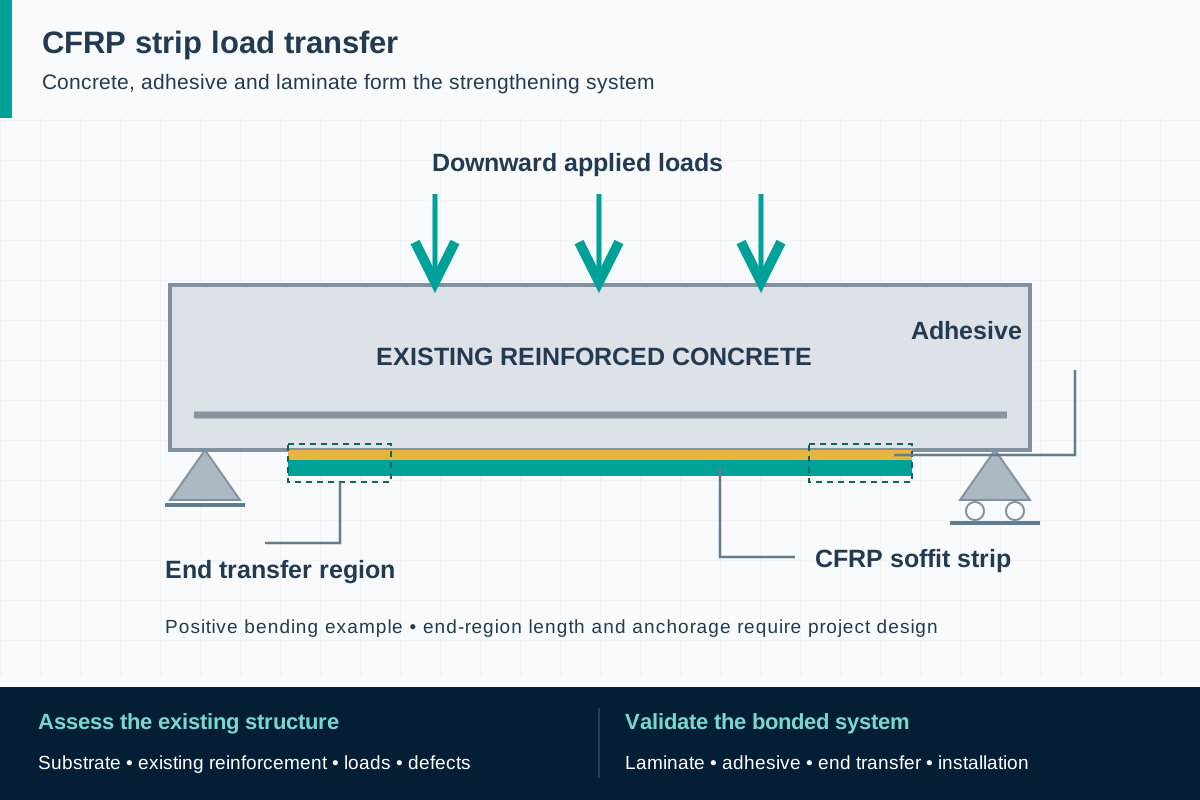
FIG. 1 Pultruded CFRP strengthening stripsComponent schematic · not to scale
For this positive-bending case, the CFRP strip sits on the beam's tension face. The adhesive transfers load into the strip, with transfer regions marked at both ends.

Component scope and material selection

Component qualification inquiry only: F1 can assess a supplied strip specification and required evidence. Stock sizes, assessed strengthening kits, adhesive compatibility and approvals require confirmation before an offer is accepted.

Select the complete material system

Specified carbon-fiber laminate with a qualified resin and controlled bonding surface.

Components to specify

  • Flat strip with specified width and thickness
  • Cut lengths identified to the reinforcement schedule
  • Narrow strip geometries considered for a designed groove

Put the functional geometry on the purchase drawing

Give each strip a part number linked to width, thickness, length and the permitted tolerances. Define how those dimensions are measured and whether the requirement applies before or after any surface treatment. Include straightness, edge condition and end-cut requirements where they affect fitting or bonding. A supplier needs the actual section rather than an approximate area calculated from a rounded catalog dimension.

State whether delivery is in individual lengths or another agreed format, and establish transport and handling requirements for that format. The reinforcement drawing should identify orientation and installed position without relying on removable packaging. If lengths will be cut on site, assign the cutting procedure, identification transfer and final inspection to a named party. Material availability and packaging geometry are quotation items, not assumed stock commitments.
ReferencesEAD 160086-01-0301: CFRP strengthening kitsSika CarboDur System: application method statement

Request material data on an agreed basis

Specify the properties needed by the designer, including longitudinal stiffness and tensile behavior, together with the applicable test method and acceptance basis. Distinguish typical development data from declared or statistically established design inputs. The source of a value, specimen orientation, conditioning and representative production construction should be identifiable. An isolated high test result is not a procurement specification. ISO 10406-3:2019 gives test methods for pultruded CFRP strips used as externally bonded reinforcement; on European projects the bonding adhesive is normally declared under EN 1504-4.

Define the permitted reinforcement and matrix system and how changes are controlled. Where thermal or environmental performance matters, agree on the evidence and conditioning relevant to the project. A carbon strip's resin temperature data should not be presented as the service limit of an adhesive joint. The purchaser should state which characteristics are mandatory for tender review and which need to be established during development.

ReferencesACI PRC-440.2-23: FRP strengthening guideISO 10406-3:2019: test methods for CFRP strips

Make the bonding face a controlled interface

Identify the intended bonding face, its surface preparation, protection during transport and compatibility requirements. Surface texture alone does not demonstrate a qualified adhesive interface. The system owner should determine the acceptance evidence for the actual strip, adhesive, concrete and any repair layer. Preserve the identity of the proposed materials during sample evaluation so the production component can be compared with what was accepted.

Define whether the order covers only strips or components of an assessed kit. Include exclusions and interfaces in the quotation, such as adhesive supply, site preparation and installation supervision. If an existing system approval is a project requirement, check its exact products and allowed variations before purchasing an alternative strip. A reference to an assessment document is not evidence that the offered material belongs to an assessed system.

ReferencesEAD 160086-01-0301: CFRP strengthening kits

Agree on sample release, inspection and batch records

Set a qualification stage before serial delivery: approve the drawing and material proposal, identify representative samples and agree on test acceptance. The inspection plan can cover dimensions, visual condition, bonding-face protection and the specified material tests. Record the criteria for disposition of damaged edges, surface contamination or mismarked pieces. Do not leave rework decisions to a generic visual-quality statement.

Request a delivery record that connects the part number and batch to the relevant material and inspection evidence. Specify how identification survives unpacking, cutting and installation. Agree on protective packaging, handling instructions, storage conditions and an incoming-inspection period. These controls support a traceable component purchase; final acceptance of the strengthened member also requires the system designer's and installer's project records.

ReferencesACI PRC-440.2-23: FRP strengthening guide

Standards, regulations and acceptance evidence

The project authority determines the governing jurisdiction and adopted edition. The scope of each reference matters: a material test, an equipment requirement and a workplace rule answer different questions.

Guidance · United States origin; use where accepted by the project designer and authority

ACI PRC-440.2-23

Engineering, construction and inspection guidance for FRP used in externally bonded or near-surface-mounted concrete strengthening.

Application boundary: A guide, not a product certificate or an automatic legal approval. The project design must define enforceable requirements. It is distinct from standards for internal GFRP reinforcing bars.

ReferencesACI PRC-440.2-23: FRP strengthening guide

Standard · Projects adopting this code through the governing code, authority or contract

ACI CODE-440.13-24

Minimum requirements for strengthening existing concrete with the unidirectional externally bonded and near-surface-mounted FRP systems permitted by its Chapter 4.

Application boundary: Publication does not make it law everywhere or certify a product. Masonry is excluded. Seismic strengthening of seismic-force-resisting members in Seismic Design Categories B–F is outside its scope; the designer must establish the applicable route.

ReferencesACI CODE-440.13-24: FRP concrete-strengthening codeACI CODE-440.13-24: official preview and scope

Assessment route · European technical assessment route for construction products

EAD 160086-01-0301

Assessment of concrete-strengthening kits comprising unidirectional carbon/epoxy strips and an epoxy structural bonding agent, for externally bonded or near-surface-mounted use.

Application boundary: Strip width and thickness must be prefabricated in the plant; site cutting to width is excluded. The stated intended use excludes seismic retrofitting and prevention. An EAD is not an ETA: verify the actual kit and assessment scope. EOTA lists the earlier -00 version as superseded.

ReferencesEAD 160086-01-0301: CFRP strengthening kitsEOTA: European Assessment Document register

Public source scopes were reviewed on . These references do not establish certification of an F1 product. Agree the offered grade, finished component, test specimen and acceptance criteria in the project specification.

Pultruded CFRP strengthening strips: practical questions

Are these catalog stock strips?

This is a specification and qualification route. Dimensions, availability, minimum order and evidence requirements must be reviewed before a product offer is confirmed.

Is adhesive included?

Only if expressly included in an agreed scope with compatibility and system evidence. A strip-only quotation does not establish an accepted strengthening kit.

Can wind-blade laminate data be used for this strip?

Not automatically. The offered construction, bonding interface, property basis and intended strengthening use need project qualification.

Can a wide plate be slit on site under EAD 160086-01-0301?

No. Its scope excludes strips cut on site to the required width. Specify the factory-produced width and thickness. Cutting to length is a separate installation operation that must follow the selected kit's instructions and the project specification.

Technical sources and further reading

Industry sources establish where the application is used. Authority sources define the published scope of standards and regulations. The design and procurement checklists above are an original engineering synthesis for project review.
  1. Standard or public authority

    ISO 10406-3:2019: test methods for CFRP strips

    Test methods for unidirectional pultruded CFRP strips used as externally bonded reinforcement on concrete. Results describe the strip, not a bonded strengthening system.

  2. Industry application evidence

    Epsilon Composite: pultruded carbon flat laminates

    Evidence of a commercial carbon/epoxy strip application in civil engineering; proprietary products and performance are not F1 specifications.

  3. Standard or public authority

    ACI PRC-440.2-23: FRP strengthening guide

    Publisher's scope for engineering, construction and inspection of externally bonded and near-surface-mounted FRP strengthening systems. The full guide is not reproduced.

  4. Standard or public authority

    ACI CODE-440.13-24: FRP concrete-strengthening code

    Official publisher listing for the 2024 design code. Its publication does not establish adoption by a particular jurisdiction or project.

  5. Standard or public authority

    ACI CODE-440.13-24: official preview and scope

    The public preview includes the preface and Sections 1.1–1.2, establishing concrete-only, permitted-system and seismic limits. It does not provide the full design provisions.

  6. Standard or public authority

    EOTA: European Assessment Document register

    Lists EAD 160086-01-0301 and identifies the earlier 160086-00-0301 as superseded.

  7. Standard or public authority

    EAD 160086-01-0301: CFRP strengthening kits

    Sections 1.1–1.2 define the carbon/epoxy strip and bonding-agent kit, manufacturing dimensions and intended-use limits. This assessment document is not an approval of F1 products.

  8. Industry application evidence

    Sika CarboDur System: application method statement

    A manufacturer's system-specific example of installation and inspection controls. Its adhesive, dimensions, environmental limits and cure times must not be transferred to another system.

Prepare a component qualification brief

Provide the application and acceptance requirements so we can assess material, geometry, sampling and the proposed supply scope. We reply within one business day; a formal quotation follows once the specification and delivery are reviewed.

01 · Part-numbered strip schedule: width, thickness, length, quantity, tolerances and measurement conditions.
02 · Material system, required property basis, test methods, conditioning and acceptance criteria.
03 · Bonding-face definition, protection and the intended adhesive/system qualification evidence.
04 · Externally bonded (EB) or near-surface-mounted (NSM) use, drawing revision and responsible designer or kit supplier.
05 · Prototype and serial release requirements, inspection records, marking and traceability.
06 · Delivery format, handling constraints, destination, storage period and installation program.
Get a quoteWhatsApp