Engineers rarely reject pultruded FRP because the material seems exotic. More often, they pause because a few practical questions remain unanswered. If those questions are answered with numbers, standards, and realistic section behavior, specification confidence rises quickly. These are the ten questions we hear most often.
1. Is FRP strong enough for this application?
Usually yes, but the real discussion is not ultimate strength in isolation. The engineer needs directional strength data, laminate description, section properties, and the correct reduction or resistance factors for the relevant design method. Pultruded FRP is not isotropic steel, so the answer must be directional and application-specific.
2. Is stiffness going to control before strength does?
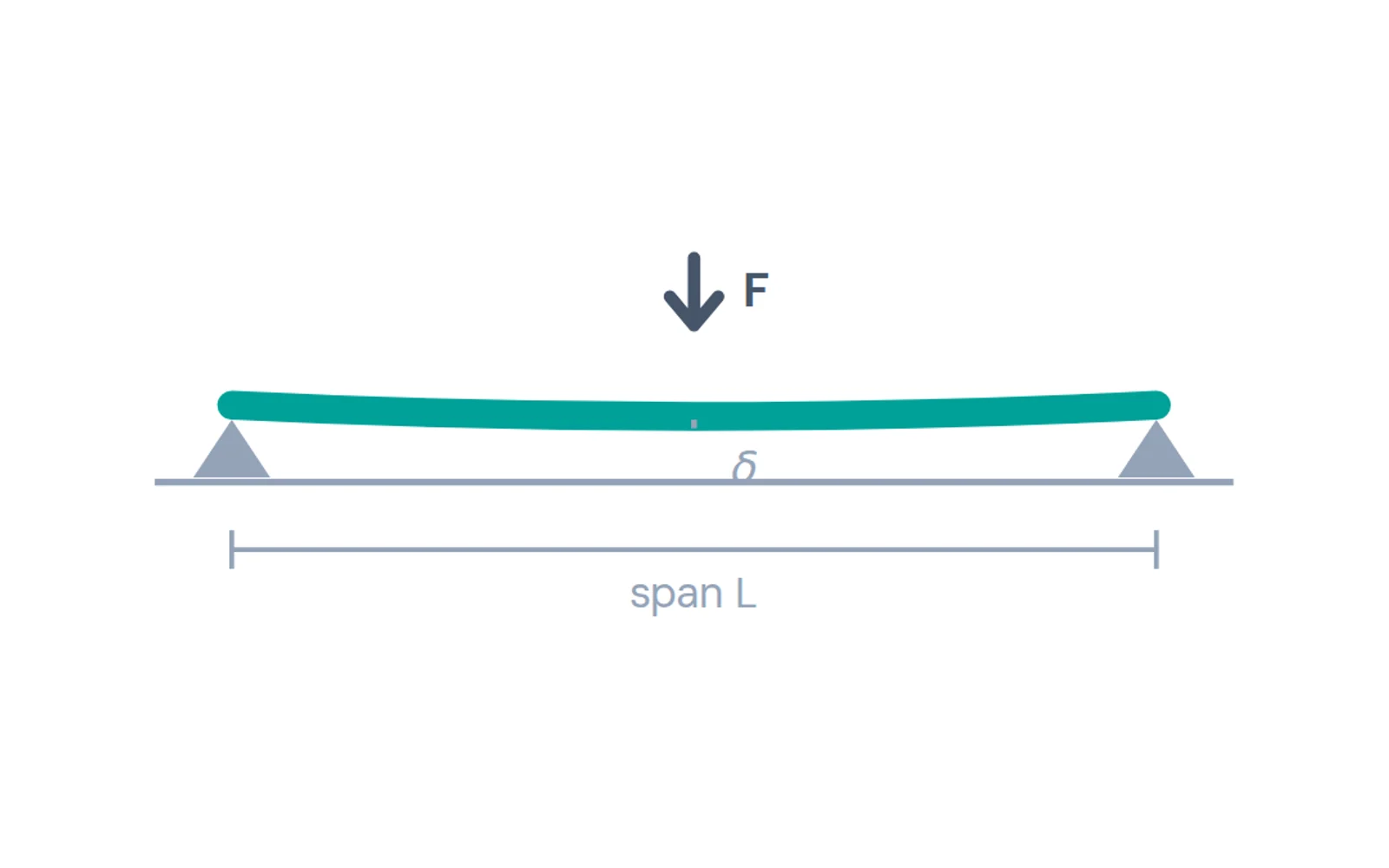
Very often, yes. This is one of the most important questions in pultruded FRP design. Because the elastic modulus is lower than steel, serviceability and deflection frequently govern the section size. Engineers who understand this early usually specify FRP more successfully.
3. Which code or standard should I design to?
This is a critical question because design confidence depends on recognizable standards. Depending on project geography and structure type, the engineer may work from ASCE/SEI 74-23, CEN/TS 19101, EN 13706, project-specific owner requirements, or validated manufacturer data. A capable supplier should help map the project to the right standard set rather than forcing the engineer to improvise.
4. How should bolted or bonded connections be designed?
Connections are where many FRP concepts fail. Bearing, net-tension, block shear, local crushing, and anisotropic behavior all matter. The supplier should provide connection guidance, preferred edge distances, washer and plate details, and a realistic view of what can and cannot be done cleanly in the field.
5. What happens at elevated temperature or in fire?
Engineers ask this early because it affects whether the application is even viable. The answer depends on resin system, flame spread requirement, smoke target, heat exposure, and whether the project is asking for reaction-to-fire performance or true load-bearing fire resistance. Those are not the same thing and they should never be mixed together in a proposal.
6. How does the section behave under long-term load?
Creep matters in FRP design. For sustained-load applications, the engineer wants to know the allowable stress basis, the service temperature, and how the section was validated. Short-term coupon strength alone is not enough for handrails, supports, cable management, facade support members, or deck planks that will live under permanent load.
7. What dimensional tolerances can actually be held?
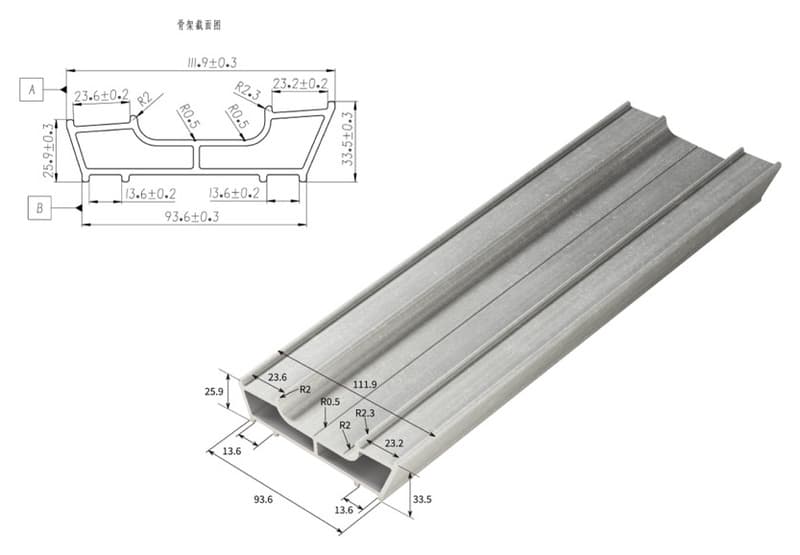
This question becomes decisive when the profile must integrate with glazing, brackets, cable accessories, or modular assemblies. Engineers need realistic tolerance data, not optimistic shop-floor estimates. EN 13706 and ASTM D3917 are often the right starting point, but custom interfaces may need tighter control on selected dimensions.
8. What quality documents will ship with the product?
Specification confidence rises sharply when the supplier can offer lot traceability, incoming raw-material control, in-process monitoring, dimensional inspection, and mechanical test records tied to the order. Engineers do not just want parts. They want evidence that the parts are what the drawings say they are.
9. Can the crew machine and install this without special equipment?
Field practicality matters. Engineers ask whether the system can be drilled, cut, assembled, and adjusted with normal tools, and whether hot work can be avoided. In many retrofit and live-plant environments, that installation answer heavily influences the material decision.
10. What are the MOQ, tooling lead time, and sample path?
The final engineering question is often commercial in disguise. If the profile is custom, the project team needs to understand prototype timing, tooling ownership, first-article validation, and what must be frozen before production can scale. When those items are vague, engineering approval usually slows down.
What the ten questions have in common
Engineers do not need a louder sales pitch. They need a clean technical bridge from concept to specification. When a supplier can hand over section properties, design guidance, quality records, and a credible production path, pultruded FRP stops reading as a risk and starts reading as a known quantity.
F1 Composite supports engineers with design coordination, tolerance planning, qualification packages, and manufacturing input early enough to head off late-stage redesign.