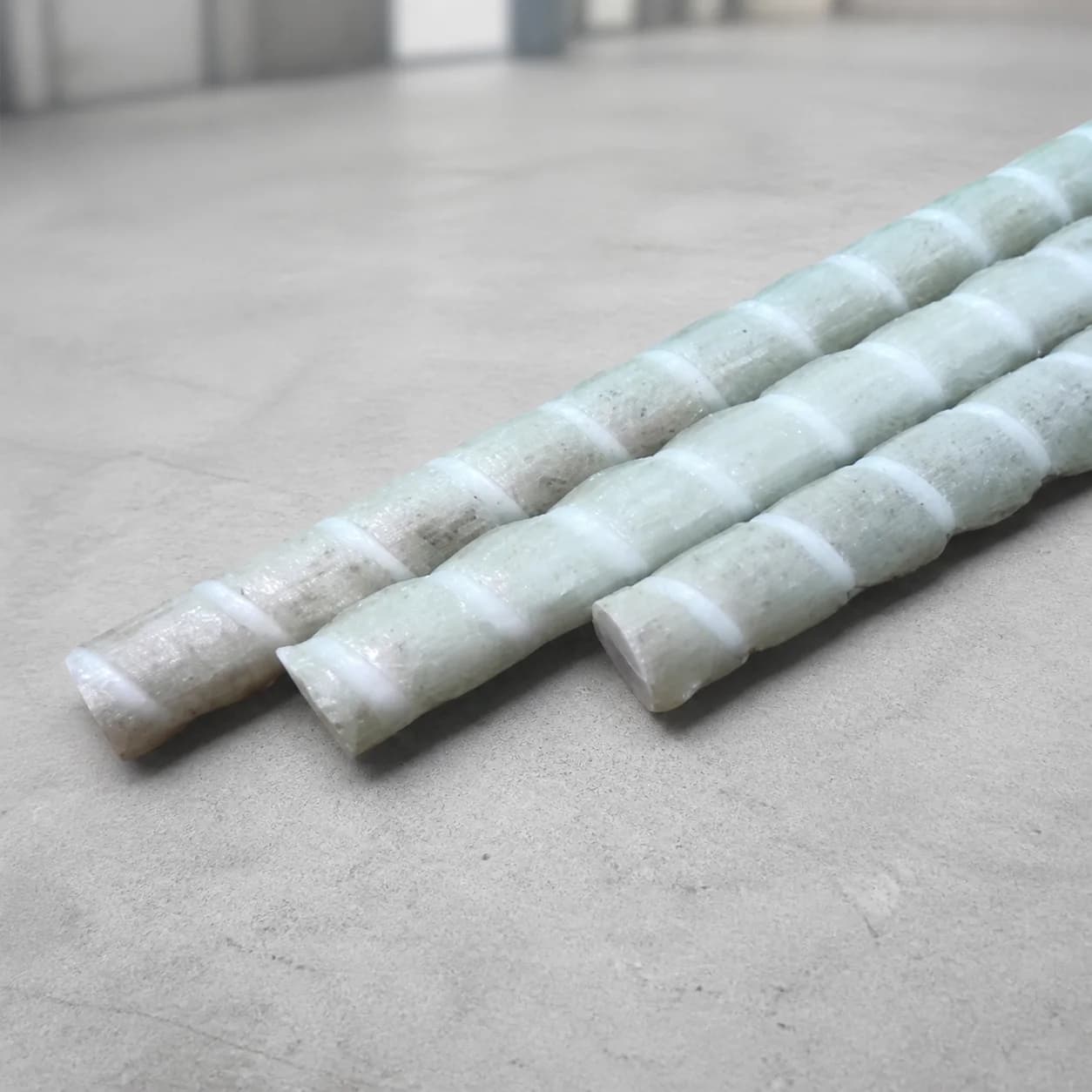
Glass fiber reinforced polymer (GFRP) rebar can be cut on site, and cutting is the only field operation it allows. A cured bar cannot be bent, heated or welded, so a good cut and a good cut list matter more than with steel. This guide covers the tools that work, the ones that damage the bar, dust control and cut ends. It draws on ACI SPEC-440.5-22, the construction specification for GFRP reinforcing bars, and on Appendix G of UFC 3-301-01; the project specification and the supplier's instructions govern.
Tools that cut GFRP cleanly
| Tool | Blade or wheel | Best for |
|---|---|---|
| Angle grinder | Diamond blade | Single cuts on site, most bar sizes |
| Circular saw | Diamond blade | Straight cuts on supported bars |
| Chop saw | Diamond or abrasive wheel | Repeated cuts to length at a cutting station |
| Fine-toothed hacksaw | Fine-tooth blade | Small bars and occasional cuts |
Diamond blades last longer in glass fiber than toothed steel-cutting blades, which dull quickly. Let the blade do the work: forcing it heats the cut and frays the surface.
Tools that damage the bar
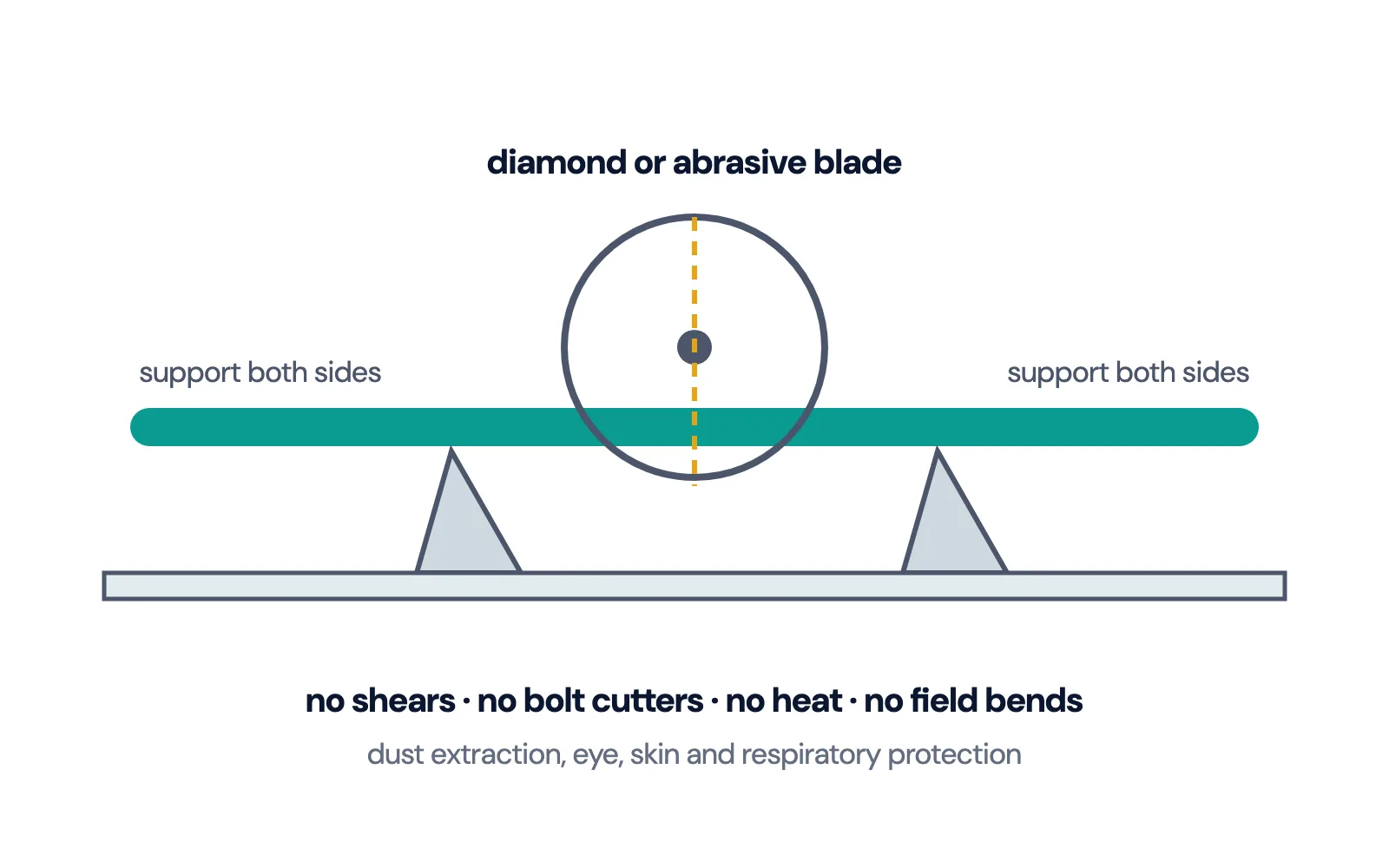
Rebar shears, bolt cutters and hydraulic cutters crush a GFRP bar instead of cutting it. The fibers split back from the end and the damaged length can no longer be counted on. UFC 3-301-01 permits field cutting but prohibits shearing, and flame cutting is out of the question for a resin-based bar. Keep shears off the GFRP part of the site.
How to make the cut
- Measure and mark the bar from the cut list, allowing for the blade width.
- Support the bar on both sides of the cut, close to the blade, so the offcut does not drop and snap the end as the blade breaks through.
- Clamp or hold the bar so it cannot roll.
- Cut at a steady feed with the dust extraction running.
- Check the end: it should be square and free of splitting. Cut back past any damaged length.
- Treat the end as the supplier's instructions require, then return the bar to its marked bundle.
Dust control and protection
Cutting GFRP makes fine glass fiber and resin dust. Use on-tool extraction or the dust-suppression method the site allows, cut in a ventilated area away from other trades, and give the crew eye protection, gloves, long sleeves and the respiratory protection the site's risk assessment calls for. Clean up with a vacuum rather than compressed air.
Cut ends
Whether cut ends need sealing depends on the product. Some suppliers ask for a resin coat on cut ends, especially for ends that stay exposed or sit near the concrete surface, while others do not require it. Read the instructions supplied with the delivered bars and the project specification, and write the requirement into the method statement before the first cut.
Order cuts and bends from the factory where you can
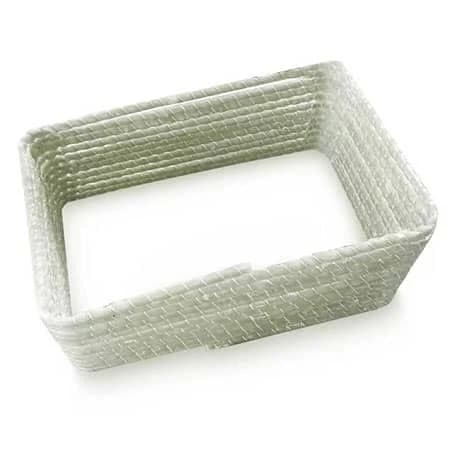
Every bend, hook and stirrup is formed in the factory before the resin cures; a cut bar cannot be turned into a bend on site. Our GFRP bent bars and stirrups guide covers the bending schedule. Straight bars can also arrive cut to length, which reduces site dust, waste and handling. Put cut lengths on the bar schedule template, and keep a small agreed allowance of spare bars for site adjustments.
For the rest of the site process, from lifting and storage to ties and flotation, see how to install GFRP rebar. F1 supplies GFRP straight bars, factory-formed stirrups and mesh cut to your schedule.
Cutting fiberglass rebar
What is the best tool to cut fiberglass rebar?
An angle grinder or circular saw with a diamond blade gives the cleanest, fastest cut on most bar sizes, and a chop saw with a diamond or abrasive wheel suits repeated cuts to length. For small bars, a fine-toothed hacksaw works. Use the blade type the bar supplier recommends.
Can you cut fiberglass rebar with bolt cutters or rebar shears?
No. Shears and bolt cutters crush the bar instead of cutting it, splitting the fibers back from the end. UFC 3-301-01 permits field cutting of GFRP bars but not shearing. Use a saw.
Do you need to seal the cut ends of fiberglass rebar?
Follow the instructions supplied with the bars. Some suppliers ask for cut ends to be sealed or kept away from particular exposures, others do not. Check the project specification as well, and record the requirement in the method statement before cutting starts.
Is fiberglass rebar dust dangerous?
Cutting produces fine glass fiber and resin dust that irritates the eyes, skin and airways. Use dust extraction or the suppression method the site allows, and wear eye protection, gloves, long sleeves and the respiratory protection required by the site's risk assessment.