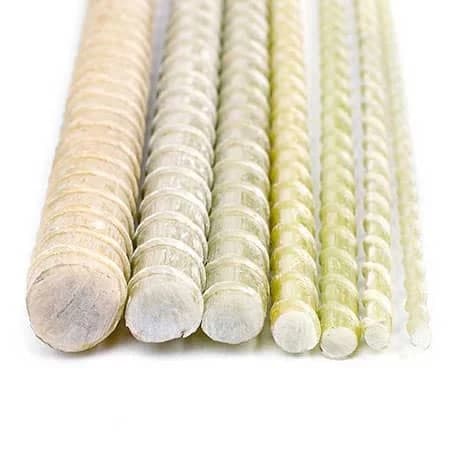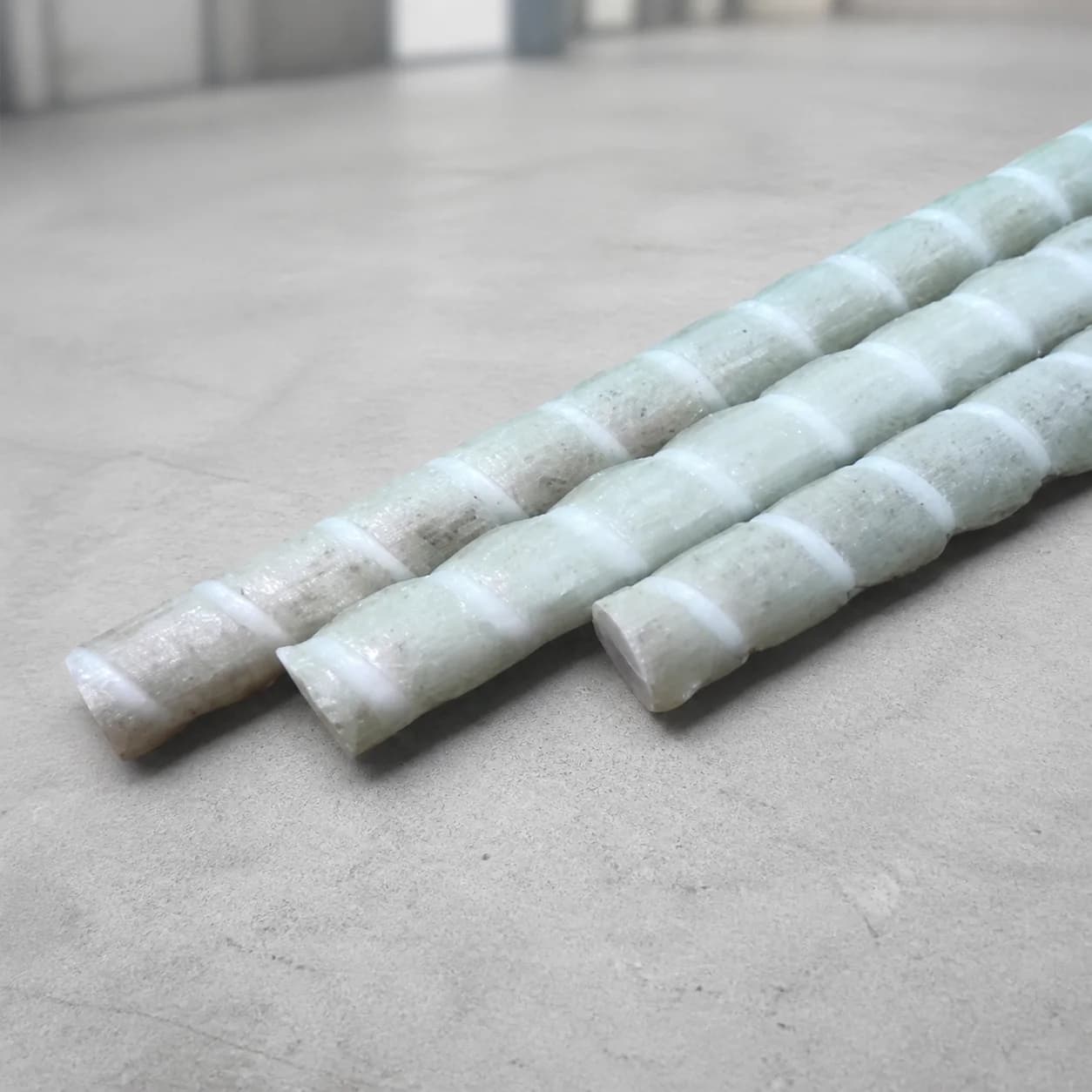
Fiberglass rebar, or glass fiber reinforced polymer (GFRP) rebar, is sold by the foot or meter for each bar size. The price per foot is the number buyers see first, and it is useful once two offers describe the same bar. This guide shows where published prices sit, why the same nominal size can mean different amounts of reinforcement, and what to add before a GFRP price is compared with steel.
What fiberglass rebar costs per foot
Public retail listings give a reference range. In October 2026, US building-supply listings for 3/8 in and 1/2 in fiberglass rebar, priced by the foot and sold in 20 ft lengths, fell between roughly $0.30 and $0.50 per foot. Larger bars cost more per foot, roughly in proportion to their cross-sectional area.
| What sets the figure | Range or basis |
|---|---|
| Reference range, 3/8 in to 1/2 in bars, US retail, October 2026 | About $0.30–$0.50 per foot |
| Larger bar sizes | Scales roughly with cross-sectional area |
| Project price | Confirmed by quotation against your bar schedule (RFQ) |
The range is a public retail reference on one date, not a quotation. A project order adds certification, cut lengths, bends, packing and freight, and the quantity and size mix move the price in both directions. Use the range to sanity-check a quotation; the actual price is the one in the RFQ response.
Why the same size can mean different bars
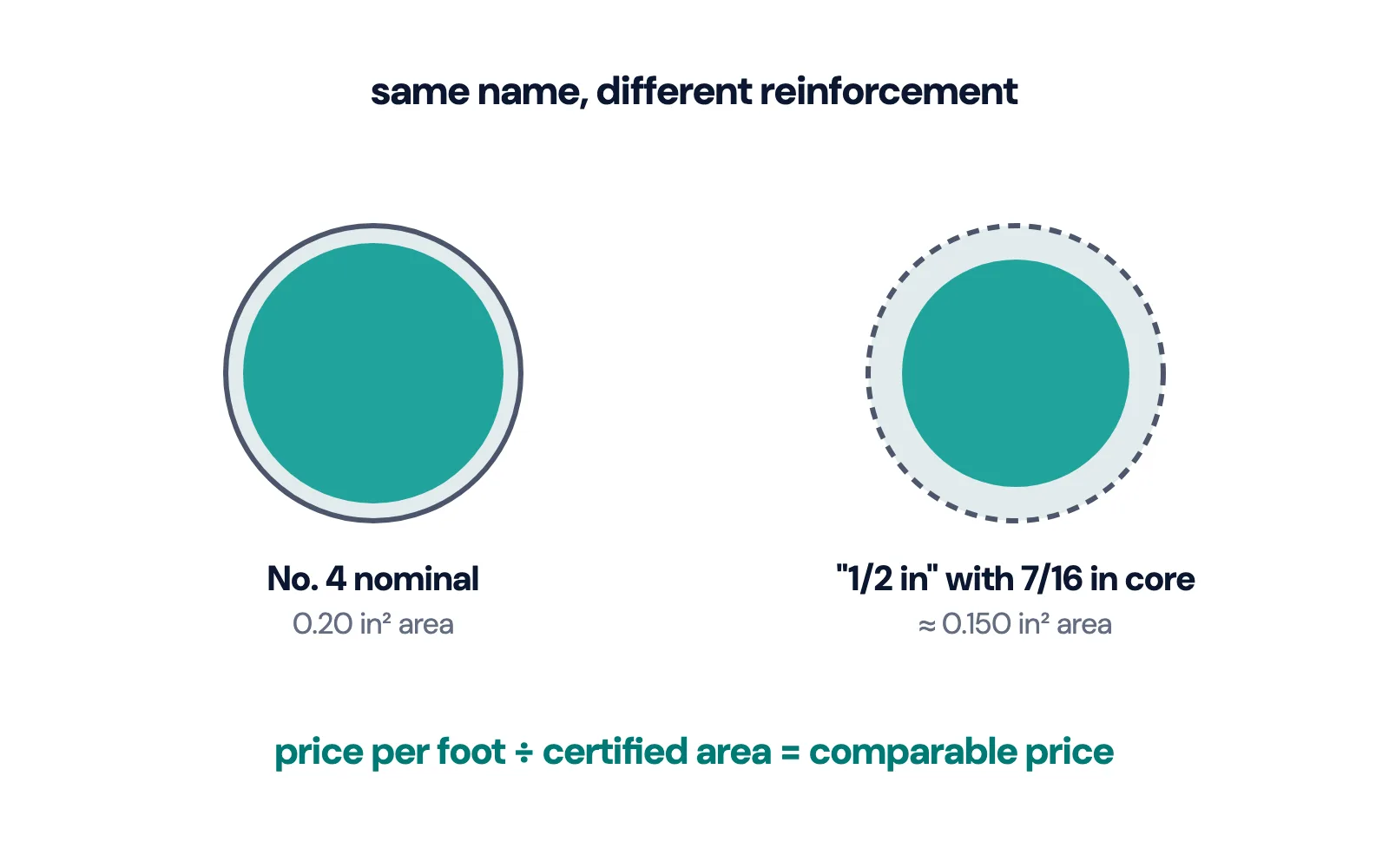
Retail listings also show the main trap in comparing per-foot prices. One published 1/2 in listing states a 7/16 in load-bearing core: a bar sold as 1/2 in by its outside diameter can have a smaller core once the ribs, wrap or sand coating are excluded. A 7/16 in core has an area of about 0.150 in², while an ASTM D7957 No. 4 bar has a nominal area of 0.20 in². The design strength of a bar is tied to the area and guaranteed tensile load that its certificate states, so a cheaper bar per foot can be the more expensive one per unit of reinforcement.
Put each offer on the same basis before comparing:
- Price per certified area: divide the price per foot by the certified cross-sectional area. A bar with a 0.150 in² core has 25% less area than a 0.20 in² No. 4 bar, so it needs to cost about 25% less per foot just to break even per unit of reinforcement.
- Price per guaranteed tensile load: divide the price per foot by the guaranteed tensile force on the certificate, which reflects both area and strength.
- Same standard and edition: check that both bars are offered against ASTM D7957 (or the standard your project names) and that the reports state the edition they were run against.
Our GFRP rebar size chart lists the nominal diameter and area of every ASTM and metric size, with calculated weights.
What moves the price of a GFRP bar
Bar size. Glass and resin content scale with the cross-sectional area, roughly with the square of the diameter, so a No. 8 bar costs several times a No. 4 bar per foot.
Grade and resin. Bars for structural concrete are typically made with vinyl ester resin, and the guaranteed tensile strength and modulus differ between products. A higher guaranteed load can justify a higher price per foot.
Certification and testing. Lot-specific certificates, third-party qualification reports and project tests such as bond or bent-bar capacity add cost and time. A price without them is not comparable with one that includes them.
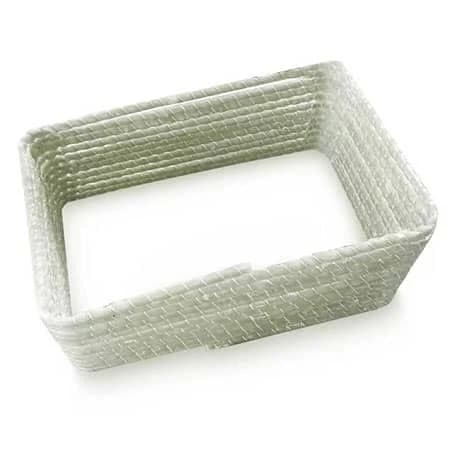
Bends, stirrups and mesh. Every bend is formed in the factory before the resin cures, as our bent bars and stirrups guide explains, so shapes are priced from the bending schedule.
Lengths, packing and freight. Cut-to-length bars reduce site waste but add handling. GFRP weighs about a quarter as much as steel of the same size, which lowers the weight-based part of freight; long flexible bundles still need proper support and packing.
Comparing GFRP with steel
A per-foot comparison of a GFRP bar with a steel bar of the same number is the least useful comparison. GFRP has roughly a quarter of the stiffness of steel, so the engineer of record designs the GFRP reinforcement to ACI CODE-440.11-22 or the code adopted for the project, and the bar sizes and spacing can change. Compare the two designs instead:
- Price the GFRP bar schedule and the steel bar schedule for the same element.
- Include the steel protection the exposure needs, such as epoxy coating, galvanizing or stainless steel.
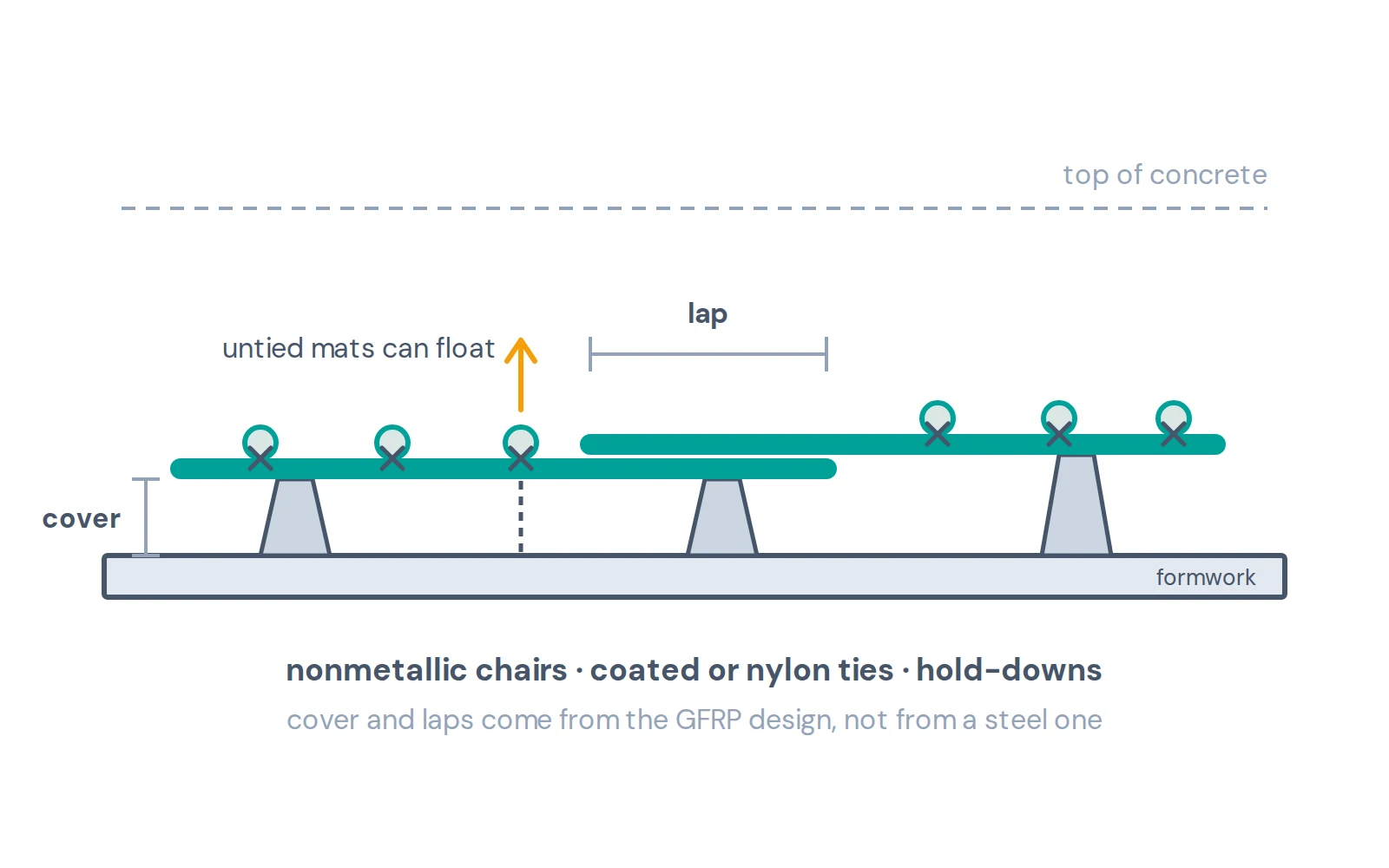
- Add handling, placing and any change in concrete cover that each design requires.
- Add inspection, repair and replacement over the period the owner uses for decisions.
Our fiberglass rebar vs steel review covers the technical tradeoffs, and the life-cycle cost calculator organizes a scenario with your own quoted costs.
Getting a comparable quotation
Send the bar schedule with diameters or bar numbers, cut lengths, quantities, bent shapes, the standard and edition required, the certification you need and the delivery destination. The bar schedule template has columns for straight bars and shapes. F1 quotes GFRP straight bars, factory-formed stirrups and mesh against the schedule, with the certified area and tensile data of the offered grade, so the price can be compared per foot and per unit of reinforcement. The quoted price, not a reference range, is the basis for the order.
Fiberglass rebar price questions
How much does fiberglass rebar cost per foot?
US retail listings for 3/8 in to 1/2 in bars fell roughly between $0.30 and $0.50 per foot in October 2026, and larger bars cost more in proportion to their area. Project prices depend on the size mix, certification, bends, quantity and delivery, so the actual price is confirmed by quotation against your bar schedule.
Is fiberglass rebar more expensive than steel?
Often per foot of bar, but the bar price is not the whole comparison. The GFRP reinforcement is designed for its own stiffness and bond, so bar sizes and spacing can change, and the decision also includes coating or alloy choices for steel, handling, cover, maintenance and replacement. Compare the two designs at the same date and on the same scope.
Why do two 1/2 in fiberglass bars have different prices?
They may not carry the same load. One published 1/2 in listing states a 7/16 in load-bearing core, which has about 25% less area than the nominal 0.20 in² of an ASTM D7957 No. 4 bar. Grade, surface, certification and lot testing also differ. Compare price per certified area or per guaranteed tensile load.
Do bends cost more than straight bars?
Yes, in most quotations. GFRP bends and stirrups are formed in the factory before the resin cures, so each shape is priced from the bending schedule with its own tooling and handling. Keep bends and straight bars on separate lines when you compare offers.