Fiberglass Direct Roving
Specify fiberglass direct roving by glass type, sizing, linear density and resin compatibility. Prepare a qualification and delivery request for your process.
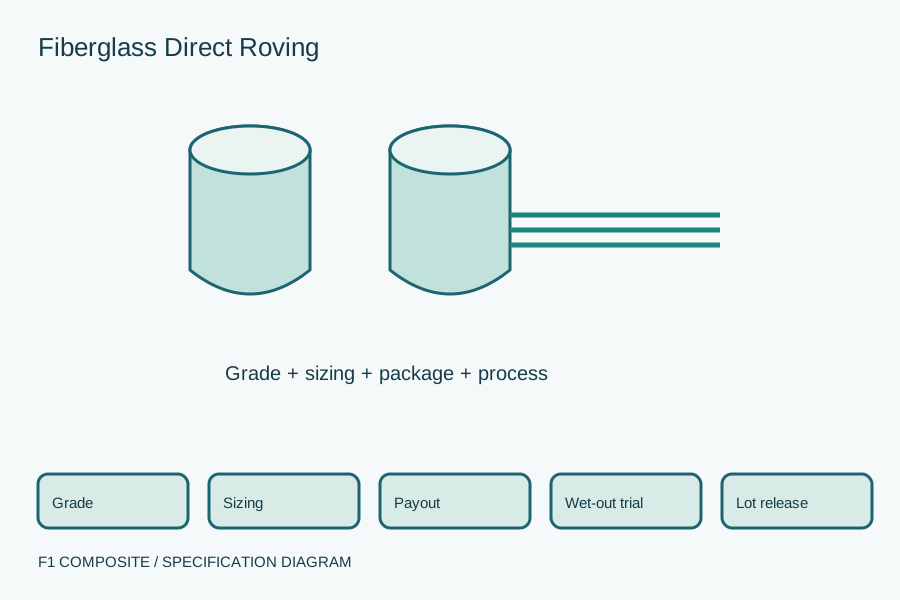
Define the proposed supply package
Equipment, tooling and material sourcing support forms part of F1 Know-How & Services. We review requirements within a technology-transfer, production-setup or improvement engagement.
Agree the exact equipment configuration or material grade, qualification documents, delivery and support responsibilities before ordering. Availability, pricing, lead time and warranty are confirmed for the proposed package.
What to specify and what to request
| Scope | Your specification | Requested supplier response |
|---|---|---|
| Fiber grade | Glass type, filament requirement and named product grade | Supplier technical data with the exact grade identifier |
| Processing fit | Linear density, sizing and intended resin/process | Compatibility evidence and a representative trial package |
| Packaging | Package dimensions, payout, pallet and moisture protection | A packing specification compatible with the creel and storage |
Roving qualification and production release
| Module / stage | Define before procurement | Required output / record |
|---|---|---|
| Technical package | Glass grade, sizing, tex, packaging and intended resin/process. | Current technical data, lot certificate and supplier change-notification terms. |
| Creel and preformer trial | Payout, tension, fuzz, breaks and behavior through the chosen guides. | A feed-trial record tied to guide/preformer and material revisions. |
| Laminate release | Wet-out, reinforcement content and project mechanical/electrical requirements. | Approved trial results; a new grade is reviewed before production substitution. |
Resolve acceptance before placing an order
CHECK 1
Qualify sizing with the resin
A glass designation or linear density alone does not establish compatibility. Review the sizing and intended resin with the proposed supplier, then assess wet-out and processing in the actual system.
CHECK 2
Control grade substitutions
Record the approved grade, supplier and incoming checks. Requalify changes that affect processing or laminate performance rather than accepting a substitution solely on nominal tex.
CHECK 3
Inspect the delivered lot
Agree lot identification, certificate of analysis, packing condition and sample retention. Identify how storage and handling will protect the reinforcement before it reaches the line.
Purchasing questions
Does the same tex make two rovings interchangeable?
No. Sizing, glass composition, filament construction and package behavior can differ. Review the proposed grade and confirm the effect on processing and the finished laminate.
Related sourcing specifications
Browse composite materials →Technology transfer & consulting →Profile resin selection →
Discuss Fiberglass Direct Roving
Share the specification and destination. The next step is to define the equipment or material support needed within your Know-How engagement.
Drawings and technical documents can follow after the initial contact.
- 1Glass type, grade and required tex
- 2Resin system and manufacturing process
- 3Creel/package and payout requirements
- 4Trial quantity, annual demand and delivery schedule
- 5Required lot documents and incoming acceptance criteria