Pultrusion Machines
Specify a pultrusion line around the profiles you plan to make. Review hydraulic or caterpillar pulling, resin handling, tooling and acceptance trials with F1.
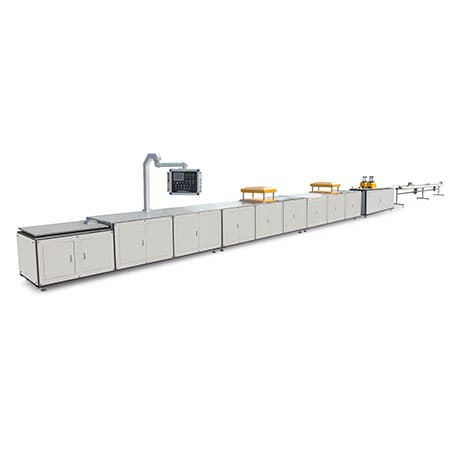
Define the proposed supply package
Equipment, tooling and material sourcing support forms part of F1 Know-How & Services. We review requirements within a technology-transfer, production-setup or improvement engagement.
Agree the exact equipment configuration or material grade, qualification documents, delivery and support responsibilities before ordering. Availability, pricing, lead time and warranty are confirmed for the proposed package.
What to specify and what to request
| Scope | Your specification | Requested supplier response |
|---|---|---|
| Product and output | Cross-section drawings, material system, cut lengths and output target | A trial plan using representative profiles and materials |
| Pulling system | Hydraulic or caterpillar arrangement, working envelope and grip interface | Pulling capability, grip behavior and control under agreed production conditions |
| Complete line | Creels, guides, impregnation, die heating, puller, cutter and controls | A module list that identifies included equipment and buyer-supplied utilities |
Compare line configurations
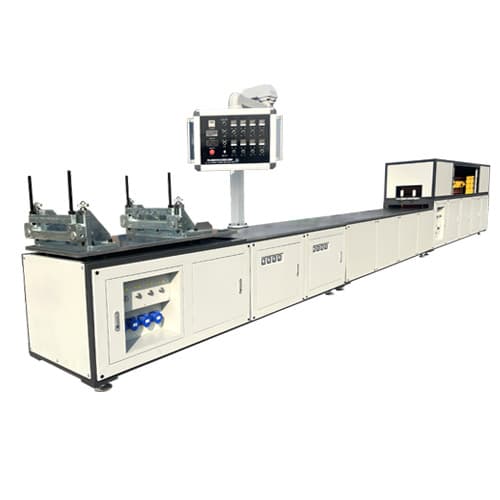
| Module / stage | Define before procurement | Required output / record |
|---|---|---|
| Hydraulic profile line | Large or varied sections needing an assessed grip and reciprocating pull cycle. | Working envelope, speed/force range and performance on the specified section. |
| Caterpillar profile line | Continuous contact pulling, with attention to thin walls and surface finish. | Belt/contact geometry, clamp control and checks for slip, crushing and marks. |
| Double-station line | Separate production lanes or stations on the proposed frame. | Independent controls, working clearances and stated shared utilities. |
| Rebar line | Impregnation, surface wrapping, curing, cooling, pulling and cutting or take-up. | Bar-size range, lane arrangement and product-specific qualification plan. |
| Threaded rock-bolt line | Thread/surface forming with coordinated pulling and downstream handling. | Thread geometry and compatibility with the approved anchor assembly. |
| Rebar mesh line | Bar supply or integrated forming, cross placement and intersection formation. | Mesh pitch/width, joint acceptance and included assembly equipment. |
Specify the whole line interface
| Module / stage | Define before procurement | Required output / record |
|---|---|---|
| Fiber supply → preforming | Creel capacity, payout, tension, mat feeds and reinforcement layout. | Routing plan, preformer set and a demonstrated feed path. |
| Resin delivery → die | Open bath or closed injection, chemistry, temperature conditioning and connections. | Compatibility confirmation and a coordinated stop/start procedure. |
| Die → pulling → cutting | Center height, cured profile temperature, grip tooling and synchronization. | Trial evidence for section integrity, surface finish and cut length. |
| Rebar take-up or cutting | Permitted product flexibility, reel/core geometry and winding tension where coiling is intended. | Product-specific approval for coiling and a defined straight-length alternative. |
| Factory utilities → controls | Power/frequency, air, cooling, extraction, layout and software/document access. | Buyer/supplier responsibility list and site-readiness checklist. |
Resolve acceptance before placing an order
CHECK 1
Compare systems on the same product
A headline pulling force does not describe the entire line. Ask each proposed supplier to address the same profile, reinforcement, resin and output target, including permitted defects and dimensional tolerances.
CHECK 2
Define the factory interfaces
Provide the available layout, incoming power, cooling, extraction and finished-length handling. Identify responsibility for foundations, utility connections and lifting access.
CHECK 3
Agree factory and site acceptance
Define the trial length or duration, dimensional checks, material testing and records. List commissioning, training, spares and support separately, with the responsible supplier named.
Purchasing questions
Is a caterpillar puller a complete pultrusion machine?
It is one line module. A complete scope also needs reinforcement handling, resin application, shaping and curing, cutting and coordinated controls. Confirm each module and interface in the proposed package.
Related sourcing specifications
Browse equipment & tooling →Technology transfer & consulting →Profile resin selection →
Discuss Pultrusion Machines
Share the specification and destination. The next step is to define the equipment or material support needed within your Know-How engagement.
Drawings and technical documents can follow after the initial contact.
- 1Profile drawings and resin/reinforcement system
- 2Product mix and required output
- 3Factory layout, power supply and utility limits
- 4New line or upgrade, and equipment already owned
- 5Acceptance criteria, destination and requested support