Stitched Fiberglass Fabrics
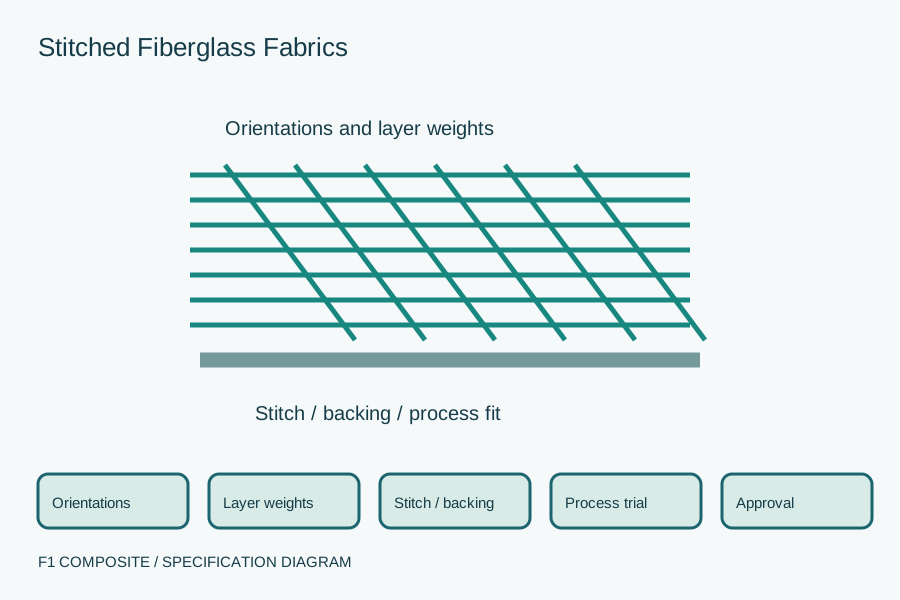
Specify stitched glass fabrics by fiber orientation, area weight, width and backing. Match the construction to your laminate and manufacturing process.
Define the proposed supply package
Equipment, tooling and material sourcing support forms part of F1 Know-How & Services. We review requirements within a technology-transfer, production-setup or improvement engagement.
Agree the exact equipment configuration or material grade, qualification documents, delivery and support responsibilities before ordering. Availability, pricing, lead time and warranty are confirmed for the proposed package.
What to specify and what to request
| Scope | Your specification | Requested supplier response |
|---|---|---|
| Fiber architecture | Required directions, layer weights and layup sequence | A construction drawing or grade sheet defining each layer |
| Stitch and backing | Stitch arrangement, any mat backing and binder details | Compatibility and handling information for the named construction |
| Roll delivery | Width, roll length, core and allowed joints | An agreed packing and incoming inspection specification |
Transfer the layup into the tooling plan
| Module / stage | Define before procurement | Required output / record |
|---|---|---|
| Layer map | Fiber directions and weights referenced to the finished section. | A layup document with a clear revision and orientation convention. |
| Cut and feed plan | Slit patterns, backing/stitch construction and guide/preformer clearance. | Trial strips and a repeatable feeding arrangement. |
| Approval and changes | Proposed supplier, resin compatibility and trial acceptance. | Named approved grade and review of construction changes. |
Resolve acceptance before placing an order
CHECK 1
Keep orientation explicit
Specify the direction of each layer relative to the finished part. Total area weight alone cannot describe how the reinforcement is distributed between load directions.
CHECK 2
Check forming and feed behavior
Review how the fabric travels through guides or conforms in the mold. Agree trials for bridging, distortion, fraying and wet-out where these affect the process.
CHECK 3
Release against the exact construction
Record the approved grade and layup. A change to stitch, backing or layer distribution needs review even if the overall area weight stays the same.
Purchasing questions
Are woven roving and stitched fabric the same material?
Their fiber architecture and handling differ. Define the required construction and approve a representative laminate rather than ordering only by total weight.
Related sourcing specifications
Browse composite materials →Technology transfer & consulting →Profile resin selection →
Discuss Stitched Fiberglass Fabrics
Share the specification and destination. The next step is to define the equipment or material support needed within your Know-How engagement.
Drawings and technical documents can follow after the initial contact.
- 1Fiber directions and weight of each layer
- 2Total area weight, backing and stitch requirements
- 3Width, roll dimensions and required slit layout
- 4Resin, process and laminate performance requirements
- 5Sample quantity, demand and delivery destination