Mat Slitters & Profile Cutters
Specify roll slitting and cured-profile cutting as separate production tasks. Review material handling, dimensions, line synchronization and cut-quality acceptance.
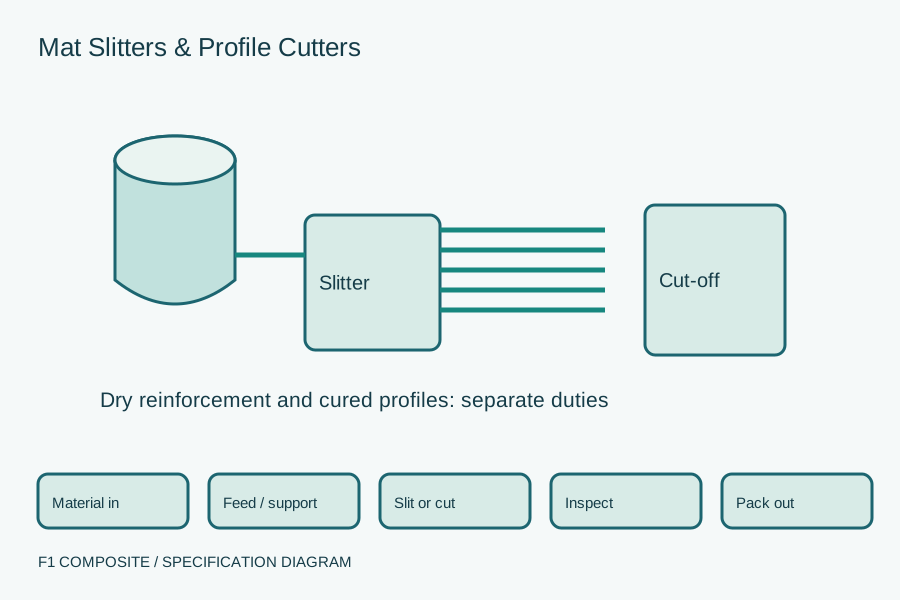
Define the proposed supply package
Equipment, tooling and material sourcing support forms part of F1 Know-How & Services. We review requirements within a technology-transfer, production-setup or improvement engagement.
Agree the exact equipment configuration or material grade, qualification documents, delivery and support responsibilities before ordering. Availability, pricing, lead time and warranty are confirmed for the proposed package.
What to specify and what to request
| Scope | Your specification | Requested supplier response |
|---|---|---|
| Roll mat slitter | Material construction, parent-roll width, core and required strip widths | Slit-width tolerance, edge condition and rewind arrangement |
| Profile cut-off | Cured section geometry, cut lengths and finish requirements | A proposed cutting and support package |
| Line connection | Standalone or synchronized cutting, feed and takeaway | Controls, guarding and extraction responsibilities |
Cutting, take-up & secondary fabrication
| Module / stage | Define before procurement | Required output / record |
|---|---|---|
| Synchronized cut-off | Section support, line signals, cut-length tolerance and edge quality. | Acceptance at the intended output and an extraction/guarding scope. |
| Rebar coiling | Product grade, diameter, allowed bend, reel geometry and tension control. | Approval for the offered product and a trial showing acceptable handling. |
| Drilling and machining | Hole/slot drawing, datum faces, fixtures and surface protection. | First-piece dimensional report and a repeatable setup. |
| Packing and identification | Lengths, part IDs, protection and dispatch sequence. | Packing specification linked to the cut list and batch traceability. |
Resolve acceptance before placing an order
CHECK 1
Match the machine to the material state
Dry mat and stitched fabric require controlled feeding and support. A cured profile is a different cutting task. Send representative samples or construction details for each proposed machine.
CHECK 2
Specify usable output
Define acceptable width variation, fraying, cut squareness and length tolerance. Include downstream use: a strip that cannot pass through the preformers is not an acceptable production result.
CHECK 3
Include handling and extraction
Identify roll lifting, feed support, finished-length handling and the required extraction interfaces. The quotation should identify the supplied guards and controls and the installation responsibilities.
Purchasing questions
Does one machine cover mat slitting and finished-profile cutting?
Usually these require different cutting and handling arrangements. Request separate scope lines unless a proposed supplier demonstrates that a particular configuration can perform both duties.
Related sourcing specifications
Browse equipment & tooling →Technology transfer & consulting →Profile resin selection →
Discuss Mat Slitters & Profile Cutters
Share the specification and destination. The next step is to define the equipment or material support needed within your Know-How engagement.
Drawings and technical documents can follow after the initial contact.
- 1Roll or profile material and representative samples
- 2Parent-roll dimensions or section drawing
- 3Required strip widths or cut lengths and tolerances
- 4Production rate and standalone/in-line duty
- 5Handling, extraction, power and destination