01 / FLAT CFRP
Plates & laminates
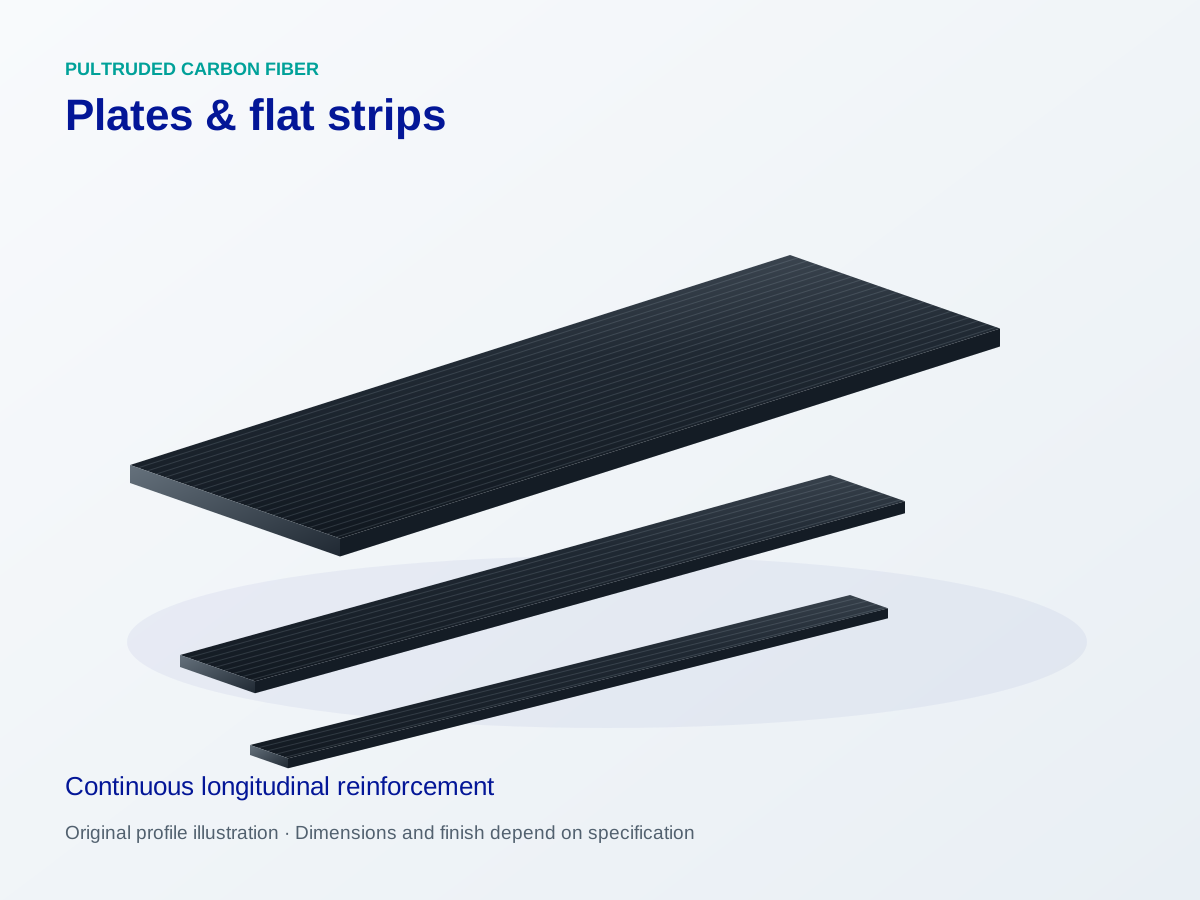
Flat reinforcement with a defined width and thickness. A broad face provides space for a designed adhesive interface.
Continuous fibers. A flat bonding face. Longitudinal stiffness for reinforcement and lightweight components. Develop CFRP plates, strips and flat bars around your dimensions, load path and surface requirements.
01 / FLAT CFRP
Flat reinforcement with a defined width and thickness. A broad face provides space for a designed adhesive interface.
02 / FLAT CFRP
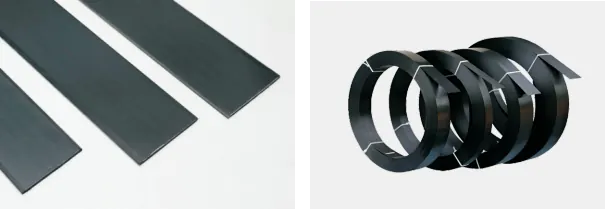
Slender reinforcement for bonded stiffeners and spar elements. Specify the working direction, bond area and end details.
03 / FLAT CFRP
Rectangular solid sections for straight components. The orientation of the section strongly affects bending stiffness.
Names such as plate, strip and flat bar can overlap. The drawing establishes the product. See how the pultrusion process controls the section.
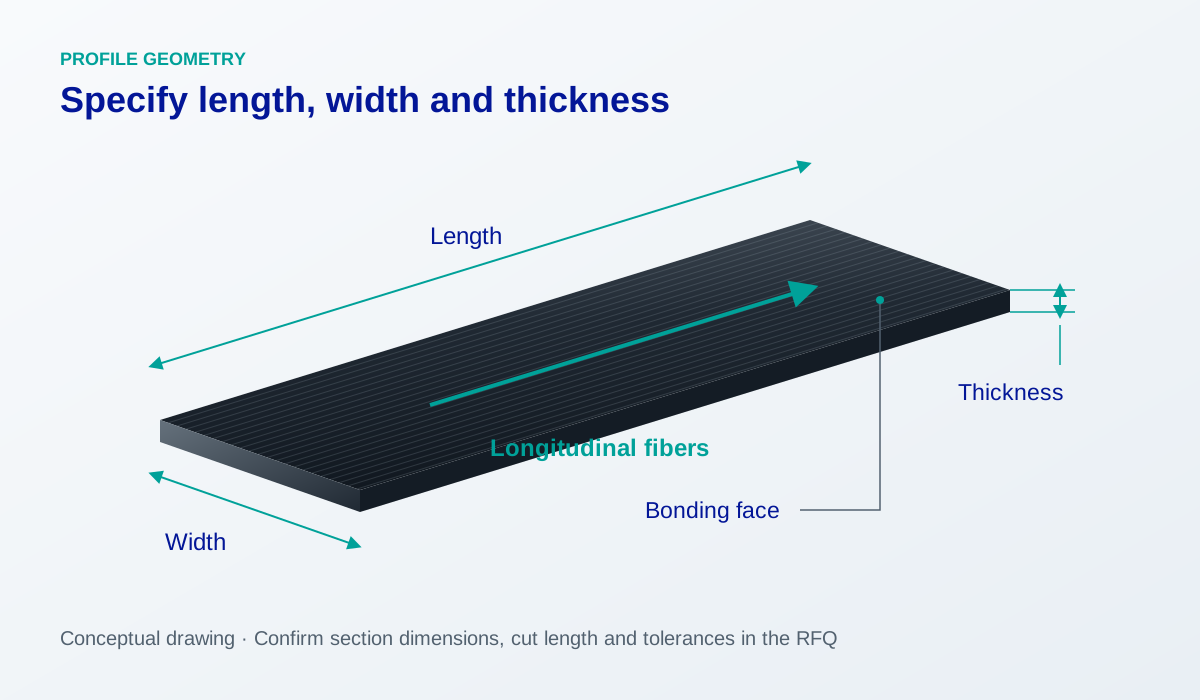
F1 reviews the requested geometry, material and tooling before confirming supply. Mechanical properties, available sizes, minimum order and lead time follow the proposed configuration.
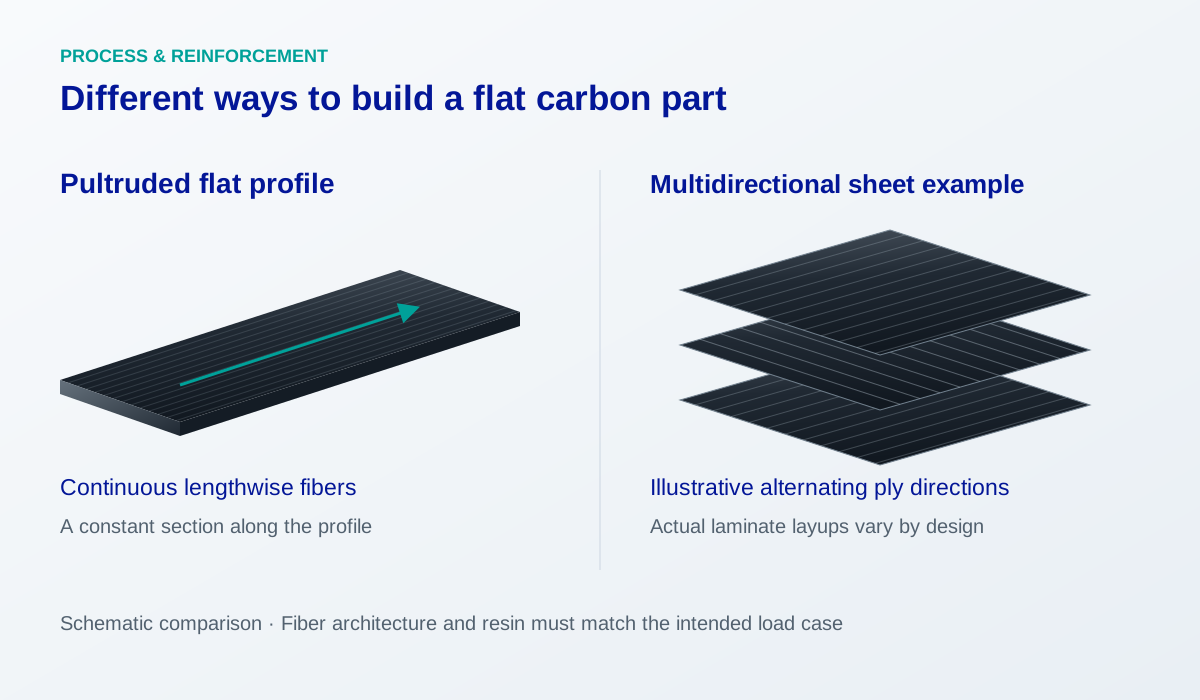
A useful starting point for long, straight reinforcement with the main load along the fibers. Review transverse loading, local bearing, torsion and connections separately from longitudinal performance.
Selected ply angles can address loads in several directions across a panel. For broad machined parts, bolt patterns or complex load paths, include the layup and finished geometry in the material review.
Define the substrate, adhesive, surface preparation, bond length and end load transfer. Agree the supplied face condition before ordering, then qualify the assembled joint for its loads and environment.
Discuss cutting, holes and edge details →Longitudinal laminates for blade reinforcement programs. Review thickness consistency, bonding surfaces, stacking and fatigue qualification together.
Explore wind-blade panels →Flat CFRP strips for an engineered reinforcement system. The substrate, adhesive, end load transfer and installation conditions form part of the design.
Explore strengthening strips →Straight strips and flat bars for equipment rails, model spars and bonded beam reinforcement. Define the bending direction, span and attachment details.
Explore lightweight carbon members →Carbon fibers are electrically conductive. Include electrical isolation and wet metal interfaces in the design review, alongside temperature, chemical exposure and surface protection.
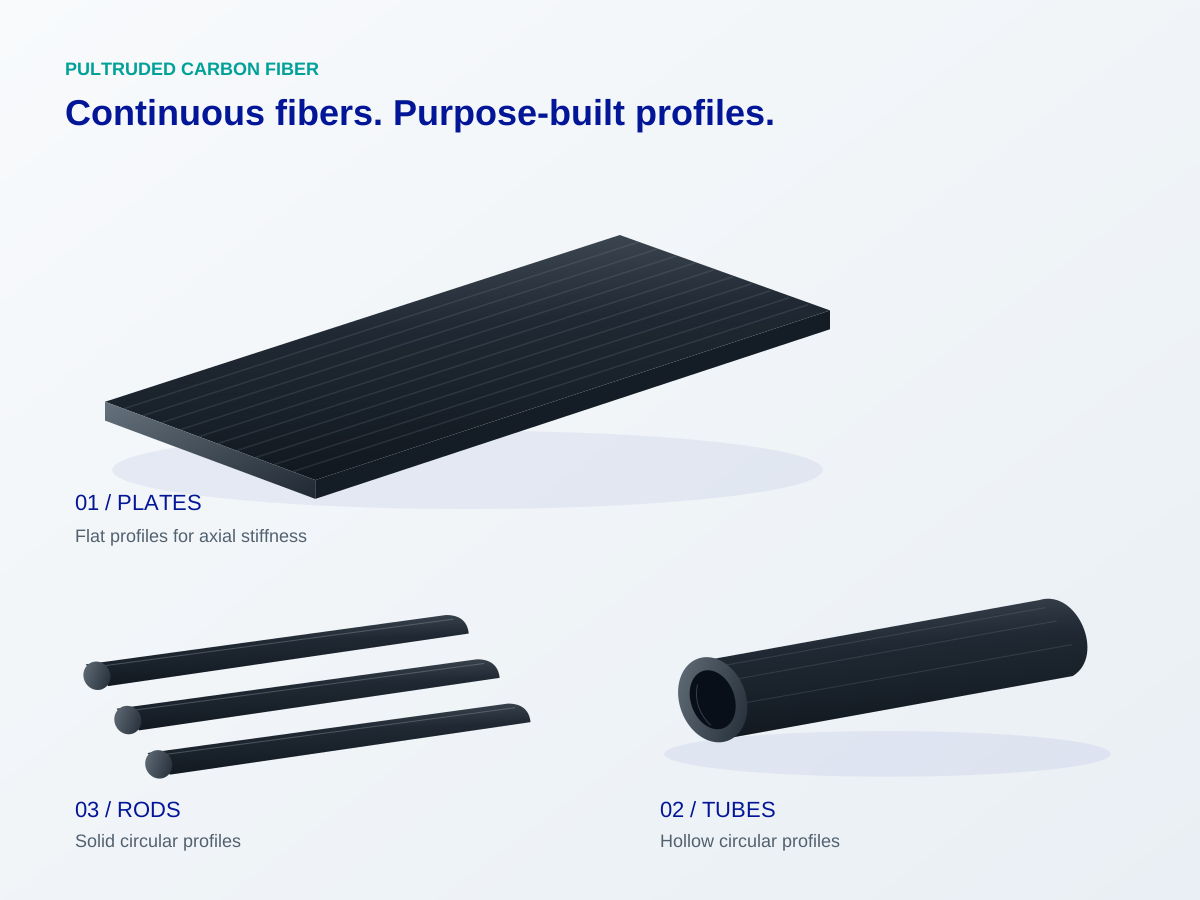 Profile illustrationCarbon fiber pultrusion overviewCompare plates, tubes and rods, manufacturing steps and material selection.Explore product details
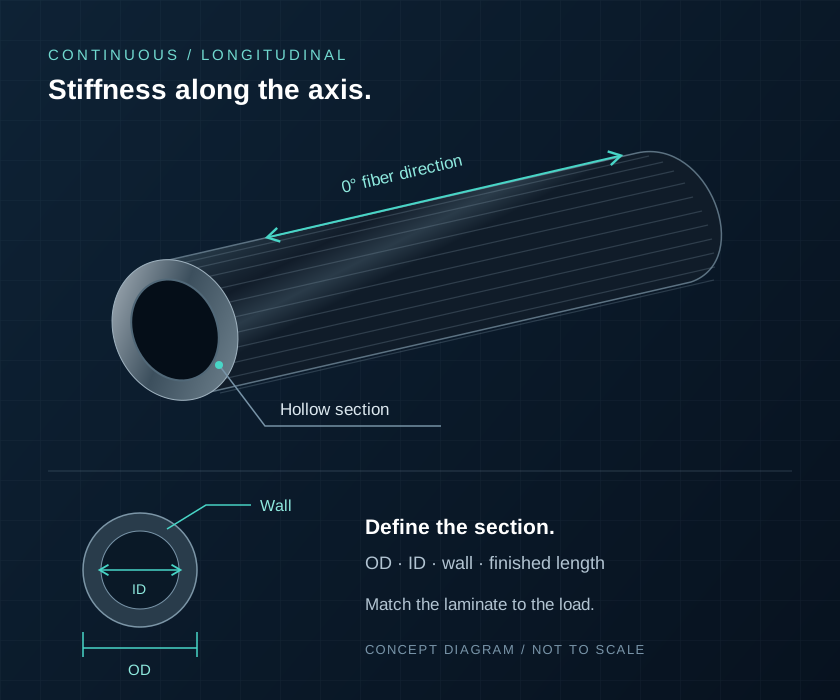 Concept diagramPultruded carbon fiber tubesHollow CFRP sections for lightweight supports, booms and moving components.Explore product details
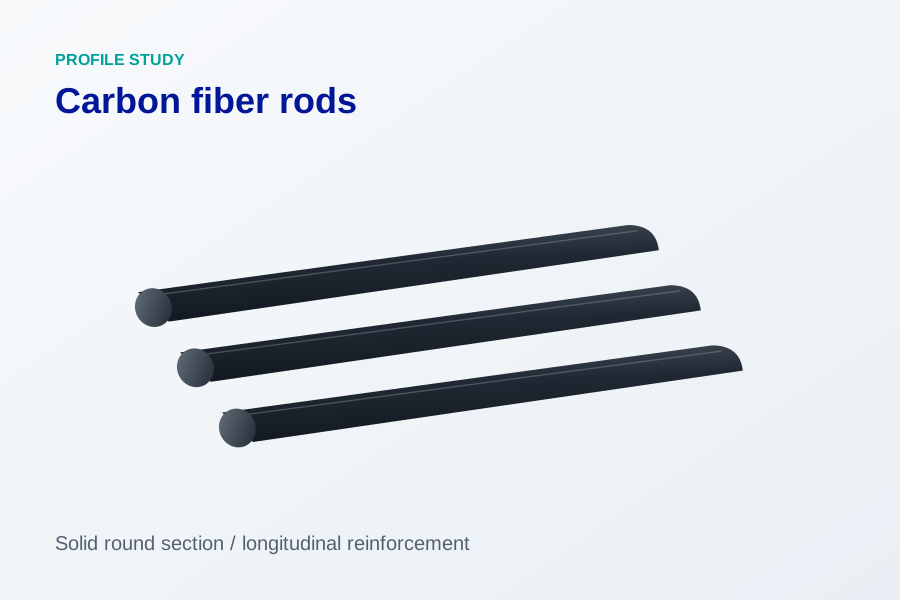 Profile illustrationPultruded carbon fiber rodsSolid carbon sections for compact members, alignment and reinforcement.Explore product details
They are flat, constant-section CFRP profiles made by pulling continuous carbon reinforcement and resin through a heated die. The main fibers run along the length. The same product form may be described as a carbon fiber strip, flat bar or pultruded laminate, depending on the section and application.
No. A typical pultruded plate emphasizes continuous longitudinal reinforcement. A laminated sheet can use selected ply directions or woven fabric to carry loads across a wider panel. For a machined panel with holes and loads in several directions, specify the layup and compare it with a laminated-sheet option.
Send width × thickness × length, tolerances and quantities in mm or inches. F1 reviews the section, tooling and material requirements before confirming the available configuration. Cut lengths, minimum order, sample timing and lead time are confirmed in the quotation.
Yes. Include the substrate, bonded area, adhesive requirements and service environment in your inquiry. Agree the supplied surface, any peel ply or surface preparation, and the finished joint’s acceptance tests. Surface preparation must suit the selected laminate and adhesive system.
Send hole positions, cutouts and edge details for review. Cutting across the fibers changes the load path, and concentrated fastener loads need a connection design. Specify the final component geometry and inspection requirements before confirming machining.
A flat plate offers a broad bonding face and directional bending stiffness. A tube distributes material around a hollow section, while a rod provides a compact solid section. Compare the actual section, fiber architecture, supports and joints against the same load and deflection requirements.
Share your width, thickness, cut length and quantity, with a drawing or application brief. Include the bonding face and any finished-part machining. We reply within one business day; a formal quotation follows once the specification and delivery are reviewed.