Dry-type transformer winding
A shaped insulating support or winding interface where the contact faces, section and continuous length must fit the coil assembly.
A drawing-led pultruded GFRP shape for transformer winding and insulating support assemblies. Match the dog bone section, material grade and qualification plan to your equipment before production.
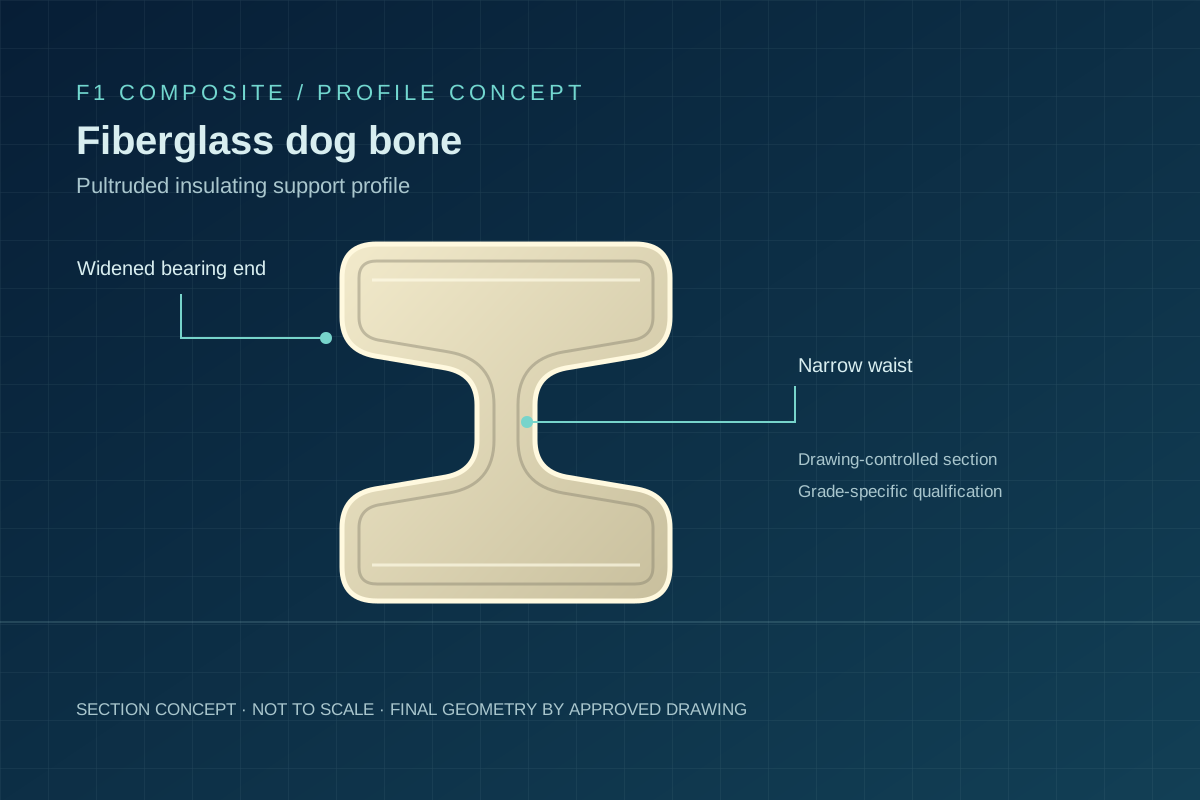
Continuous glass reinforcement and a cured polymer matrix form a consistent pultruded length. The widened ends provide defined contact regions while the narrower waist creates clearance for the surrounding assembly. Actual geometry is established by the equipment drawing.
The supplier reference page identifies transformer core winding, dry-type transformers, reactors and other high-voltage equipment as typical uses. Its published figures and certification claims describe that supplier's offering; this page does not present them as verified F1 product data.
A shaped insulating support or winding interface where the contact faces, section and continuous length must fit the coil assembly.
A nonmetallic spacer or support profile used around coils and other components, subject to the equipment maker's electrical and mechanical design.
A custom insulating section for capacitors, disconnectors or power modules when creepage, clearance, finish and attachment details have been reviewed.
| Specification field | What to send | Review before release |
|---|---|---|
| Cross-section | End widths and radii, waist width, overall height, bearing faces and tolerances | Approve a dimensioned drawing or physical sample before tooling release |
| Length and processing | Cut length, end finish, holes, slots or other machining and their tolerances | Check exposed fibers and edge finish after secondary operations |
| Material system | Glass reinforcement, resin, color, surface finish and operating environment | Select a production grade for the required thermal and environmental duty |
| Electrical duty | System voltage, insulation arrangement, creepage and clearance, test method | Qualify the finished profile and assembled equipment for the actual duty |
| Mechanical duty | Support loads, restraint method, winding pressure, vibration and temperature | Review the load path and request grade-specific test evidence |
Ask for the test method, specimen orientation, test conditions and report scope behind any quoted tensile, flexural, dielectric, moisture or temperature value. Check that the report applies to the proposed resin, reinforcement and section.
For electrical service, define the equipment-level voltage, creepage, clearance, partial discharge and thermal acceptance criteria. The equipment manufacturer remains responsible for validating the final design and installed assembly.
It is a pultruded glass-fiber reinforced polymer section with wider ends and a narrower middle. In electrical equipment, the shaped section can serve as an insulating support or winding interface. It is not a standardized test specimen or a universal replacement for an approved insulator.
The supplier reference shows example dimensions, but those are not an F1 stock list. Send a drawing or sample so we can check die availability, geometry, tolerances and production quantity before quoting.
A rating depends on the selected material grade, section, surface, test method and final assembly. State the equipment standard and acceptance criteria in the RFQ; grade-specific reports and samples must be reviewed before a rating is used in design.
Cut lengths and secondary machining can be reviewed with the drawing. Holes, slots and exposed cut ends may change mechanical and electrical behavior, so their location, finish and inspection requirements belong in the approved specification.
Attach the cross-section drawing and describe where the profile sits in the electrical assembly. We reply within one business day; a formal quotation follows once the specification and delivery are reviewed.