Fiberglass reinforced plastic is a composite material in which glass fibers reinforce a cured polymer resin. It is also called GFRP, glass fiber reinforced polymer, glass reinforced plastic, GRP, or simply fiberglass. These labels describe the same basic material architecture: strong, stiff fibers carry most of the load while a continuous resin matrix binds the fibers together and protects them from the service environment.
That definition sounds simple, but fiberglass reinforced plastic is not a single recipe. A corrosion-resistant tank, a molded boat hull, a ladder rail, and a pultruded I-beam can all be GFRP while using different resins, fiber arrangements, glass contents, and manufacturing processes. Those choices decide whether the finished part is structural, chemically resistant, fire-retardant, thermally insulating, or economical to produce at scale.
What fiberglass reinforced plastic is made from
Every fiberglass reinforced plastic contains two primary constituents. Glass reinforcement supplies tensile strength and stiffness. E-glass is the general-purpose reinforcement used in most structural profiles; ECR glass may be selected for stronger resistance to acidic environments. The glass can enter the laminate as unidirectional rovings, continuous strand mat, woven fabric, stitched multiaxial fabric, or a thin surface veil.
The polymer resin surrounds that reinforcement. Isophthalic polyester is common for general structural duty. Vinyl ester improves resistance to hydrolysis, chlorides, and aggressive chemicals. Polyurethane can improve transverse toughness and enable thinner, more detailed sections. Phenolic systems are used where smoke and flame performance control the specification. The resin may also contain pigments, UV stabilizers, mineral fillers, and fire-retardant additives.
The two constituents do different jobs. Fibers work best along their length, so their direction controls where the laminate is strongest. Resin transfers shear between fibers, supports them against local buckling, holds the cross-section, and isolates the glass from water and chemicals. Treating GFRP as if it were a homogeneous plastic or an isotropic metal misses this division of labor.
Where fiberglass reinforced plastic sits within the FRP family
FRP is the larger family: it means fiber reinforced polymer or fiber reinforced plastic and can use glass, carbon, aramid, or basalt reinforcement. GFRP and GRP identify the glass-reinforced branch. Fiberglass is often used for the finished composite in North America, although it can also mean the raw glass fiber itself.
In a project specification, the safest practice is to name the reinforcement and matrix instead of relying on the acronym alone. “Pultruded E-glass/isophthalic polyester profile to EN 13706 E23” communicates far more than “FRP member.” Our FRP full form and meaning guide explains how these labels appear in drawings, datasheets, and regional specifications, while What is FRP? covers the wider composite family.
Main manufacturing forms of fiberglass reinforced plastic
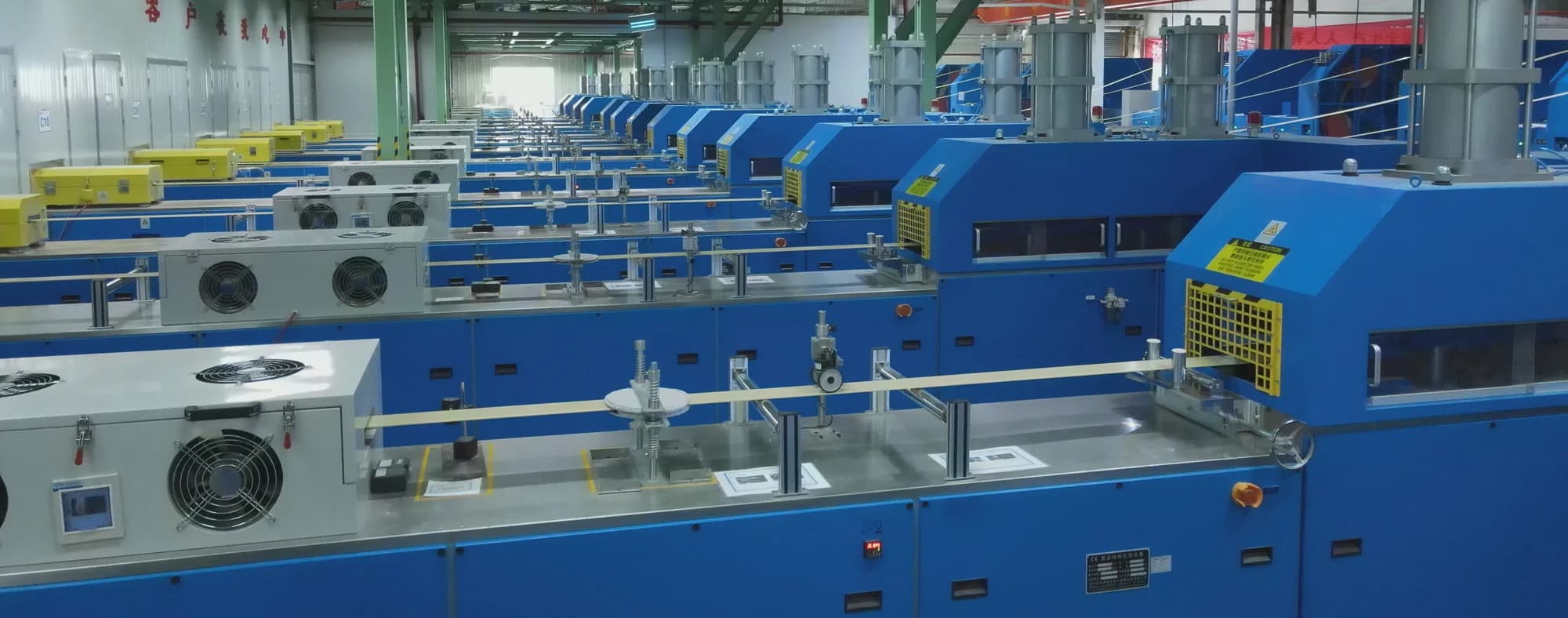
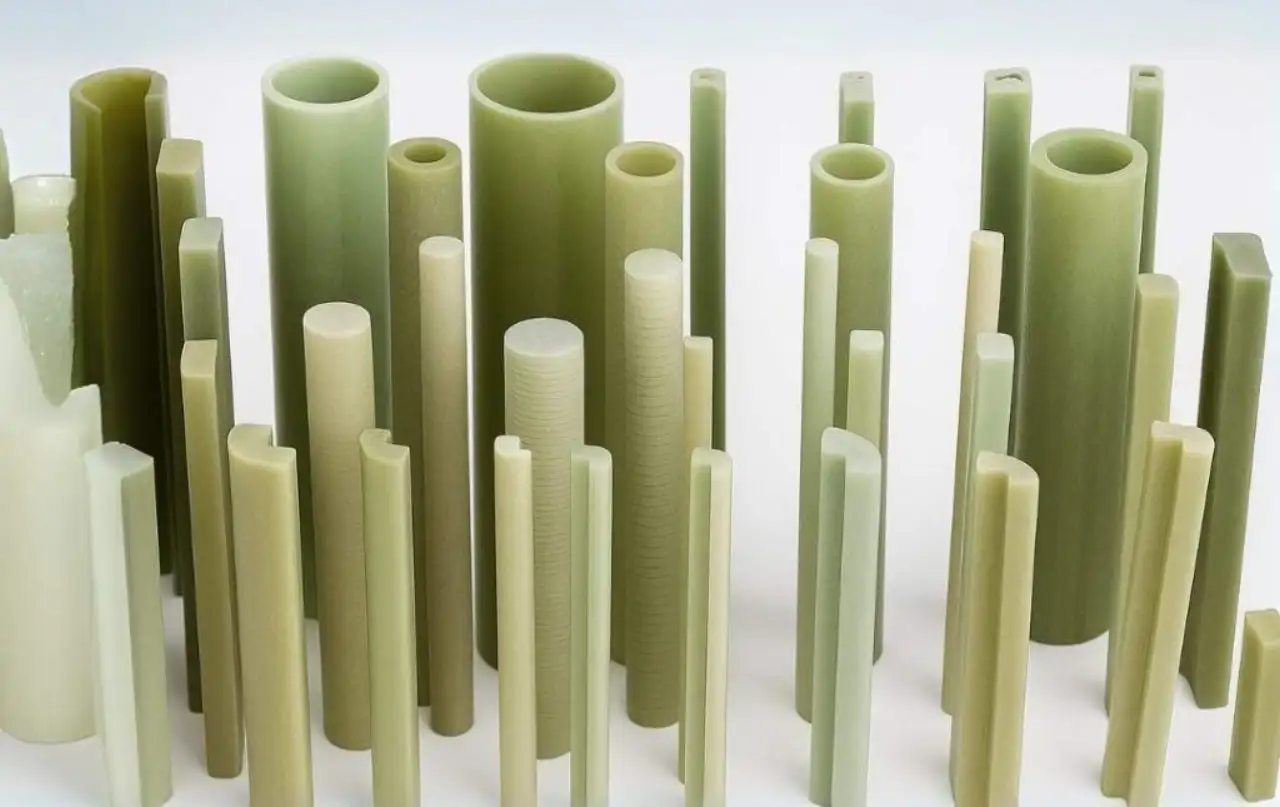
Pultrusion continuously pulls resin-wet glass through a heated steel die. It produces constant cross-section profiles such as I-beams, channels, angles, tubes, rods, flat bars, window frames, and custom sections. Continuous rovings provide high longitudinal properties, while mats or fabrics supply transverse integrity. The method is repeatable and material-efficient for long structural members.
Molding processes produce panels, gratings, covers, enclosures, and complex three-dimensional parts. Compression molding uses matched tools and controlled pressure; resin transfer molding injects resin into a closed fiber preform; open molding builds a laminate against one tool surface. Molded products can carry loads in several directions but do not automatically share the axial efficiency of a pultruded profile.
Filament winding places resin-impregnated fibers around a rotating mandrel and is well suited to pipes, tanks, and pressure vessels. Hand lay-up and vacuum infusion remain useful for large shells and low-volume parts. The process must therefore be part of the material description: identical resin and glass can produce very different properties when the fibers are arranged differently.
Typical fiberglass reinforced plastic properties
Structural GFRP combines low density with useful directional strength. Pultruded profiles commonly have a density near 1.8–2.0 g/cm³, roughly one quarter of steel by volume. They do not rust, are electrically non-conductive, and transfer far less heat than aluminum or steel. These characteristics can reduce handling equipment, eliminate recoating, prevent galvanic corrosion, and improve thermal isolation.
The limitations matter just as much. GFRP has a lower elastic modulus than steel, so deflection often governs beam design. Its properties are directional, bolted joints require bearing and edge-distance checks, and the resin system controls temperature and fire behavior. Long-term design must account for sustained load, environmental exposure, UV protection, and the appropriate safety factors. A credible specification uses tested design values, not a generic “stronger than steel” slogan.
For published laminate values and test methods, use the FRP technical data page. For preliminary section checks, the FRP profile calculator applies selectable material and design inputs rather than assuming one universal GFRP grade.
Where fiberglass reinforced plastic is used
GFRP is valuable where corrosion, weight, electrical isolation, or thermal bridging creates a lifecycle penalty for metal. Structural shapes and gratings support chemical plants, wastewater facilities, cooling towers, marine walkways, pedestrian bridges, rooftop equipment, and substations. Pultruded window profiles combine structural stability with low thermal conductivity. Custom pultrusions create cable-tray supports, façade components, solar rails, transportation parts, and reinforcement inserts that consolidate several metal pieces into one section.
The material is not automatically the best answer for every project. Steel remains efficient where stiffness, very high temperature, or established fabrication infrastructure dominates. Aluminum may be preferable when ductility and familiar recycling routes control. The useful question is not “is fiberglass reinforced plastic better?” but “which service requirement creates enough value to justify this laminate and process?”
How to specify fiberglass reinforced plastic
Start with the load case, span, deflection limit, temperature, chemical exposure, fire requirement, UV exposure, and expected design life. Then specify the manufacturing process, reinforcement, resin family, mechanical grade, dimensional tolerance, surface protection, and applicable tests. EN 13706 defines requirements for pultruded profiles; ASTM D3917 covers dimensional tolerances for pultruded shapes. Coupon tensile and flexural values are commonly reported using ASTM D638 and ASTM D790, but full-section design still requires section geometry and connection checks.
If the project needs a catalog shape, compare the dimensions and section properties in the pultruded FRP profiles hub. If geometry, resin, or fiber architecture must be project-specific, use the custom pultruded profiles route. This is the point where a broad material definition becomes an auditable engineering specification.