Reinforced thermosetting resin conduit (RTRC)
Fiberglass electrical conduit, elbows and fittings for corrosive plants, wastewater works, bridges, tunnels and duct banks. Specify wall type, size series and listing to NEC Article 355 and NEMA TC 14, and get a quote.
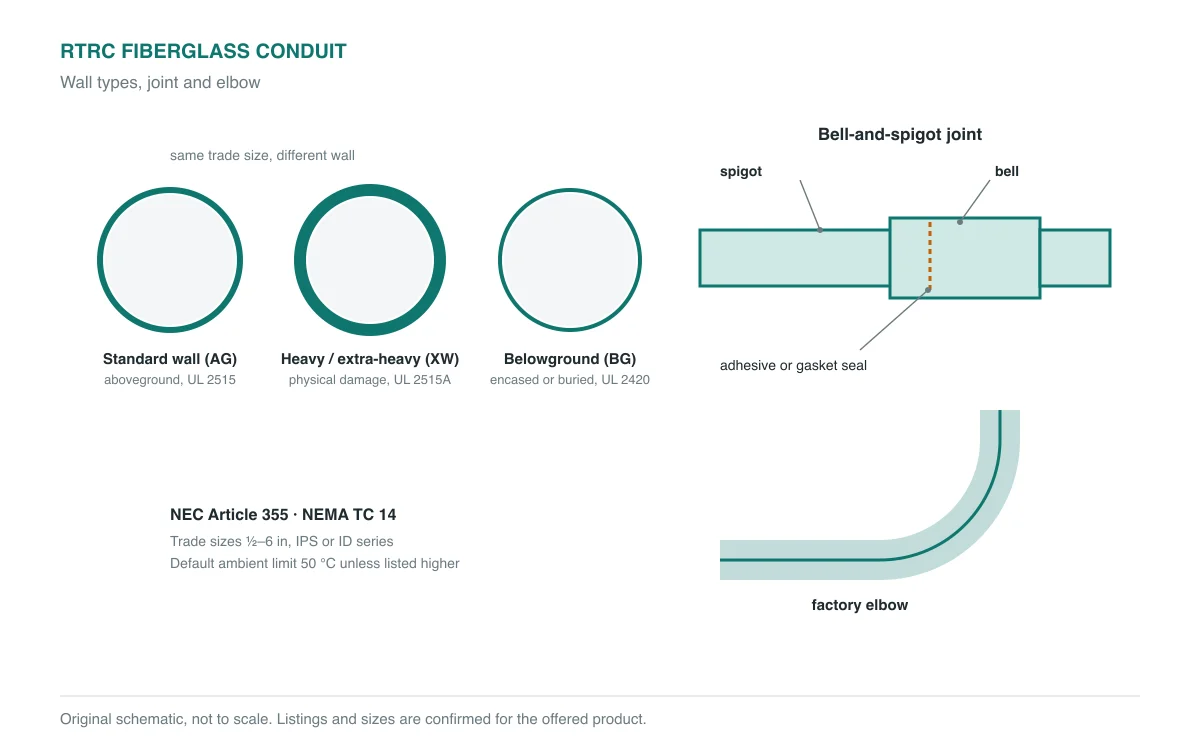
RTRC conduit: key facts
Reinforced thermosetting resin conduit (RTRC) is fiberglass electrical conduit made of glass fiber in a thermoset resin, governed by NEC Article 355 and tested to NEMA TC 14 and UL 2515 or UL 2420. F1 Composite supplies RTRC conduit and fittings to the series, wall type and listing the project specifies.
- Code basis
- NEC Article 355 sets where RTRC may and may not be used, its 50 °C default ambient limit, support and expansion rules.
- Listings
- UL 2515 covers aboveground RTRC, UL 2515A extra-heavy wall, UL 2420 belowground; NEMA TC 14 adopts them.
- Sizes
- Code-recognized trade sizes ½ in to 6 in, in IPS or ID series, with bell-and-spigot joints and factory elbows.
- Why RTRC
- Corrosion resistance, low weight compared with rigid steel, heat resistance compared with PVC and no pull-rope burn-through at bends.
- Where
- Wastewater plants, chemical and fertilizer plants, bridges and tunnels, data centers, ports and utility duct banks.
Where NEC Article 355 allows RTRC
Uses permitted
- Concealed work, and exposed work where not subject to physical damage and identified for the use
- Severe corrosive influences, where approved for the chemicals present
- Wet, damp and dry locations, cinder fill and underground
Uses not permitted
- Hazardous (classified) locations, except as other NEC articles allow
- Supporting luminaires or other equipment
- Where subject to physical damage, unless identified for it
- Ambient temperatures above 50 °C (122 °F), unless listed for higher
Rooftop and sunlight use: NEMA bulletin on RTRC installed on rooftops. Secure RTRC within 3 ft of each box or termination, and add expansion fittings where a straight run changes length by ¼ in or more.
Aboveground, extra-heavy wall and belowground RTRC
| Aboveground, standard wall (AG) | Exposed or concealed runs not subject to physical damage; listed products are tested to UL 2515, including sunlight exposure |
|---|---|
| Aboveground, heavy or extra-heavy wall (XW) | Runs where physical damage is a risk; XW products are tested to UL 2515A |
| Belowground (BG) | Concrete-encased or direct-burial duct banks; tested to UL 2420, with thin wall for encasement and heavier walls for direct burial |
Cable supports in the same corrosive areas: FRP cable tray supports and strut built from FRP channels.
Support spacing for RTRC
| Trade size (in) | Maximum spacing between supports |
|---|---|
| ¾–1 | 3 ft (0.9 m) |
| 1¼–2 | 5 ft (1.5 m) |
| 2½–3 | 6 ft (1.8 m) |
| 4–5 | 7 ft (2.1 m) |
| 6 | 8 ft (2.4 m) |
RTRC conduit questions
What is reinforced thermosetting resin conduit?
RTRC is rigid nonmetallic electrical conduit made of glass fiber in a thermoset resin, usually epoxy, with its couplings, elbows and fittings. NEC Article 355 governs its use, and it is often called fiberglass conduit.
Where can RTRC be used?
Under NEC 355.10 it can be concealed, exposed where not subject to physical damage and identified for the use, underground, in wet or corrosive locations approved for the chemicals present, and in cinder fill. It is not used in hazardous locations except as other articles allow, or to support equipment.
What is the difference between UL 2515 and UL 2420?
UL 2515 covers aboveground RTRC and its fittings, including sunlight resistance; UL 2420 covers belowground RTRC for concrete encasement or direct burial. NEMA TC 14 adopts them, with UL 2515A for extra-heavy wall. Ask which listing the offered product carries.
What temperature can fiberglass conduit take?
The NEC limits RTRC to 50 °C ambient unless the product is listed for more. Listed aboveground products are commonly rated from −40 °C to 110 °C. State the ambient and conductor temperatures in the inquiry.
Why choose RTRC over PVC or steel conduit?
It does not corrode like steel, keeps its shape in heat better than PVC, is several times lighter than rigid steel, and resists pull-rope burn-through at bends. Steel remains the choice where hazardous-location rules or physical damage require it.
Which sizes are available?
Code-recognized trade sizes run from ½ in to 6 in, in iron-pipe-size (IPS) or inside-diameter (ID) series, with bell-and-spigot joints, elbows and adapters. Send the series, wall type and lengths; the offered sizes and listings are confirmed in the quotation.
Quote RTRC fiberglass conduit
Send the trade sizes and series, wall type, lengths and quantities, elbows and fittings, the installation (exposed, encased or direct burial) and the listing the project requires. We reply within one business day; a formal quotation follows once the specification and delivery are reviewed.
- Sizes and series
- Trade sizes, IPS or ID series, lengths and quantities.
- Wall and listing
- AG, XW or BG and the required UL / NEMA TC 14 listing.
- Fittings
- Elbows, couplings, adapters and expansion fittings.
- Site
- Ambient temperature, chemicals, sunlight and destination.