Reason 1
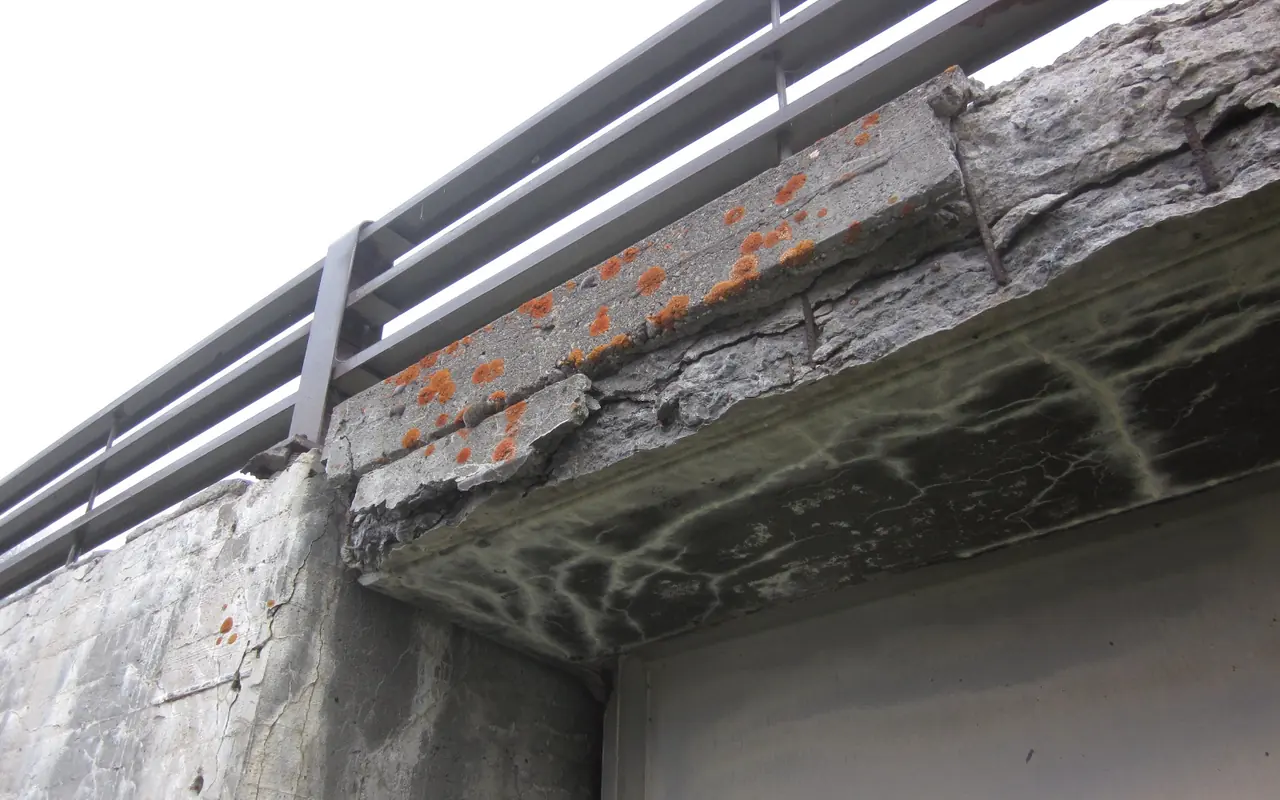
It cannot rust
No corrosion cell, so chlorides, de-icing salt and wet-dry cycling stop being a reinforcement problem.
Published data: 75–80% of tensile strength retained after 900 days in alkali and seawater; ask for the method and report.
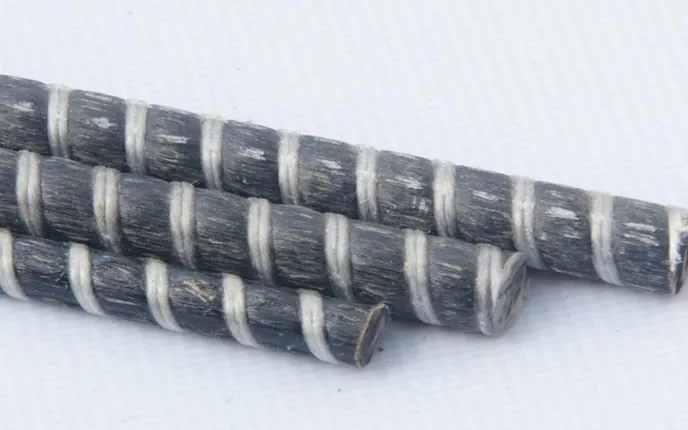
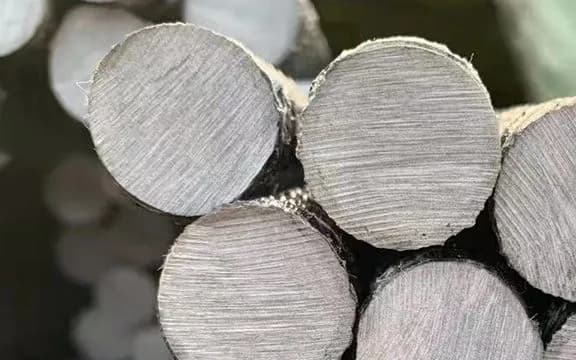
Basalt fiber reinforced polymer (BFRP) rebar is pultruded from continuous basalt filament, which is melted and drawn from crushed basalt rock with no other ingredient. FengDu New Material makes it; F1 Composite exports it. The bar does not corrode, weighs a quarter of steel, carries no current and no magnetic signature, and comes in a 50 GPa modulus class with the highest tensile class of the FRP bars we supply. Eleven inquiry diameters from Ø3 to Ø25 mm, straight or coiled, with an F1 product manual to download.

Reason 1
No corrosion cell, so chlorides, de-icing salt and wet-dry cycling stop being a reinforcement problem.
Published data: 75–80% of tensile strength retained after 900 days in alkali and seawater; ask for the method and report.
Reason 2
1,100 MPa published up to Ø12 mm and 1,000 MPa at Ø25 mm, against about 900 MPa for a GFRP 45 bar and 420 MPa yield for Grade 60 steel.
Basalt filament is stronger and stiffer than E-glass; the bar inherits part of that as a 50 GPa modulus class in one grade.
Reason 3
A Ø16 mm bar is about 0.38 kg/m against 1.58 kg/m in steel. Bundles are carried by hand; small sizes ship as coils.
Density 1.9–2.1 g/cm³ against 7.85; the published unit masses reconcile to 1.9 g/cm³.
Reason 4
The bar disappears from MRI fields and rail detection loops, and the fiber is drawn from crushed rock with no other ingredient.
Basalt fiber and vinyl ester or epoxy resin carry no current and no magnetic signature; thermal conductivity stays below 1 W/m·K.
| Property | BFRP (published class) | GFRP 45 / 60 | Steel Grade 60 | What it means |
|---|---|---|---|---|
| Tensile strength | 1,000–1,100 MPa class | 530–840 MPa guaranteed minimum (ASTM D7957, size-dependent); about 900–1,000 MPa typical | 420 MPa yield, 620 MPa ultimate | The highest tensile class of the three; strength still rarely sets the bar. |
| Tensile modulus | 50 GPa class | 45 or 60 GPa class | 200 GPa | A quarter of steel: crack width and deflection govern the design, as for GFRP. |
| Behaviour to failure | Linear to rupture at about 2.6% strain | Linear to rupture at 1.1% strain or more | Yields at about 0.2% strain, then stretches | Sections are proportioned for concrete crushing with the bar kept elastic. |
| Density and weight | 1.9–2.1 g/cm³; a Ø16 mm bar is about 0.38 kg/m | About 1.9–2.1 g/cm³ | 7.85 g/cm³; a Ø16 mm bar is 1.58 kg/m | A quarter of the weight; a tonne of bar is four times the length of a tonne of steel. |
| Corrosion | No electrochemical corrosion; 75–80% retained after 900 days in alkali or seawater (published) | No electrochemical corrosion; 80% retained after ASTM D7705 exposure | Rusts once chlorides or carbonation reach the bar | The reason either fiber is specified; compare the reports, not the fibers. |
| Fiber | Continuous basalt filament, drawn from melted rock with no additives | E-glass or E-CR glass, a formulated melt | Rolled carbon steel | Basalt fiber is stiffer and stronger than E-glass; the bar inherits only part of that. |
| Electrical and magnetic | Non-conductive, nonmagnetic | Non-conductive, nonmagnetic | Conductive, ferromagnetic | MRI suites, rail detection loops, substations. |
| Thermal conductivity | Below 1 W/m·K | Below 1 W/m·K | About 50 W/m·K | No thermal bridge through an insulated element. |
| Temperature | Fiber tolerates far more heat than glass; the bar is limited by its resin (Tg 100 °C class) | Resin Tg 100 °C minimum | Keeps most strength to about 500 °C | Fire design is by cover and detailing for both FRP bars. |
| Product standard | ASTM D8505/D8505M-23; CSA S807:19 (basalt included); ISO 10406-1 methods | ASTM D7957/D7957M-26; CSA S807:19 | ASTM A615, EN 10080 | ACI CODE-440.11-22 covers glass bars only; a basalt bar needs the D8505 and engineer route in the US. |
| Shaping | Straight bars and coils; bends by inquiry | Factory-formed stirrups, bends and mesh | Bent, cut and welded on site | Nothing is bent, heated or welded on site for either FRP bar. |
Class values, not a datasheet. BFRP values are published typical values; GFRP values are ASTM D7957 minimums and the site's modulus classes; steel is ASTM A615 Grade 60. The qualification report for the offered size governs.
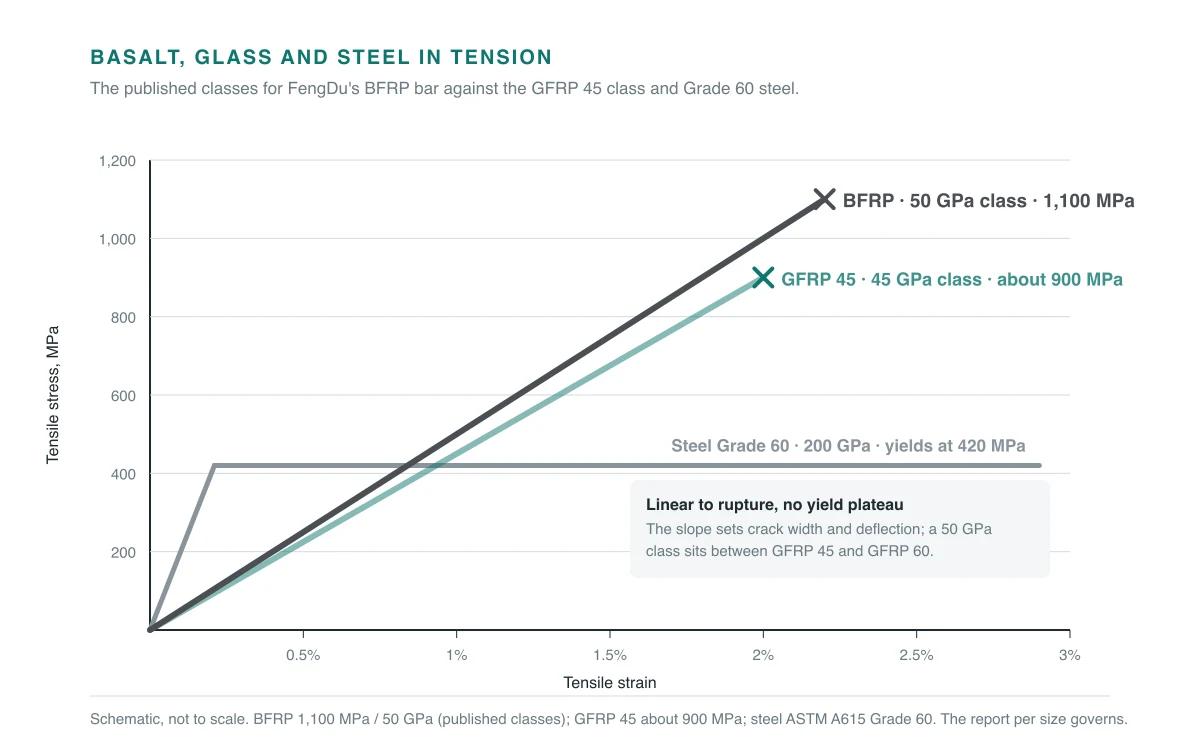
At a 50 GPa class the bar is a quarter as stiff as steel. Crack width, deflection and bond govern, so the design is redone to the FRP code, not substituted size for size.
BFRP is linear to rupture at about 2.6% strain. Sections are proportioned so the concrete crushes first and the bar stays elastic.
ASTM D8505 and CSA S807 cover basalt bars; ACI CODE-440.11-22 does not. A US building project needs the engineer's design and the authority's acceptance.
Bends, hooks and mesh are raised as an inquiry. Where a project needs shapes now, the GFRP family's factory bends can be paired with straight basalt bars if the designer allows.
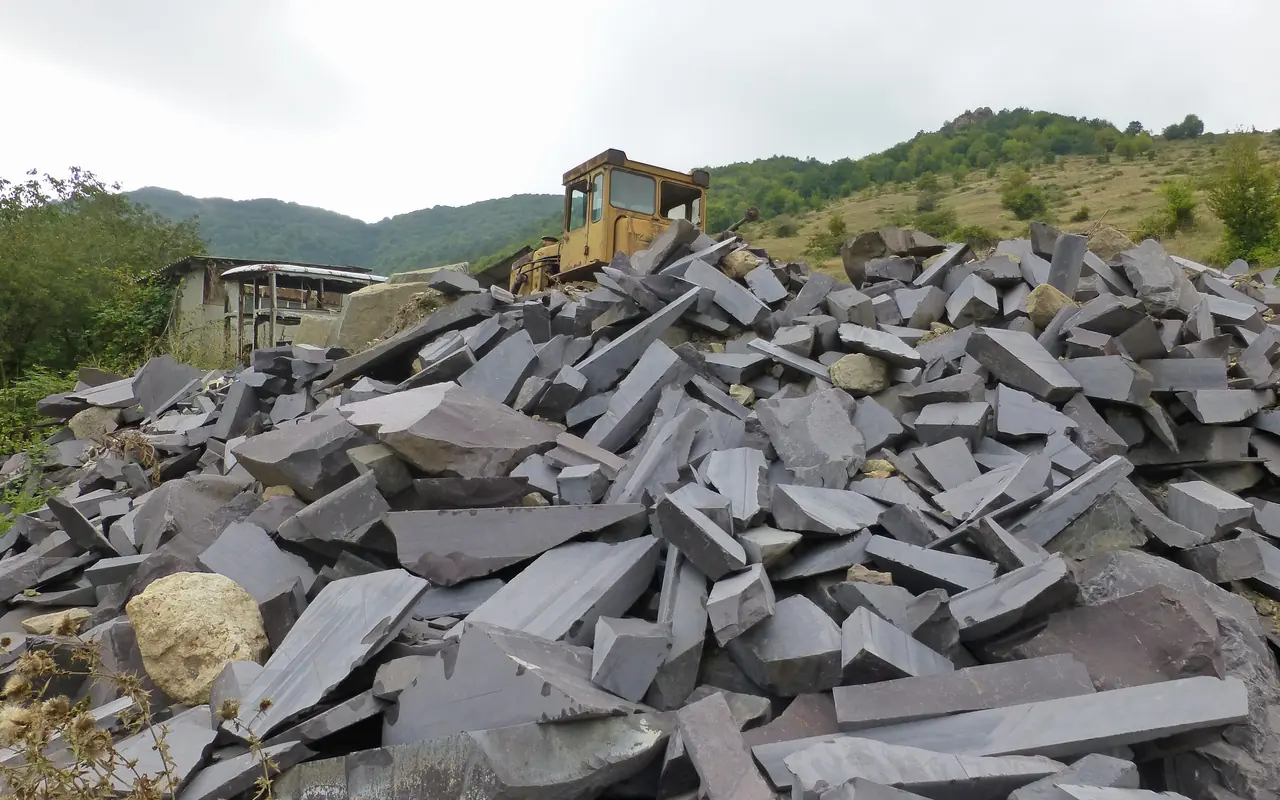
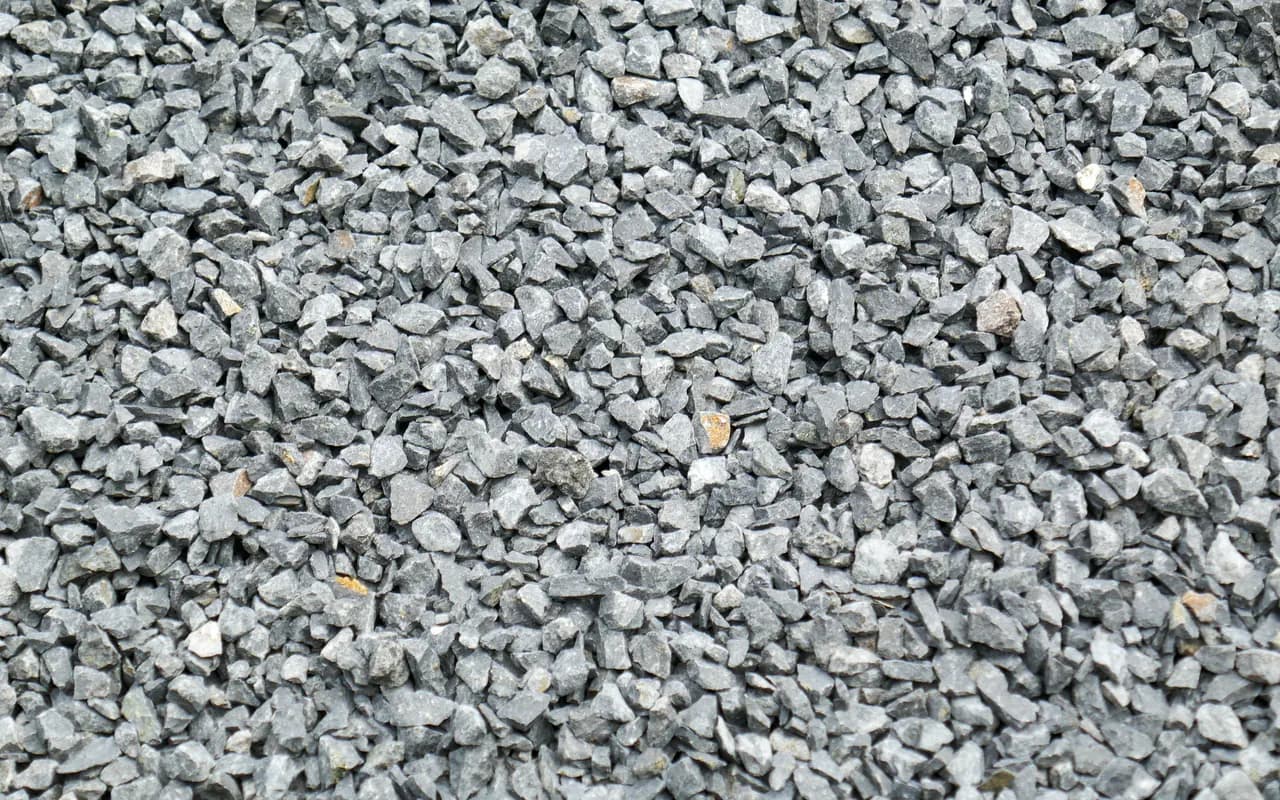
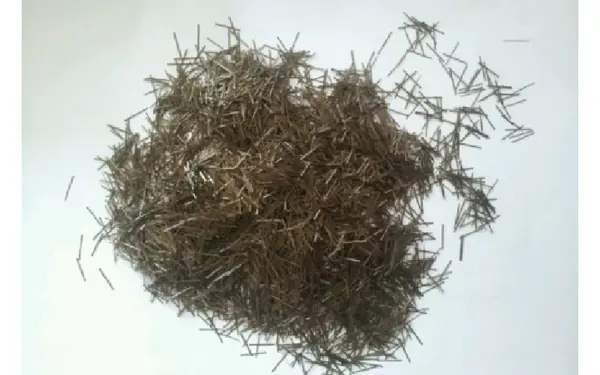
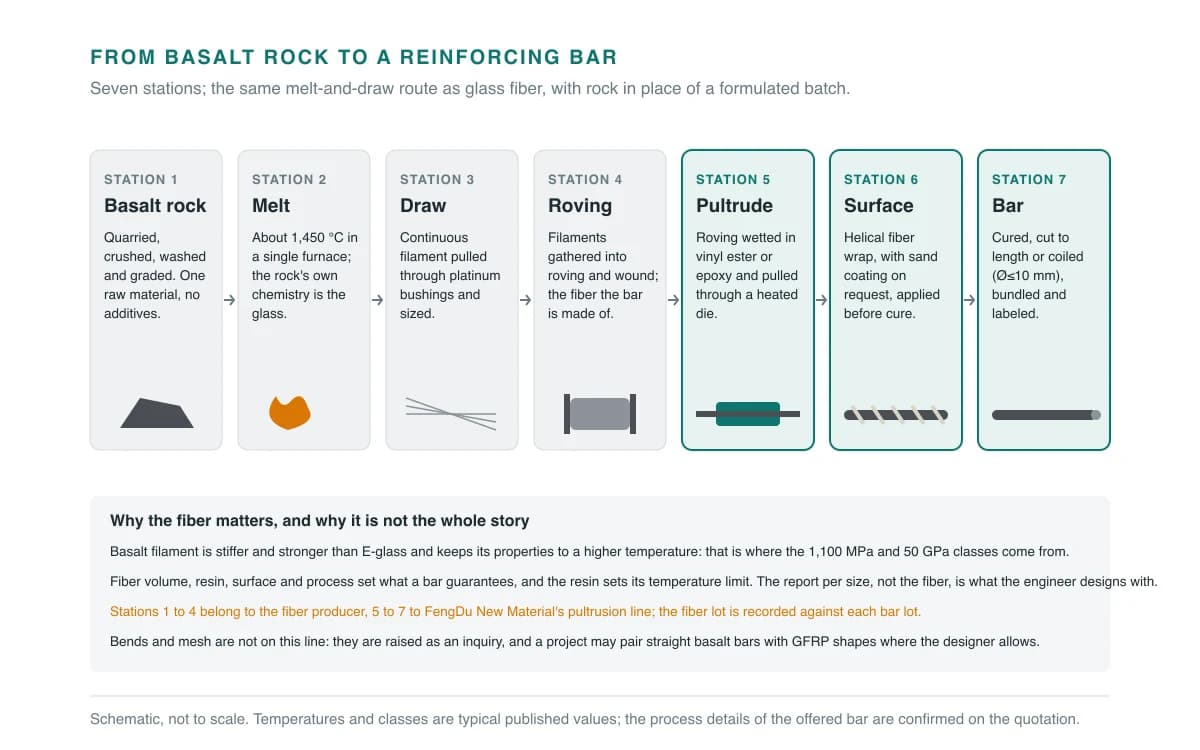
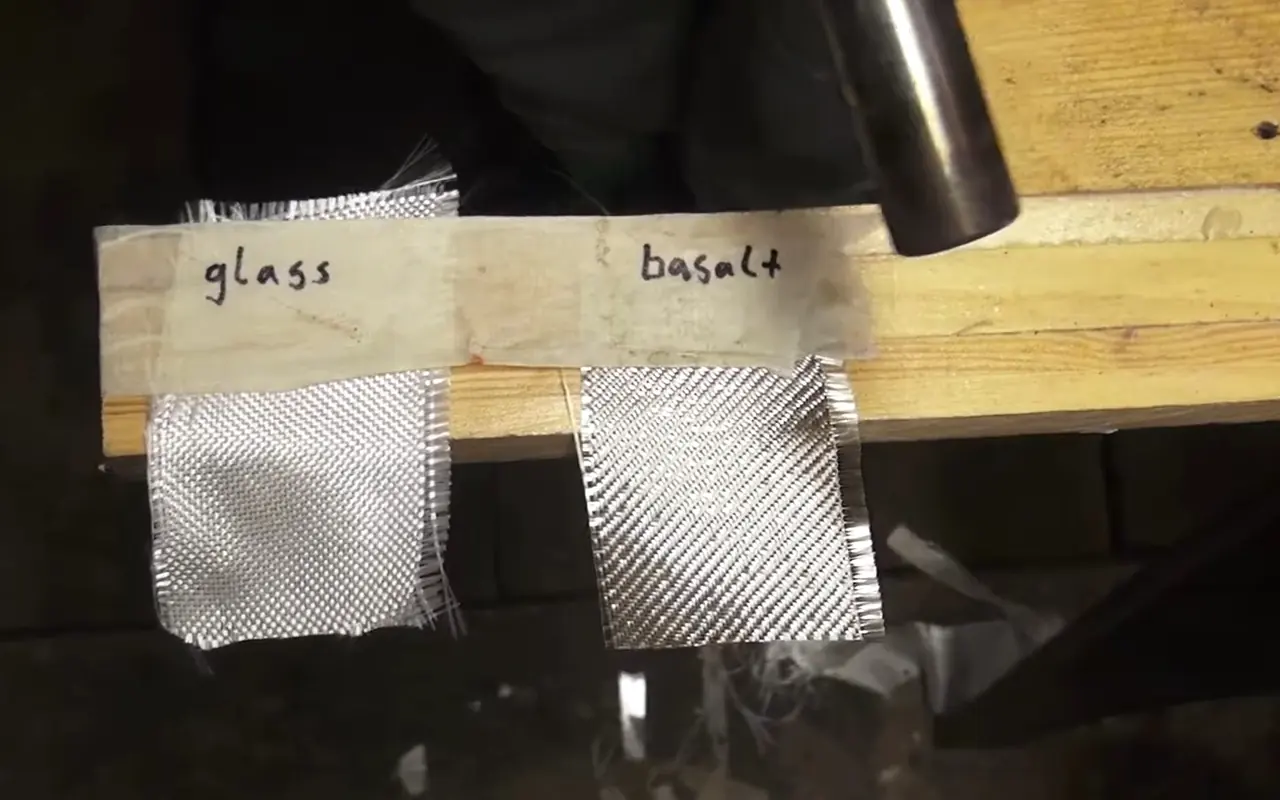
Basalt filament is stiffer and stronger than E-glass filament and keeps its properties to a higher temperature, which is where the bar's 1,100 MPa and 50 GPa classes come from. Fiber volume, resin, surface and process decide how much of that reaches the bar; the qualification report per size, not the fiber, is what the engineer designs with.
The matrix softens above its glass transition temperature (100 °C class for a vinyl ester bar) long before the fiber is affected, so fire-rated members are designed by cover and detailing, exactly as for GFRP. A basalt bar is not a fire-rated bar.
FengDu New Material, the maker of F1's GFRP rebar, pultrudes the basalt bar on the same kind of line from bought-in continuous basalt roving. Capacity is not stock: every size is quoted to a schedule, and the fiber lot travels with the bar lot on the production record.
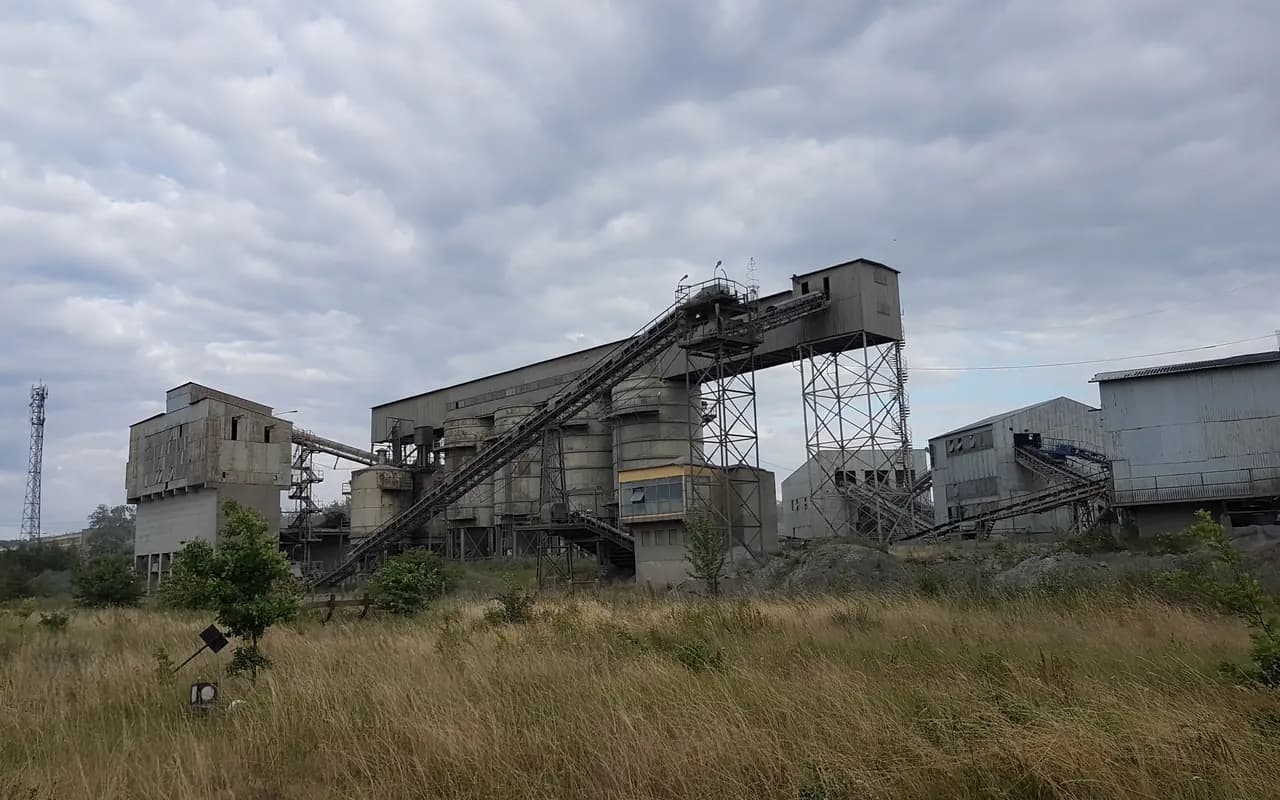
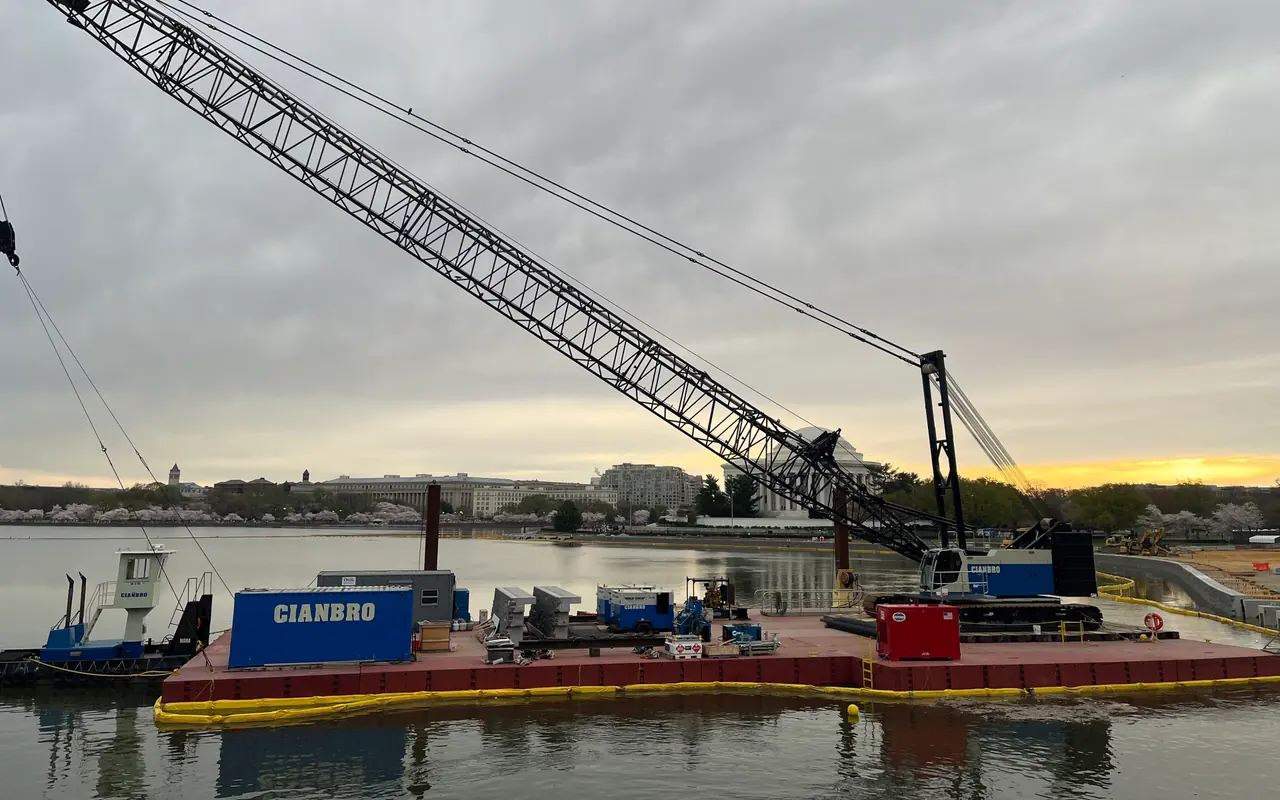
Fig. 12 · Rebuilding the Tidal Basin seawalls, Washington, DC, 2025. Walls, wharves and piles in tidal water are where chloride corrosion of steel is fastest.
Chloride corrosion is the failure mode; a nonmetallic bar removes it, and the published seawater immersion data speaks to exactly this exposure.
Sizes: Ø10–Ø25 mm straight bars
Route: Open to imported bars in the Middle East, Africa, Asia-Pacific and Latin America; Canadian projects through CSA S807.

Fig. 13 · Deck construction on the new Scottsburg Bridge, Oregon, 2021.
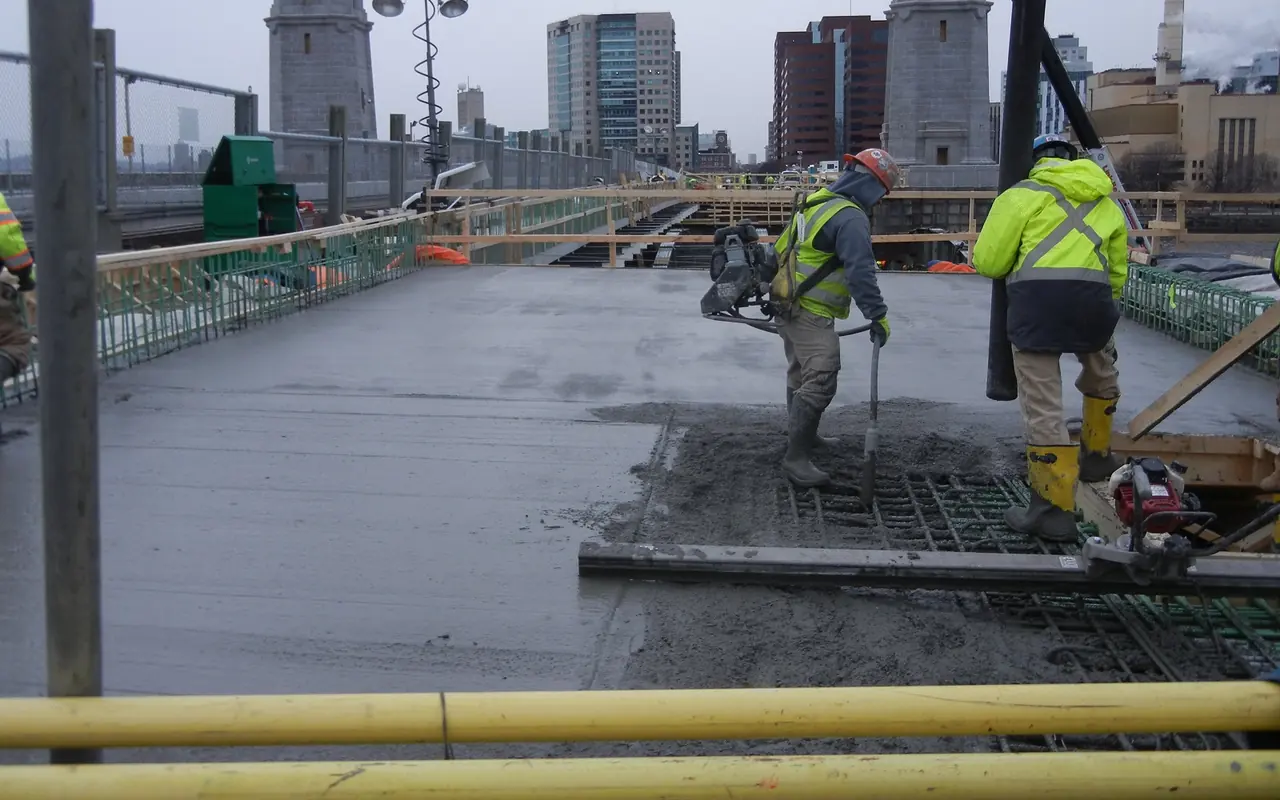
De-icing salt and traffic disruption justify a corrosion-free deck; basalt's higher modulus class helps on deflection-governed spans.
Sizes: Ø14–Ø25 mm
Route: In the United States and Canada public work runs through owner producer lists; elsewhere the engineer's acceptance of the D8505 or S807 data.
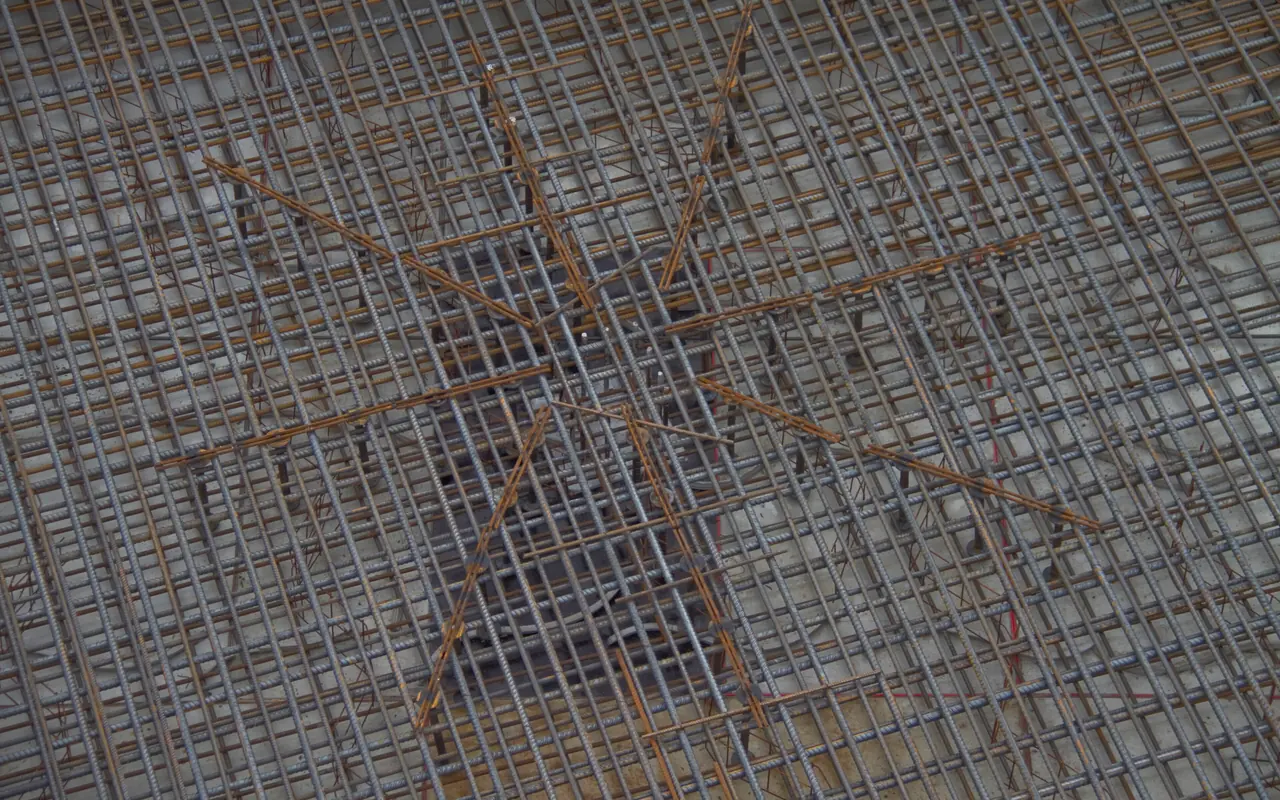
Fig. 14 · A building slab mat with punching-shear reinforcement over a column, in steel. Parking decks and balconies are detailed on the same grid.
Crack control over a large thin area, with no rust staining and bars light enough to place by hand.
Sizes: Ø6–Ø12 mm bars, coils for Ø≤10
Route: The largest volume segment; sold on the size mix and the delivered price per metre.
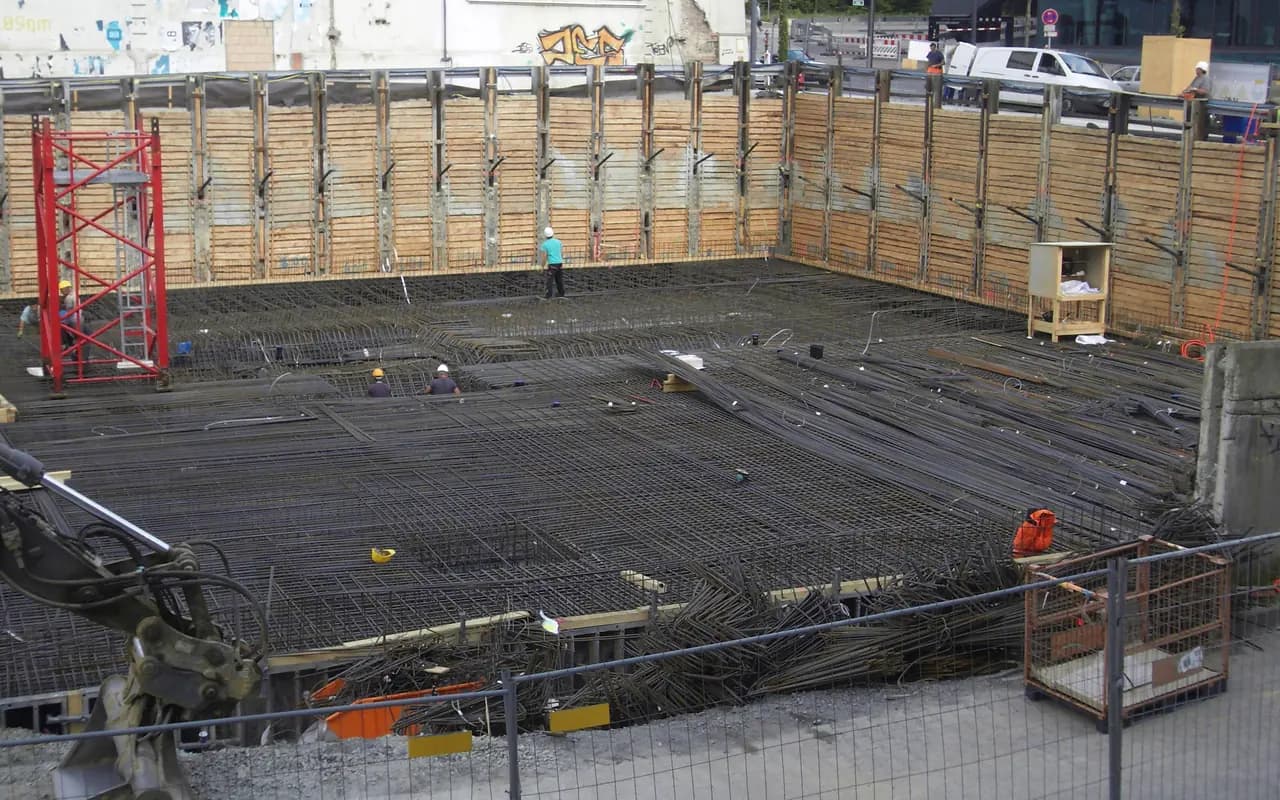
Fig. 15 · A foundation slab in a sheeted excavation, in steel. Tank bases, channel inverts and pit slabs are detailed the same way.
Chloride or sulfate groundwater, and pile caps and rafts that are expensive to repair once cover spalls.
Sizes: Ø12–Ø25 mm
Route: Engineered packages; durability data reviewed against the soil report.
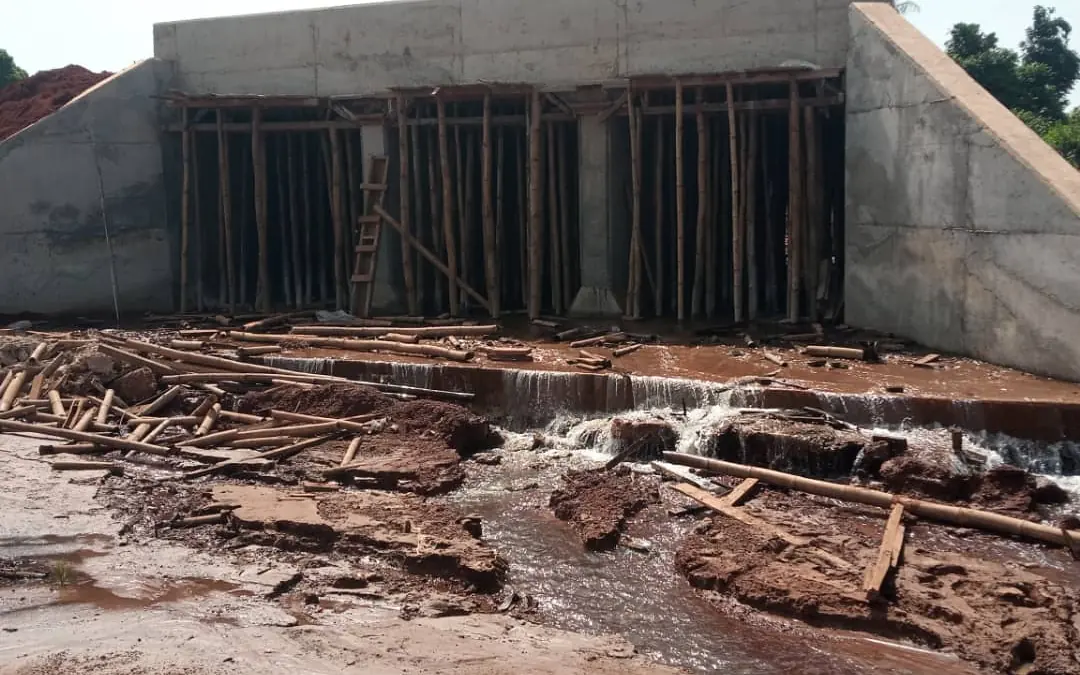
Fig. 16 · A box culvert under construction in Ghana, already carrying water.
Wet-dry cycling and saline groundwater in linings, box culverts and headwalls.
Sizes: Ø8–Ø16 mm for linings; Ø16–Ø25 mm for walls
Route: Owner acceptance of supplier qualification data with a durability review.
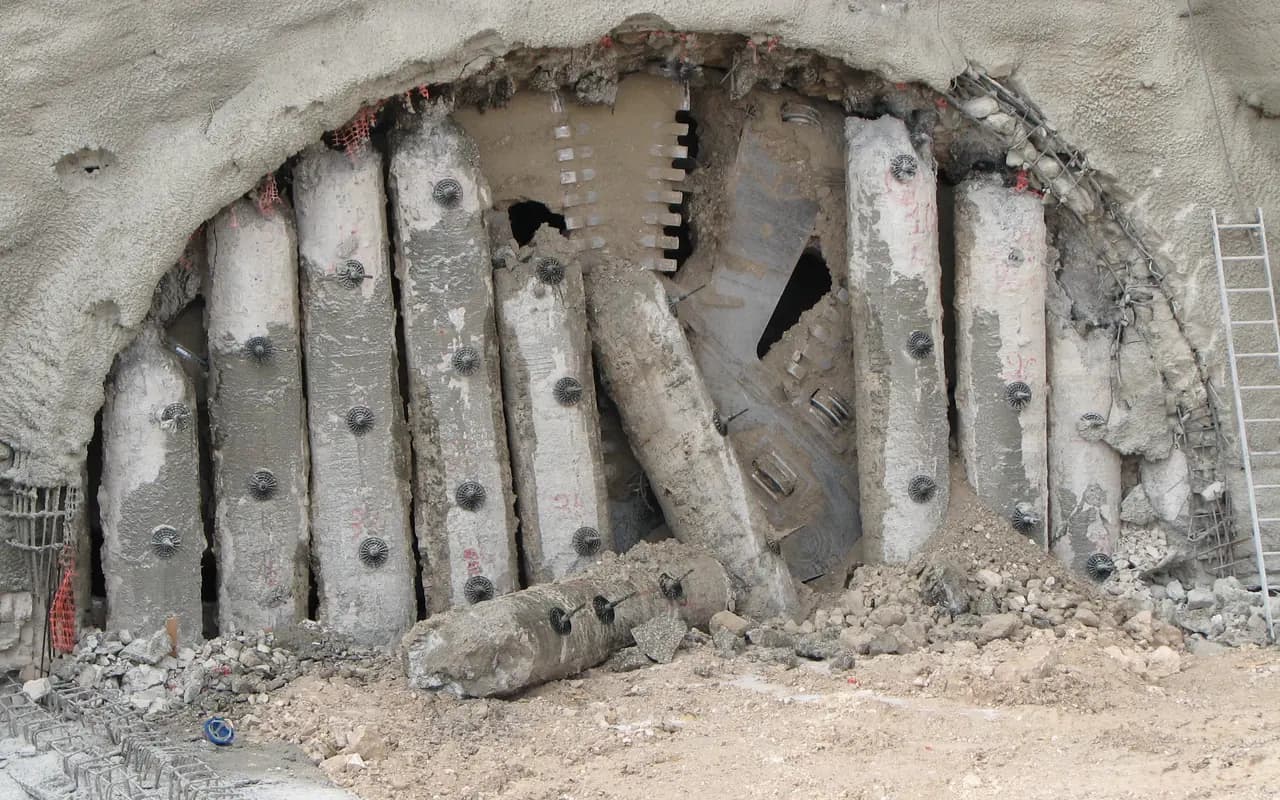
Fig. 17 · A TBM breaking out of a portal on the Jerusalem high-speed line, 2012. A GFRP soft-eye is designed so the cutterhead chews through the wall without stopping.
Reinforcement a tunnel boring machine or roadheader can cut, and a bar that does not rust in groundwater.
Sizes: Ø16–Ø25 mm cages engineered to the breakthrough sequence
Route: Engineered packages led by the contractor's designer.
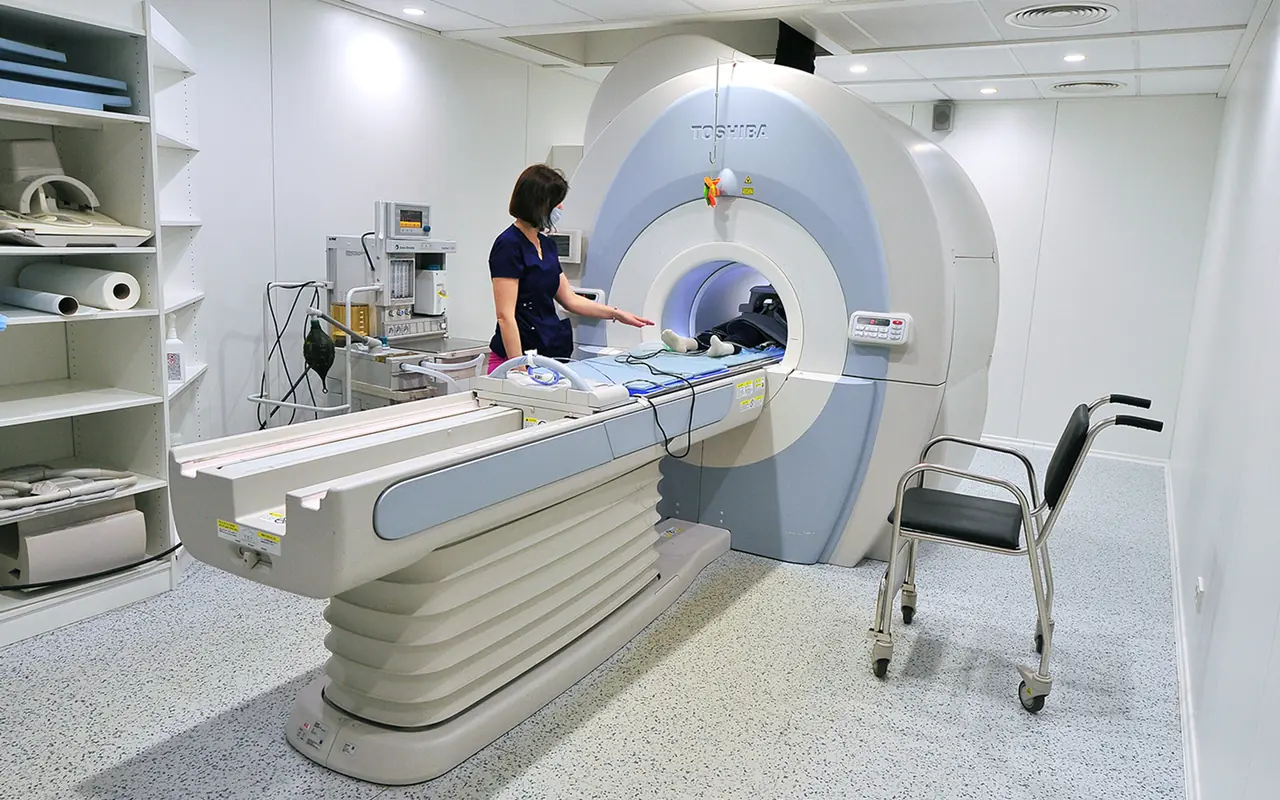
Fig. 18 · An MRI suite: the slab and walls around the magnet are kept free of ferromagnetic and conductive reinforcement.
Nonmagnetic and electrically insulating reinforcement, with nonmetallic chairs and ties.
Sizes: Ø8–Ø20 mm
Route: Engineered by the facility designer; supplier data accepted project by project.
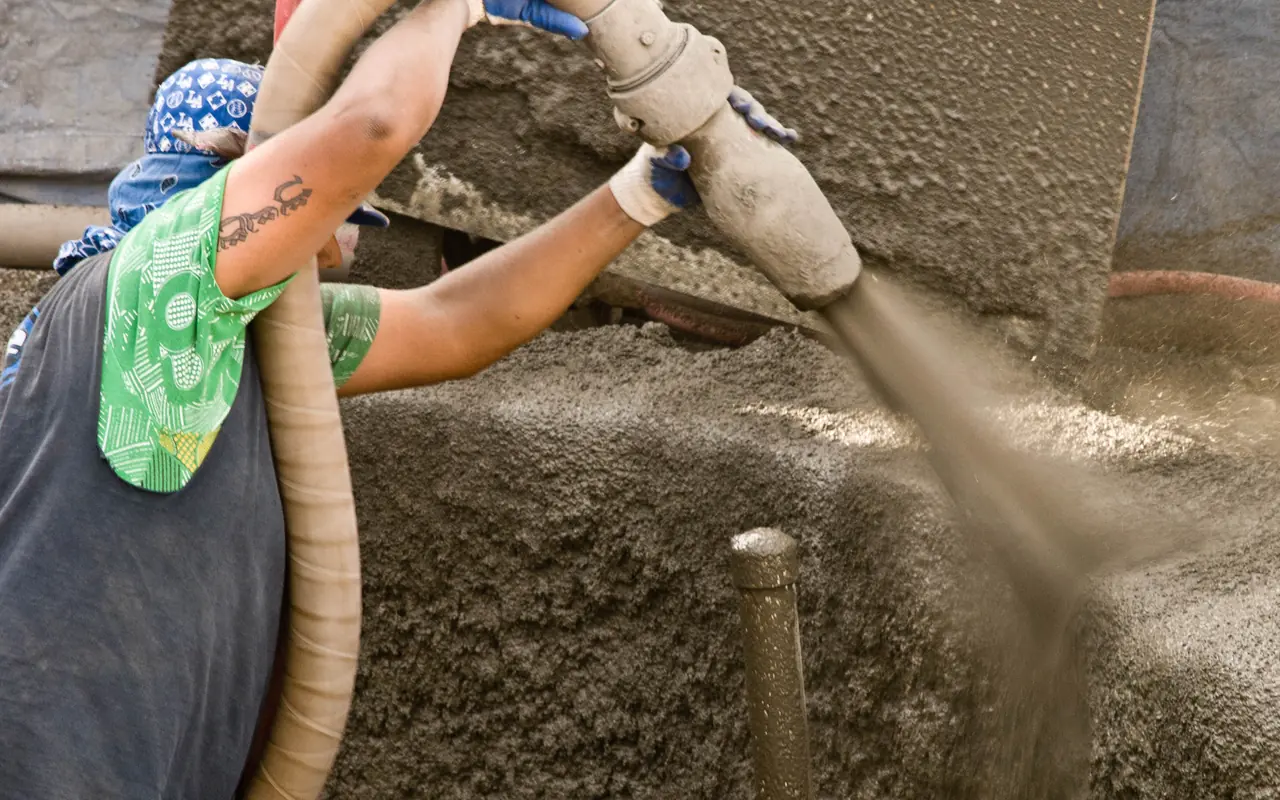
Fig. 19 · Shotcrete going onto a pool cage, Arizona. GFRP replaces the steel in the same geometry and cannot stain the finish.
Shells, tanks and channels in wet or chemically aggressive service where steel needs coatings.
Sizes: Ø8–Ø16 mm bars
Route: Pool builders and industrial owners buy on supplier qualification data.
The detailing changes, reference projects and approval route for each market are on the GFRP rebar applications page; the same logic applies to a basalt bar with the standards swapped for ASTM D8505 and CSA S807.
| Tensile strength | 1,100 MPa (Ø3–Ø12) · 1,000 MPa (Ø25)Published typical values; guaranteed force per size by report |
|---|---|
| Tensile modulus | 50 GPa class (52–55 GPa published)Above the 44.8 GPa ASTM D8505 floor and the CSA S807 Grade I threshold of 50 GPa |
| Elongation at rupture | about 2.6% (Ø3–Ø12)Linear to rupture; no yield |
| Density | 1.9–2.1 g/cm³Published unit masses reconcile to 1.9 g/cm³ |
| Alkali and seawater exposure | 75–80% strength retained after 900 days immersionPublished durability statement; ask for the test method and report |
| Surface | Helical fiber wrap; sand-coated finish on requestBond is tested per size to the governing standard |
| Forms | Straight bars to cut length; Ø≤10 mm also coiledFactory bends and mesh are raised as a separate inquiry |
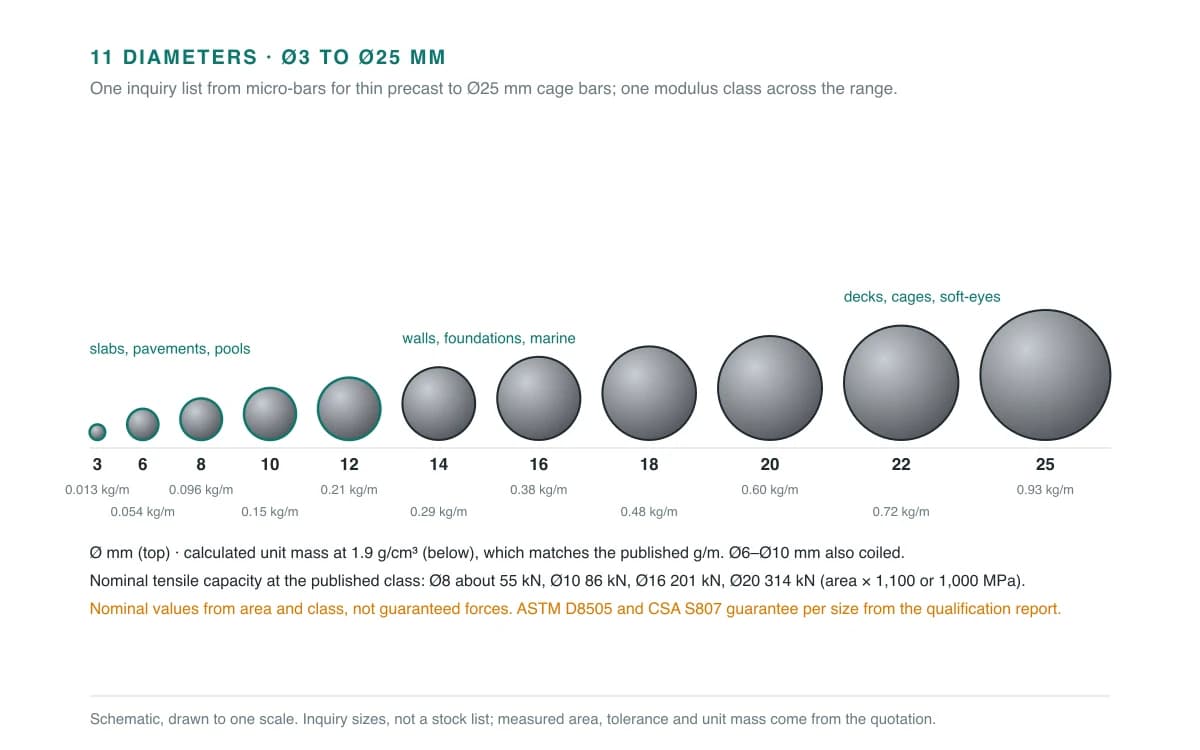
| Ø mm | Area mm² | Mass kg/m | Class MPa | Nominal kN | Form |
|---|---|---|---|---|---|
| 3 | 7.1 | 0.013 | 1,100 | 8 | Bar or coil |
| 6 | 28.3 | 0.054 | 1,100 | 31 | Bar or coil |
| 8 | 50.3 | 0.096 | 1,100 | 55 | Bar or coil |
| 10 | 78.5 | 0.149 | 1,100 | 86 | Bar or coil |
| 12 | 113.1 | 0.215 | 1,100 | 124 | Straight bar |
| 14 | 153.9 | 0.292 | 1,000 | 154 | Straight bar |
| 16 | 201.1 | 0.382 | 1,000 | 201 | Straight bar |
| 18 | 254.5 | 0.483 | 1,000 | 254 | Straight bar |
| 20 | 314.2 | 0.597 | 1,000 | 314 | Straight bar |
| 22 | 380.1 | 0.722 | 1,000 | 380 | Straight bar |
| 25 | 490.9 | 0.933 | 1,000 | 491 | Straight bar |
Mass calculated at 1.9 g/cm³, which matches the published g/m. Nominal kN is area × published class (1,000 MPa taken for Ø14 and above pending the size report). ASTM D8505 and CSA S807 guarantee per size from the qualification report; a nominal value is not a design value.
| Steel bar | BFRP bar of equal tensile capacity |
|---|---|
| Ø10 | Ø6–Ø8 |
| Ø12 | Ø8 |
| Ø14–Ø16 | Ø10 |
| Ø18 | Ø12 |
| Ø20–Ø22 | Ø14 |
| Ø24 | Ø16 |
| Ø26 | Ø18 |
| Ø28–Ø30 | Ø20 |
Equates ultimate tensile capacity only. FRP designs are governed by crack width, deflection, bond and sustained load under ACI 440.1R, CSA S806 or the adopted code, which usually need more bar area than this table gives. The project designer decides; do not substitute from this table.
Surface type (helical wrap or sand coating), resin, measured area, tolerance, unit mass, straight length or coil, and the guaranteed tensile force and modulus per size with the standard and edition tested.
Layer 1
ASTM D8505/D8505M-23 covers basalt and glass FRP bars (guaranteed force, modulus, bond, alkali resistance per size); CSA S807:19 (R2024) grades BFRP bars by modulus like GFRP; ISO 10406-1:2015 gives the test methods; GB/T 26743-2011 and JG/T 406-2013 are the manufacturer's home standards.
Layer 2
ACI CODE-440.11-22 is written for glass bars only, so a US building using basalt needs the engineer's design to ACI 440.1R guidance and the authority's acceptance. CSA S806 and S6 accept S807 bars of either fiber. EN 1992-1-1:2023 Annex R applies where the national annex adopts it, with product data from an assessment.
Layer 3
ICC-ES AC454 and state DOT lists cover named GFRP producers; F1 holds no ICC-ES, DOT, CE or ETA listing for basalt bars and does not claim one. Tell us which document your project requires and we confirm what the manufacturer can evidence.
01
Fiber and resin, surface, measured area, unit mass, guaranteed tensile force and modulus for each offered size.
02
Test methods and editions, laboratory, bond, transverse shear, alkali and seawater exposure and retained properties.
03
Batch identification, inspection records, packing list and handling instructions for the released order.
04
The F1 product manual (PDF) restates this page with the size table, the substitution guide and the ordering checklist.
8-page product manual for F1 Composite basalt fiber reinforced polymer (BFRP) rebar: how the bar is made from rock, FengDu New Material as manufacturer, published values as classes (1,100 MPa, 50 GPa, 1.9–2.1 g/cm³), 11 sizes from Ø3 to Ø25 mm with area, mass and nominal capacity, the steel substitution guide with its caveats, ASTM D8505 / CSA S807 / ISO 10406-1, handling and the ordering checklist. Classes, not guaranteed values; the qualification report per size governs.
The manual restates this page: published values as classes, the size table, the substitution guide with its caveats, standards, handling and the ordering checklist. It is not a qualification report; the report for the offered size travels with the quotation.
Reference range · observed 2026-10
Public FOB listings observed in October 2026 for basalt bars from Ø6 to Ø25 mm ran from roughly $0.6 to $1.6 per metre, rising with diameter; basalt fiber itself costs more per tonne than E-glass, so a BFRP bar prices above the same GFRP size.
These are public references on one date, not quotations. The project price is the one in the RFQ response, built from the drivers on the right.
Driver 1
Material scales with cross-sectional area, so a Ø20 mm bar costs about four times a Ø10 mm bar per metre. Quote the schedule, not an average.
Driver 2
Vinyl ester or epoxy matrix, sand coating and third-party reports to D8505 or S807 each add cost per metre.
Driver 3
Project cut lengths add handling but cut site waste; coils for Ø≤10 mm cut freight volume.
Driver 4
A tonne of BFRP is about four times the length of a tonne of steel, so freight is bought per container; terms (FOB, CIF, DAP, DDP) decide who carries freight, duty and clearance.
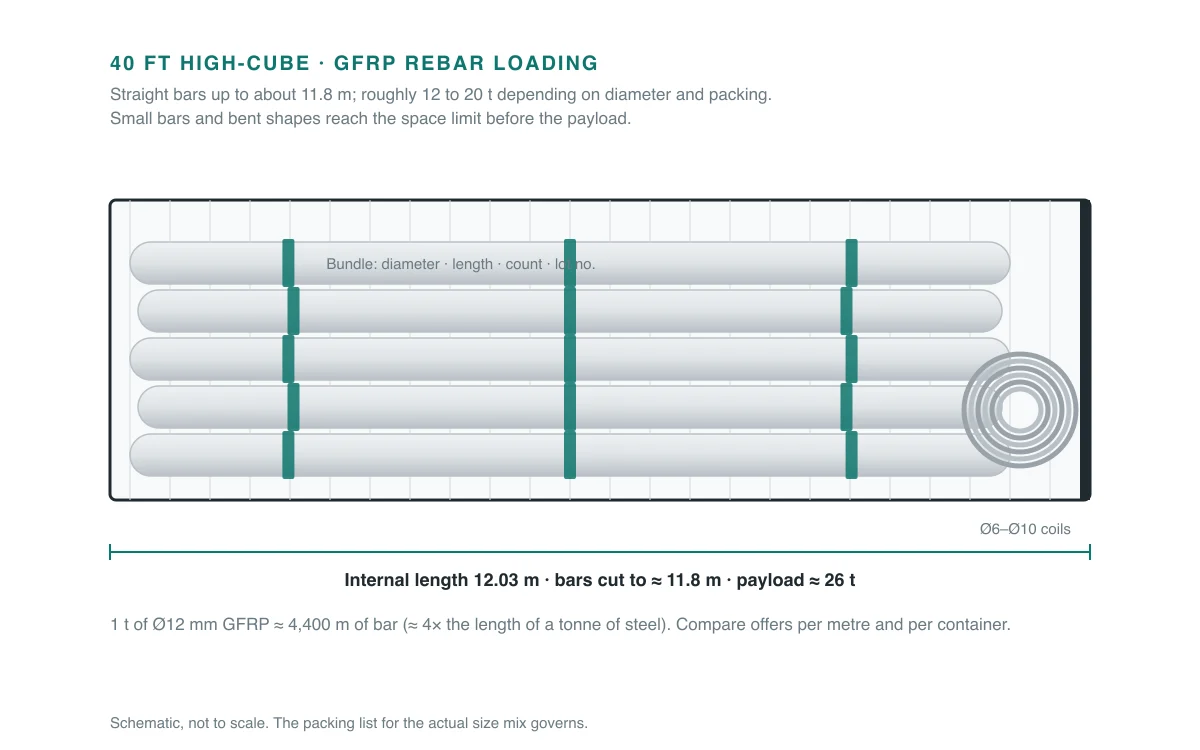
Straight bars are cut to the project length; 6 m and 12 m are the usual planning lengths and bars up to about 11.8 m load into a 40 ft high-cube container. Longer bars need an open-top or flat-rack booking or an agreed cut length.
Ø6–Ø10 mm bars are coiled on a reel, which cuts freight volume for slab and pavement orders; confirm straightening and handling on site before choosing coils.
Bundles are strapped, labeled by diameter, length and quantity, and protected from abrasion; coils are wrapped and palletized.
Have the project designer size the bar to the governing FRP code using the guaranteed force and modulus of the offered size, not the steel substitution table.
Straight bars and coils are the standard product. Raise bends, hooks and mesh as an inquiry; never bend, heat or weld a cured bar on site.
Check labels, quantities and damage on arrival. Store off the ground and out of prolonged sun; protect from impact.
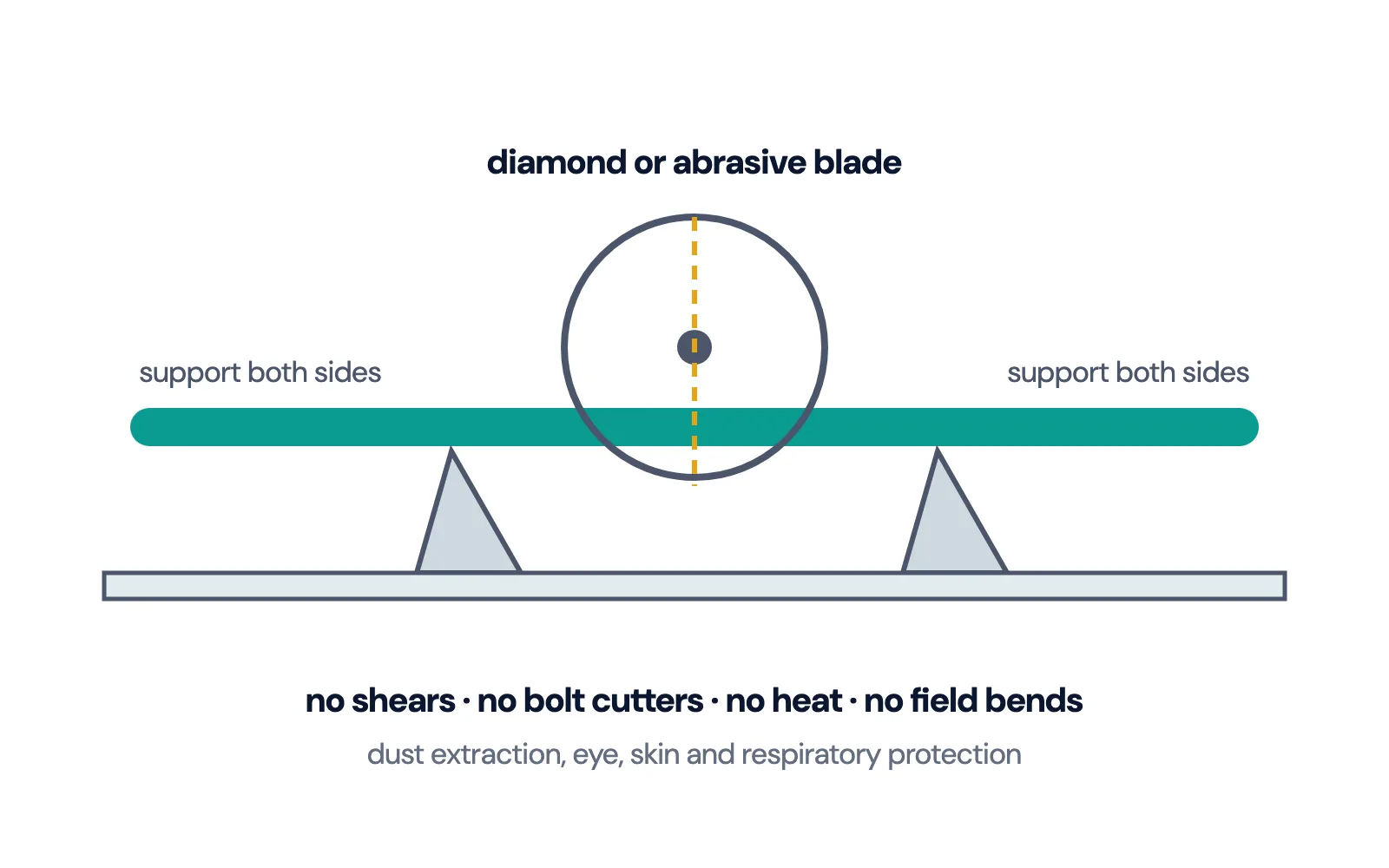
Diamond or abrasive blade with dust extraction; no shears, bolt cutters or torch.
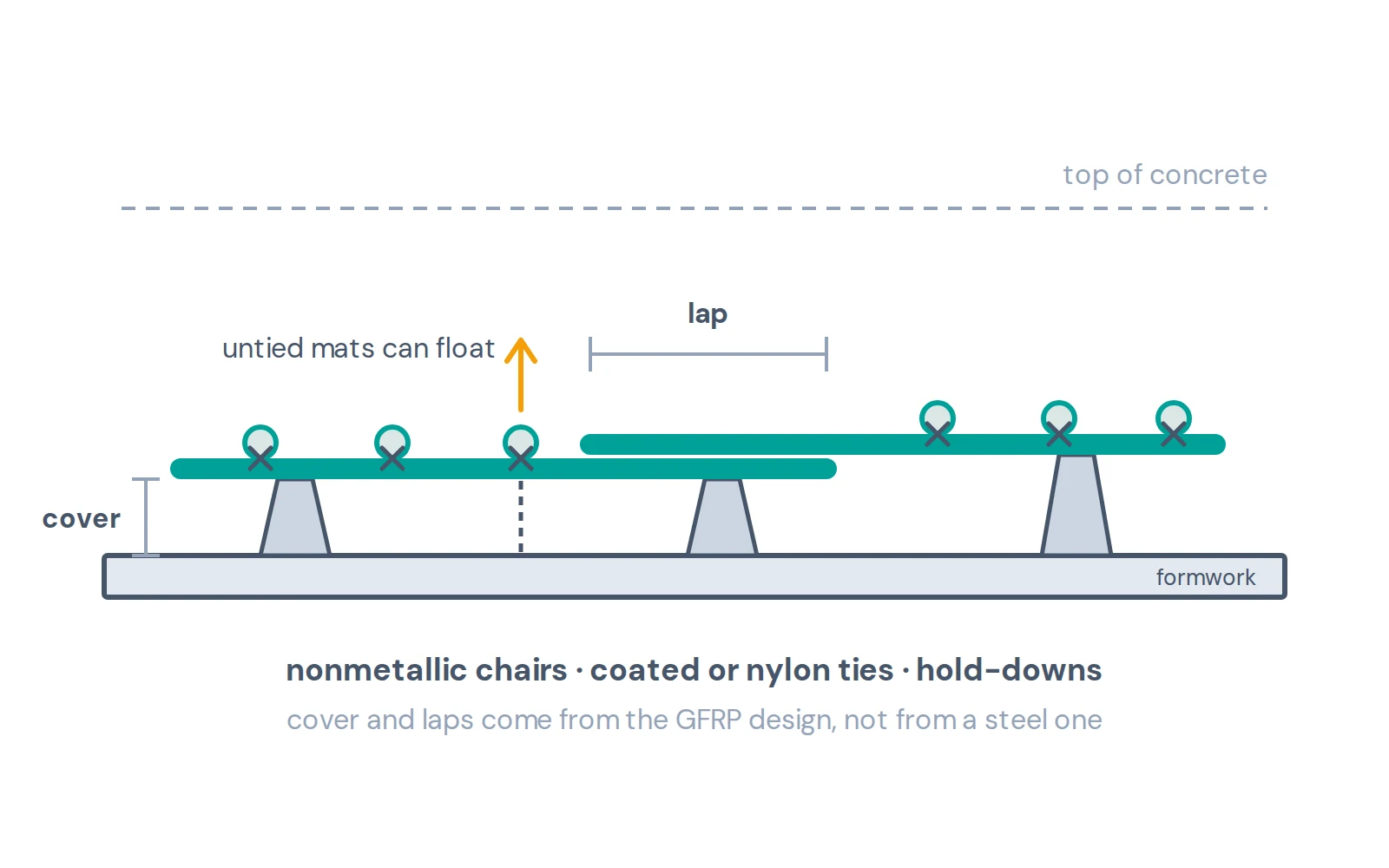
Nonmetallic chairs set the cover; tie the light mat so it cannot float. Check spacing, cover and laps before the pour.
A pultruded bar of continuous basalt fiber in a thermoset resin, with a helical wrap or sand coating for bond. Basalt fiber is drawn from melted basalt rock with no other ingredient. The bar does not rust, weighs about a quarter of steel, carries no current and no magnetic signature, and is cut with a blade.
Eleven inquiry diameters from Ø3 to Ø25 mm: 3, 6, 8, 10, 12, 14, 16, 18, 20, 22 and 25 mm. Ø6–Ø10 mm bars can be coiled. These are inquiry sizes, not a stock list; the quotation confirms the measured area, tolerance, length and unit mass.
At the fiber, yes; at the bar, by class. FengDu's basalt bar is published at 1,100 MPa and a 50 GPa class against the 45 GPa class and 530–840 MPa guaranteed minimums of ASTM D7957 glass bars. Only the certified values of the bar supplied can be designed with, so compare qualification reports, not fibers.
No. The published substitution guide pairs each steel size with a smaller BFRP size of equal tensile capacity, but FRP designs are governed by crack width, deflection, bond and sustained load under the governing code, which usually need more bar area than the strength match. The designer decides.
ASTM D8505/D8505M-23 is the product specification that covers basalt bars; CSA S807:19 covers them in Canada with modulus grades; ISO 10406-1 gives the test methods. ACI CODE-440.11-22 is written for glass bars only, so a US building project using basalt needs the engineer's design and the authority's acceptance.
No. Those are producer-specific listings and F1 does not claim one for basalt bars. Tell us which documents your project requires; we confirm what FengDu can evidence for the proposed sizes and identify what further testing would be needed.
Same handling, same design logic, a different fiber and a different code path. GFRP has the broader code acceptance (ASTM D7957, ACI 440.11) and the factory-bend and mesh programme; basalt offers a higher strength class and a 50 GPa class in one grade, and a price above the same GFRP size. Our basalt-vs-fiberglass guide and the GFRP rebar page cover the choice.
Raise them as an inquiry with the shape drawings. The standard basalt product is straight bars and coils; factory-formed stirrups, bends and mesh are routine in the GFRP family, and a project can mix straight basalt bars with GFRP shapes where the designer allows it.
Public FOB listings observed in October 2026 ran from roughly $0.6 to $1.6 per metre from Ø6 to Ø25 mm. Project and export prices depend on the size mix, resin, test scope, lengths or coils, packing and shipping terms; the RFQ response is the price.
Depending on diameter and packing, a 40 ft high-cube carries roughly 12 to 20 metric tons of straight bars up to 11.8 m long; at 0.38 kg/m a tonne of Ø16 mm bar is about 2,600 m. Coils of small diameters pack denser still.
Yes. The F1 basalt FRP rebar product manual (PDF) carries the published properties, the size table with nominal area, unit mass and tensile capacity, the steel substitution guide with its caveats, standards, handling and the ordering checklist. The link is in the manual section of this page and on the downloads page.
Send your bar schedule or BOQ, the standard your project cites, the documents required and the destination. We reply within one business day; a formal quotation follows once the specification and delivery are reviewed.