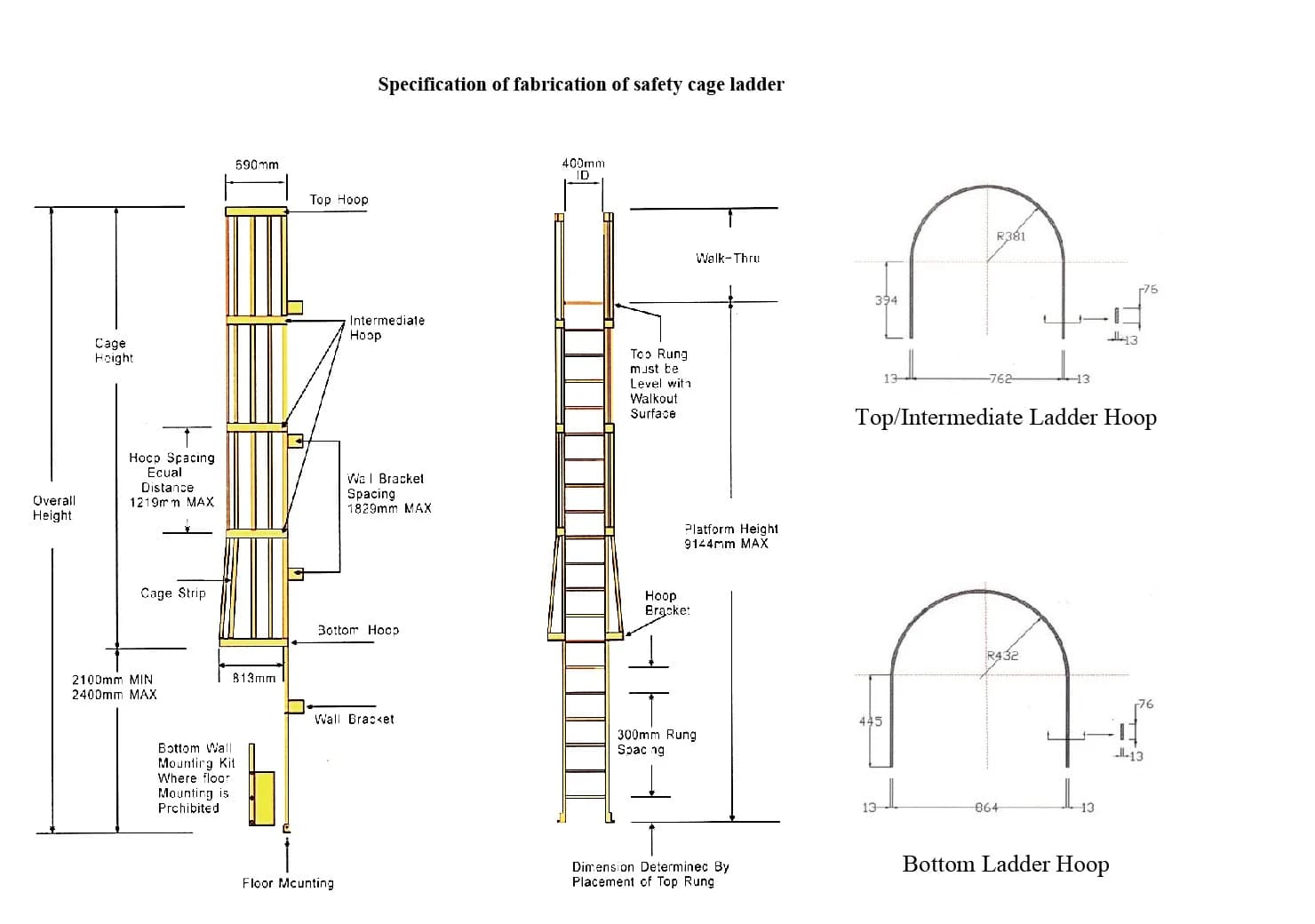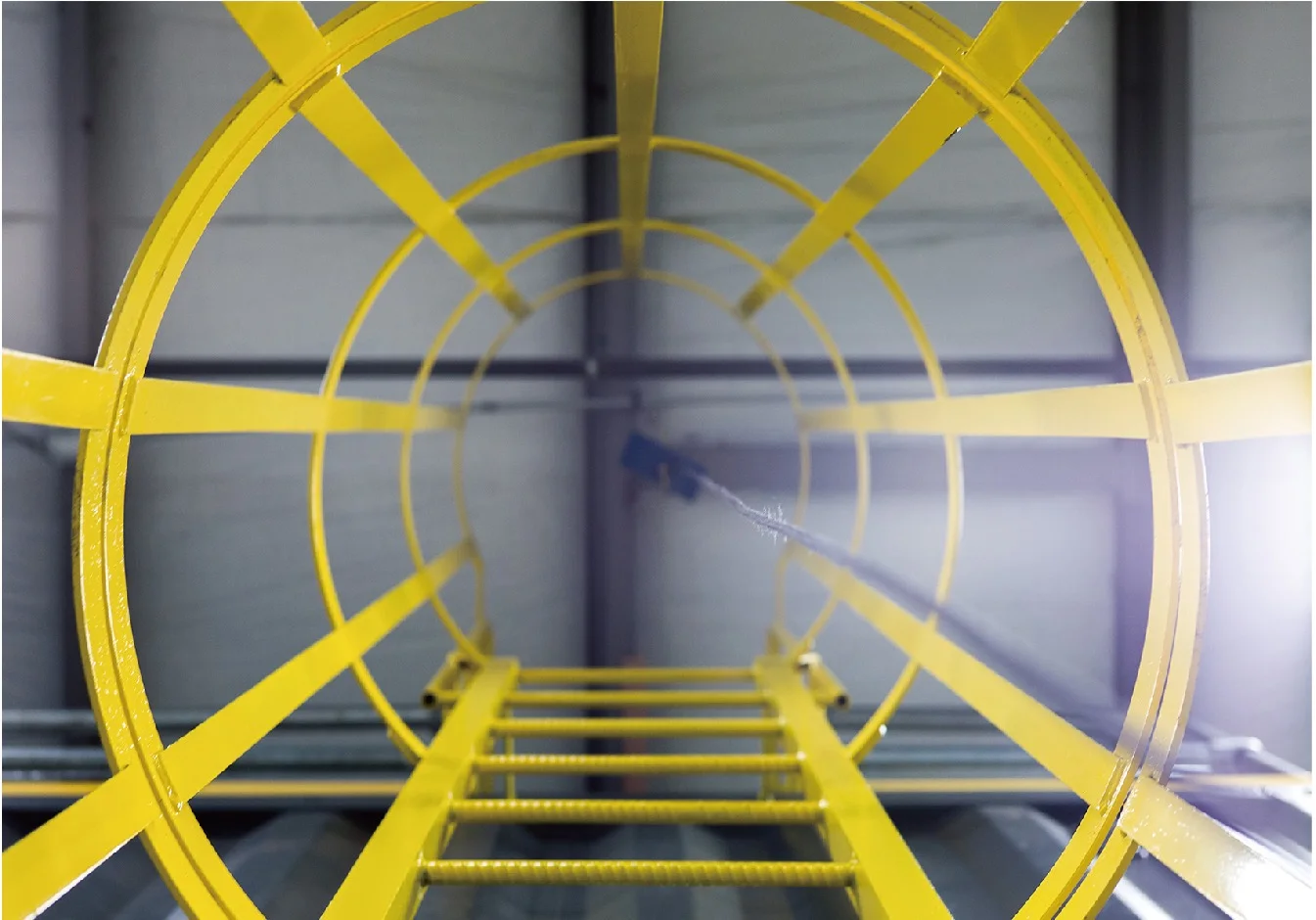
A fixed ladder is a small structure with strict geometry. The rules that govern it set the rung spacing, the clear width, the clearances and, above a certain height, the way a climber is protected from falling. In the United States those rules changed in 2016, and the change is still working its way through existing plants: cages are being phased out as fall protection. In Europe the machinery-access standard still relies on cages. An FRP ladder can be built for either, but not with the same drawing.
OSHA 1910.23: geometry for fixed ladders
| Element | Requirement |
|---|---|
| Rung, step and cleat spacing | 10 to 14 in (25 to 36 cm) between centerlines |
| Minimum clear width | 16 in (41 cm), measured before any ladder safety system is installed |
| Clearance behind the ladder | 7 in (18 cm) from the rung centerline to the nearest permanent object (4.5 in for elevator pit ladders) |
| Side rails at the top | Through and side-step ladders extend 42 in (1.1 m) above the access level or landing |
These apply to fixed ladders in general industry. Elevator shafts and telecommunication towers have their own spacing rules, and construction sites fall under 29 CFR 1926 rather than 1910.
OSHA 1910.28(b)(9): the fall protection timeline
The trigger is height: a fixed ladder that extends more than 24 ft (7.3 m) above a lower level.
| Ladder situation | Required protection |
|---|---|
| Installed before November 19, 2018 | Personal fall arrest system, ladder safety system, cage or well |
| Installed on or after November 19, 2018 | Personal fall arrest system or ladder safety system |
| A ladder section, cage or well is replaced | Personal fall arrest system or ladder safety system, at least in the replaced section |
| From November 18, 2036 | Every such fixed ladder has a personal fall arrest system or ladder safety system |
A ladder safety system is a rail or cable fixed to the ladder with a sleeve or carrier connected to the climber's harness. The cage has not been banned outright: it can remain on a ladder that also has a ladder safety system, provided it does not interfere with the system. But a new ladder over 24 ft that relies on a cage alone does not meet the rule.
For an FRP ladder, the practical consequence is structural. The ladder safety system brings anchorage and bracket loads that its manufacturer specifies, and those loads flow into the FRP side rails, the brackets and the wall or frame. Choose the system before the ladder is detailed, so the rails, splices and brackets are designed for it.
EN ISO 14122-4 in Europe
EN ISO 14122-4:2016 covers fixed ladders that give permanent access to machinery. Where the fall height exceeds 3,000 mm, it requires fall protection: a safety cage or a guided-type fall arrester. Cage hoops typically start between about 2,200 and 3,000 mm above the base and are spaced no more than 1,500 mm apart, with vertical strips between them. The standard also sets rung spacing, clear width, landing and rest-platform arrangements; check the edition named in the project specification.
The contrast with the U.S. rule is the point to plan around. A caged FRP ladder detailed for a European plant may be exactly right there and still fall short of the OSHA rule for a new U.S. installation over 24 ft. When a product line serves both markets, state the destination standard on every drawing.
What changes when the ladder is FRP
Electrical isolation. Fiberglass side rails and rungs do not conduct, which is why FRP ladders are specified around substations, rail equipment and electrolytic plants. Metal brackets, fasteners and a steel ladder safety rail still conduct, so the electrical safety review should include them.
Grip. Fluted or gritted rungs and rung covers give a slip-resistant surface in wet and oily areas.
Stiffness. FRP is less stiff than steel. Rungs, side rails and bracket stand-offs are checked for deflection under the climber and the fall protection loads, not only for strength.
Exposure and hardware. Outdoor ladders need UV-stabilized resin and a surface veil. Stainless steel fasteners are common in corrosive service, and the resin is matched to the chemicals present.
What to send with an RFQ
Send the vertical rise; the top and bottom landing geometry and the top exit (through or side-step); the wall or frame substrate and bracket locations; the stand-off; the jurisdiction and governing standard; the fall protection concept, including the ladder safety system brand and model if one is chosen; the exposure; the color; quantities; and the delivery destination. The fiberglass fixed ladder page lists the catalog rails, rungs, cage components and layout references. Combine the ladder with the platform edge protection described in our guardrail requirements guide.
FRP fixed ladder questions
Are ladder cages still allowed under OSHA?
On fixed ladders installed before November 19, 2018, a cage or well remains an accepted option until the cage, the well or a ladder section is replaced, or until November 18, 2036, whichever comes first. Ladders over 24 ft installed on or after November 19, 2018 need a ladder safety or personal fall arrest system. A cage may stay alongside such a system if it does not interfere with it.
What rung spacing does a fixed ladder need?
OSHA 1910.23 spaces rungs, steps and cleats 10 to 14 in apart, measured between centerlines, with separate limits for elevator pits and telecommunication towers. EN ISO 14122-4 sets its own geometry, so design to the standard named for the site rather than mixing the two.
Can a fiberglass ladder carry a ladder safety system?
Yes, when the rail or cable system's anchorage and bracket loads, as specified by its manufacturer, are checked against the FRP side rails, the connections and the wall or frame they fix to. Name the system and model in the RFQ so the brackets are designed for it.
Why use FRP rather than galvanized steel for fixed ladders?
FRP does not rust in wastewater, chemical and marine atmospheres, it does not conduct near energized equipment, and it is light enough to handle in long sections. It needs UV-stabilized resin outdoors, and its lower stiffness means brackets and rungs are checked for deflection as well as strength.