 Molded FRP gratingSquare and mini mesh, depths, nominal panel sizes, weights and open area.View molded grating
Grating comparison
Molded vs pultruded FRP grating
The two fiberglass grating types are made differently and span differently. Compare construction, depth, open area, weight, cutting and clips from F1's published catalog data, then pick the panel by span, load direction and layout.
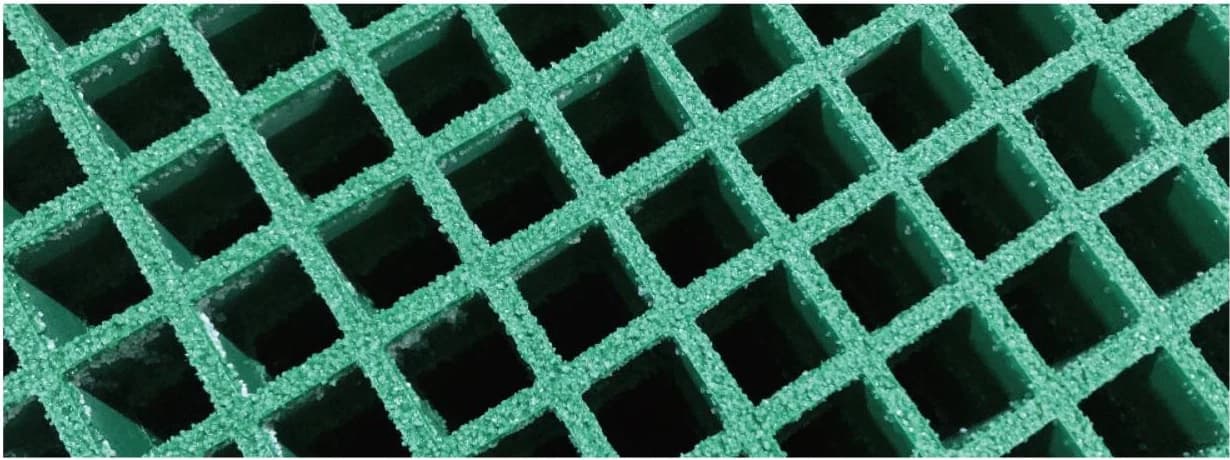
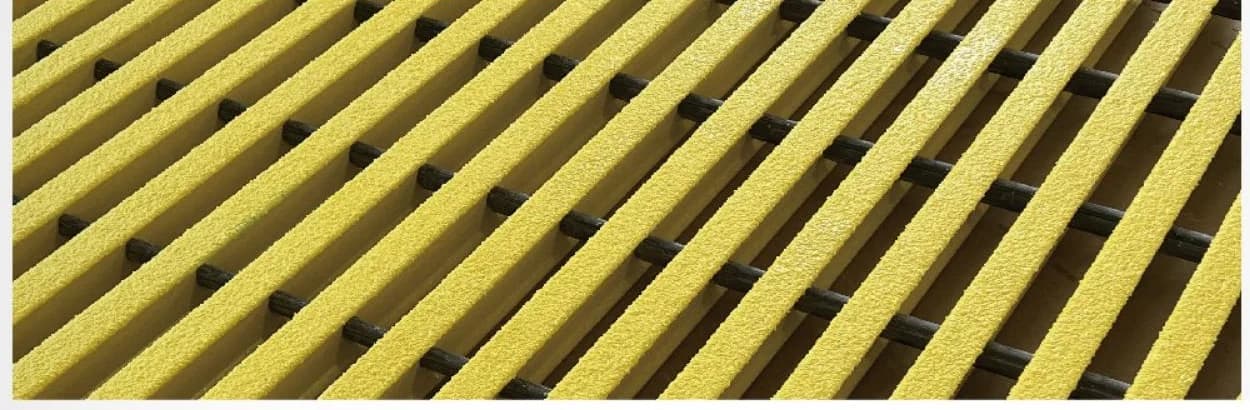
FIG. 1 Molded mesh (left) and pultruded T-bar (right)Catalog photos
Molded vs pultruded grating: the short answer
Molded FRP grating is a one-piece two-way mesh that can be cut in any direction; pultruded FRP grating is a one-way panel of pultruded bearing bars that spans further and is stiffer along the bars. Choose by span, load direction, cutouts and walking surface, then confirm the load table for the exact panel.
- Molded grating
- A one-piece bidirectional mesh with 30–35% glass by weight. F1 lists 26 configurations, 13–65 mm deep with 30–84% open area.
- Pultruded grating
- Pultruded I-bar or T-bar bearing bars joined by cross-rods. F1 lists 36 configurations, 25–76 mm deep with 12–83% open area.
- Choose molded for
- Cutouts in any direction, loads from several directions, short spans and supports on all sides.
- Choose pultruded for
- Longer one-way spans, higher stiffness along the bars, small-opening pedestrian surfaces or high-open airflow decks.
- Fixing
- Molded panels use M or J hold-downs plus C edge connectors; pultruded panels use M, J or T hold-downs.
Molded and pultruded grating side by side
Ranges are calculated from the nominal rows published on the two F1 grating product pages. They describe the listed catalog, not every product on the market.
| Molded FRP grating | Pultruded FRP grating | |
|---|---|---|
| How it is made | Continuous glass roving laid in both directions in a mold, wetted with resin and cured as one panel. | Pultruded I-bar or T-bar bearing bars, joined by cross-rods into an open panel. |
| Reinforcement direction | Bidirectional mesh: reinforcement runs both ways. | One-way: most reinforcement runs along the bearing bars. |
| Glass content | 30–35% by total weight for the listed construction. | Set by the bearing-bar laminate; request the series datasheet. |
| Catalog configurations | 26 mesh and depth rows | 36 T-bar, I-bar and specialty rows |
| Depth range | 13–65 mm | 25–76 mm |
| Open area | 30–84% | 12–83% |
| Nominal weight | 5.8–52 kg/m² | 8.5–73.6 kg/m² |
| Cross-bar spacing | Fixed by the mesh, for example 38.1 × 38.1 mm. | 152.40 mm cross-rod centers on the listed series. |
| Spans | Short to moderate spans; check the selected mesh and depth. | Longer one-way spans with higher stiffness along the bars. |
| Field cutting | Cut in any direction; support and seal every cut edge. | Plan cuts so bearing bars span the support; support every cut bar end. |
| Clips | M or J hold-downs, plus C connectors between panel edges. | M, J or T hold-downs; T fits the F1 pultruded series only. |
Row-by-row data: molded grating mesh and depth table and FRP pultruded grating series table. Hold-downs for both: fiberglass grating clips.
When to choose molded or pultruded grating
| Situation | Usually | Why |
|---|---|---|
| Many penetrations, pipe openings or irregular cutouts | Molded | The two-way mesh tolerates cuts in any direction. |
| Loads that arrive from any direction, supports on all sides | Molded | Reinforcement in both directions shares load across the panel. |
| Trench covers and short-span wet walkways | Molded | Small panels on close supports suit the mesh depths listed. |
| Longer clear spans and fewer support beams | Pultruded | Continuous bearing bars give higher stiffness in the span direction. |
| Small top openings for pedestrian routes | Pultruded | Wide-top T-bar series start at 12% open area; molded mini mesh is the alternative. |
| Airflow-sensitive decks such as cooling towers | Pultruded | The high-open SI series is listed for airflow-sensitive applications. |
Many platforms use both: pultruded panels on the long walkway runs and molded panels around equipment and penetrations. The FRP grating selector narrows the catalog rows by span, opening and surface.
Compare loads with a table for the exact panel
Equal depth does not mean equal capacity. A molded 38 mm mesh and a pultruded 38 mm I-bar panel deflect differently on the same span because their reinforcement runs differently. Ask for a load and deflection table that names the series, depth, resin, span direction and support condition, and compare the two options at the same clear span, load footprint and deflection limit.
How to read one: FRP grating load table guide. Against steel: FRP grating vs steel grating.
Frequently asked questions
What is the difference between molded and pultruded grating?
Molded grating is cast as one panel with glass reinforcement running in both directions, so it behaves the same both ways and can be cut freely. Pultruded grating is assembled from pultruded bearing bars and cross-rods, so it is a one-way product with higher stiffness along the bars and longer spans.
Which is stronger, molded or pultruded FRP grating?
Neither is stronger in general. Pultruded grating is stiffer along its bearing bars and usually spans further; molded grating spreads load in both directions. Compare product-specific load tables for the same span, load footprint and deflection limit.
Is pultruded grating more expensive than molded grating?
It depends on the series, depth, span and quantity. A pultruded panel can need fewer supports on a long span, which changes the cost of the steel or FRP frame. Compare installed quotes for the same layout rather than price per square meter alone.
Which grating is better for chemical plants?
Both are made in corrosion-resistant resins. Molded grating is resin-rich, with 30–35% glass by weight, while pultruded grating relies on the bearing-bar laminate and its surface. Match the resin formulation to the chemicals, concentration and temperature for either type, and seal cut edges.
Can molded and pultruded grating be used on the same platform?
Yes. A common layout uses pultruded panels on long walkway spans and molded panels around equipment and penetrations. Keep the walking surface, panel depth at transitions and clip types consistent on the layout drawing.
Where are load tables for each type?
F1 publishes nominal geometry and weight for both families, not rated loads. Send the selected row, span, load case and deflection limit for a review of product-specific load evidence; the load-table guide explains how to read the result.
Open the product data
- Molded FRP gratingSquare and mini mesh, depths, nominal panel sizes, weights and open area.View molded grating
 FRP pultruded gratingT-bar, I-bar, high-load and high-open series with depth, bar centers and weight.View pultruded grating
Citable engineering resource
How to cite this page
For a thesis, journal paper or design report. Cite this page's URL rather than the home page, and add the date you accessed it if your style requires one.
IEEE
F1 Composite, “Molded vs pultruded FRP grating,” F1 Composite, Nov. 24, 2026. [Online]. Available: https://www.f1composite.com/technology/molded-vs-pultruded-frp-grating
APA
F1 Composite. (2026, November 24). Molded vs pultruded FRP grating. https://www.f1composite.com/technology/molded-vs-pultruded-frp-grating
BibTeX
@misc{f1composite-molded-vs-pultruded-frp-grating-2026,
  author       = {{F1 Composite}},
  title        = {Molded vs pultruded FRP grating},
  year         = {2026},
  month        = {nov},
  howpublished = {\url{https://www.f1composite.com/technology/molded-vs-pultruded-frp-grating}},
  organization = {F1 Composite}
}Send the platform layout, spans and loads to compare both grating types
Send the dimensions, quantity, service conditions and destination. We reply within one business day.